

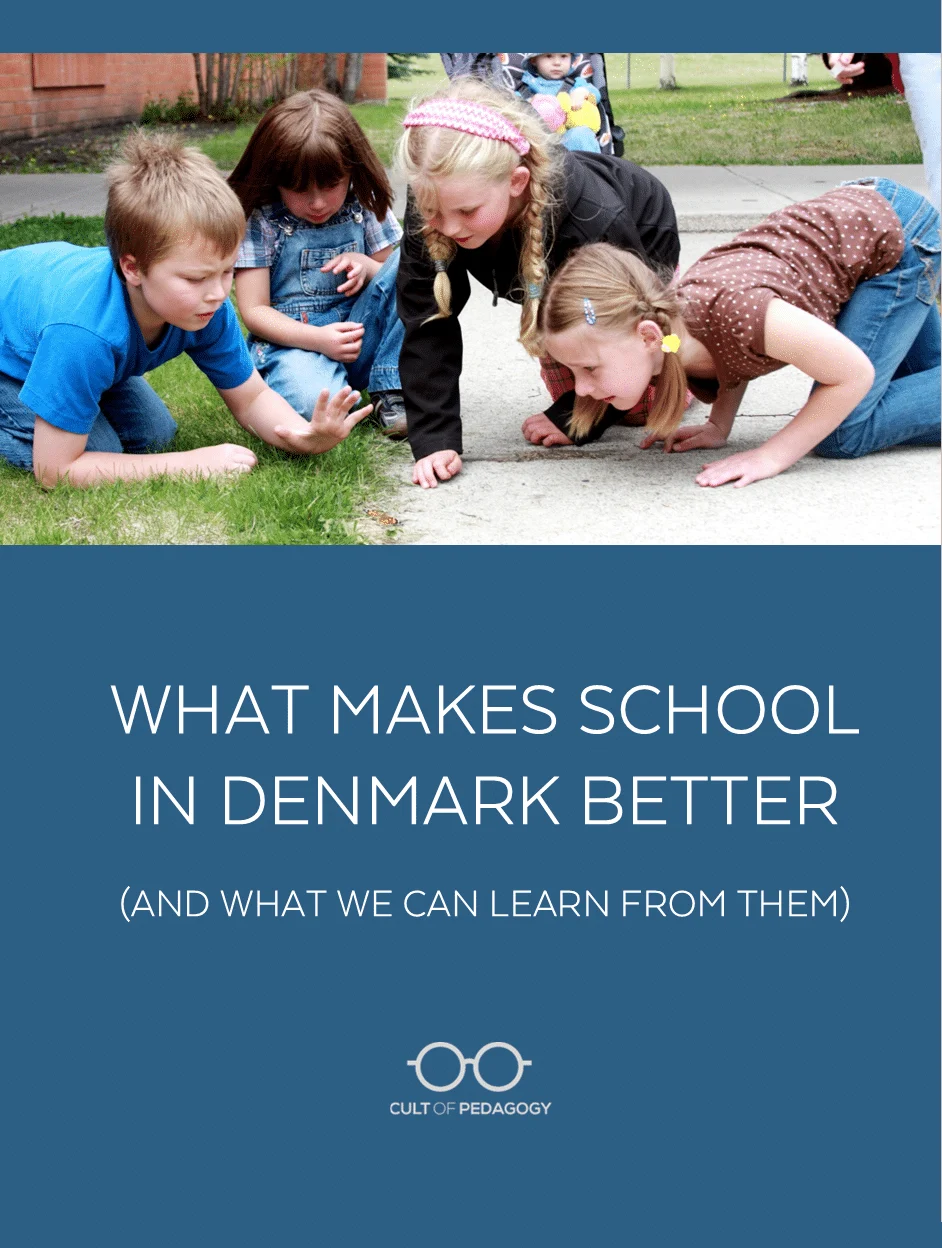
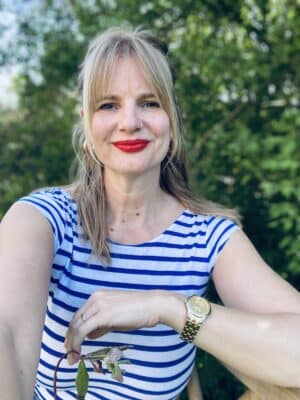
A recent in-depth discussion with educator and author Pernille Ripp has shed light on stark differences between the education systems of the United States and Denmark, her native country. The conversation, part of the Cult of Pedagogy podcast, highlights how Danish schools foster a more humane and enriching environment for both teachers and students, primarily through a philosophy of "doing less" rather than adding more to an already burdened system. Ripp’s insights, drawn from her experience teaching in both countries, offer a compelling argument for systemic adjustments that prioritize trust, autonomy, and professional respect.
Pernille Ripp: A Bridge Between Educational Worlds
Pernille Ripp, a respected voice in learning and literacy, has cultivated a significant following through her blog and books, advocating for educational practices that nurture a love for learning. Her previous work, including a podcast interview titled "How to Stop Killing the Love of Reading," has consistently focused on creating supportive and engaging school environments. After years of teaching in the U.S., Ripp’s return to Denmark provided her with a unique comparative lens, allowing her to articulate the tangible distinctions in educational philosophy and practice. Her observations move beyond mere anecdotal comparison, delving into the underlying principles that shape daily school life and professional morale. The objective of this comparative analysis is not simply to highlight shortcomings in the U.S. system but to identify actionable insights that could potentially be integrated, requiring shifts in expectations rather than significant financial outlays or new programs.
Empowering Educators: The Danish Approach to Teacher Competence and Trust
One of the most profound disparities identified by Ripp lies in the perception and treatment of teachers as professionals. In Denmark, the system operates on a fundamental assumption of teacher competence. This translates into significant professional autonomy, a stark contrast to the often highly prescriptive environments found in many U.S. schools. Danish teachers are given broad, age-based educational goals, with the expectation that they, as trained professionals, will determine the most effective pedagogical pathways to achieve them. This trust is institutionalized; for instance, the Danish government recently streamlined its national educational objectives, reducing them from hundreds to approximately ten, thereby empowering local schools and individual teachers to tailor curricula.
This autonomy extends to decision-making at the school level. Teachers are encouraged to bring innovative ideas directly to colleagues, facilitating quicker implementation without the bureaucratic hurdles of multi-layered committee approvals often seen in the U.S. Different schools can adopt diverse curricula based on the specific needs and demographics of their student populations, reflecting a belief that local expertise is paramount. Ripp emphasizes, "The system assumes that I know what I’m talking about and that the experience that I have with my students is one that is valid and also valuable."
In the U.S., the prevailing culture often involves mandated curricula, detailed pacing guides, and extensive checkbox requirements. While intended to ensure consistency and accountability, these measures can inadvertently communicate a lack of trust in teachers’ professional judgment, reducing them to implementers rather than innovative educators. A 2023 survey by the RAND Corporation, for example, highlighted that K-12 public school teachers in the U.S. report high levels of stress and burnout, with excessive workload and lack of administrative support often cited as key factors. A shift towards greater professional trust, as seen in Denmark, could potentially alleviate some of these pressures. U.S. schools could explore piloting programs where mandated curricula serve as a flexible starting point rather than a rigid script, allowing teachers to adapt and innovate, followed by structured feedback sessions to assess effectiveness.
Professional Work Conditions: Prioritizing Teacher Well-being
The professional working conditions for Danish teachers also stand in sharp contrast to those in the U.S. Ripp reports working a standard 40-hour week, with approximately half of that time dedicated to direct student instruction. This structure ensures ample time for planning, collaboration, and professional development outside of classroom hours. When faced with an overloaded schedule due to extra committees, Ripp’s principal in Denmark proactively sought to reduce her workload, asking, "What can we remove from your plate?" This approach signifies a systemic commitment to protecting teacher well-being and preventing burnout, a critical issue in the U.S. where teacher attrition rates remain a concern.
Furthermore, Danish schools often provide dedicated professional spaces for teachers. Ripp describes a separate office for prep work, free from interruptions, with clear norms around respecting quiet work time. This physical separation also helps mitigate the pressure teachers often feel in the U.S. to personally decorate and maintain "their" classrooms, blurring the lines between personal and professional space.

The system for managing teacher absences also reflects this professional trust. When sick, Ripp simply calls in before 7 a.m. No elaborate sub plans are required. Danish schools frequently employ permanent substitutes attached to each building who are familiar with the students and the school culture, arriving prepared with their own activity ideas. This contrasts sharply with the U.S. system, where sick teachers often spend hours creating detailed sub plans, exacerbating stress and delaying recovery. Reforming substitute teaching culture, protecting dedicated prep time from interruptions, and restructuring school days to allow for longer, uninterrupted planning blocks are practical steps U.S. schools could explore to emulate these conditions.
Fostering Autonomy: How Danish Schools Empower Students
The philosophy of trust and autonomy extends significantly to students in Denmark, often from an early age. Danish children are entrusted with responsibilities that contribute to their self-management and independence. This includes tasks like packing their own backpacks and managing their materials, fundamental skills that U.S. students sometimes lack due to highly structured environments. Ripp recounted her own daughter’s experience moving to Denmark, where her third-grade teacher was surprised she didn’t know how to pack her lunch, a task often managed by parents or school staff in the U.S.
Rather than micromanaging every aspect of student behavior, such as scripted hallway walks or rigid cafeteria arrangements, Danish schools establish clear expectations and trust students to navigate these environments responsibly. When students make poor choices, these moments are viewed as opportunities for instruction and growth, not as failures of the system or reasons for increased control. This approach fosters a sense of accountability and self-efficacy, preparing children to function effectively within a community. "We are constantly asking children in Denmark to take responsibility in ways that we don’t do in America," Ripp states. U.S. schools could experiment with gradually increasing student decision-making, even in minor areas, and consciously reframing missteps as learning experiences rather than disciplinary infractions.
Designing for Regulation: Movement, Play, and Well-being
The design of the Danish school day profoundly reflects an understanding of children’s developmental needs, particularly regarding movement, outdoor time, and unstructured play. Students go outside daily, regardless of weather conditions, embracing the concept that physical activity is non-negotiable for healthy development. Risky play, such as wrestling or snowball fights, is not just tolerated but encouraged within designated, supervised zones. Ripp describes her shift in perspective: seeing kids wrestling, her instinct evolved from "Stop that" to "Are you having fun?" This stands in contrast to a U.S. school culture often driven by liability concerns, leading to reduced recess times and highly controlled play environments.
Moreover, play in Danish schools does not require an "educational justification." Ripp shared an anecdote about taking her class on a train to her house for cake and trampoline time, a recreational outing that was met by her principal with "Oh, that’s so fun!" rather than questions about learning objectives. This highlights a cultural acceptance of play as an intrinsic good, essential for social-emotional development and stress reduction, rather than a tool to achieve academic ends. Research consistently demonstrates the positive impact of unstructured play on cognitive development, creativity, and social skills. U.S. schools could explore extending recess times, integrating more outdoor learning, and re-evaluating policies that overly restrict physical play, perhaps piloting "risky play" zones with appropriate supervision.
Minimal Homework and Prioritizing Family Time
Homework in Denmark is notably minimal, especially in elementary school, and when assigned, it is always purposeful. Ripp recounted a polite but firm pushback from a parent when she assigned books for a research project: "I would like you to focus on what you’re doing in school — we’ve got the evenings covered." This sentiment reflects a societal value placed on protecting evenings as family time and allowing children to simply "be kids." The prevailing attitude is that if homework exists, it must be highly specific, manageable, and clearly beneficial; otherwise, it will face legitimate pushback from parents and students alike.
This contrasts with a common practice in the U.S. where homework can often be extensive, particularly in primary grades, leading to family stress and diminished opportunities for other developmental activities. A 2014 study by Stanford University found that excessive homework can be detrimental to students’ well-being and academic performance. U.S. educators could critically evaluate the necessity and impact of homework assignments, adopting a "less is more" approach, and consciously protecting evenings for family engagement and unstructured leisure.
Student Voice: Building Community, Not Just SEL
While U.S. schools increasingly incorporate Social-Emotional Learning (SEL) lessons, Danish schools integrate student voice and community building as an inherent part of the school day. This is often achieved through a regular "class hour," a dedicated time for community building, self-regulation, and navigating interpersonal dynamics. During this time, students engage in discussions about real conflicts and situations, learning how their choices affect others and how to function effectively within a collective.
"Schools are for community and not for individualism in Denmark. You’re expected to be able to function within a community," Ripp explains. This contrasts with a tendency in some U.S. contexts to treat SEL as a separate curriculum item rather than an embedded aspect of school culture. By carving out regular, curriculum-objective-free time for class meetings, U.S. schools could foster stronger student-teacher relationships and empower students to contribute meaningfully to their learning environment. This approach views the entire experience of community engagement as curriculum, demonstrating a commitment to holistic development.
Academic Rigor Without Relentless Pressure
Despite these student-centered, less prescriptive approaches, Danish schools maintain high academic expectations, but without the intense, high-stakes pressure often felt in U.S. classrooms. A key difference is the delayed introduction of formal grading, which typically begins in seventh grade. Similarly, formal reading development does not commence until first grade in Denmark (which is roughly equivalent to second grade in the U.S. system, considering different entry ages), and entering kindergarten without knowing all letters is considered perfectly normal. Ripp recounts observing children she worried about in first grade suddenly becoming fluent readers by third grade, underscoring a belief in developmental readiness and a less urgent, more patient approach to learning.
The philosophy centers on doing fewer things, but doing them better and deeper. Ripp described intentionally running two weeks behind on a unit because students were highly engaged, a decision met with no panic or criticism. This flexibility allows for authentic learning experiences driven by student interest and depth of understanding, rather than rigid adherence to pacing guides that prioritize coverage over comprehension. The U.S. system, often driven by standardized testing and perceived "achievement gaps," frequently pushes for accelerated learning and early academic benchmarks, potentially creating undue pressure on young learners. U.S. educators, even within existing frameworks, could strategically choose to "slow down on purpose," prioritizing depth over breadth, and consciously cutting out less impactful activities to create space for more meaningful engagement.
The Power of Subtraction: Implications for U.S. Education
Pernille Ripp’s central thesis throughout this comparative analysis is the transformative power of "doing less." Many of the Danish practices that contribute to better outcomes for teachers and students do not require additional funding or new programs. Instead, they demand a critical re-evaluation of existing expectations, policies, and priorities. By subtracting unnecessary restrictions, burdensome mandates, and excessive workloads, schools can create environments where trust, autonomy, and well-being naturally flourish.
Implementing such changes in the U.S. would undoubtedly face challenges, including entrenched bureaucratic structures, accountability frameworks, and cultural resistance. However, Ripp maintains that any system created by people can be changed by people. Her hope is that these insights inspire educators and administrators to envision how elements of the Danish model—such as enhanced teacher autonomy, protected prep time, increased student independence, and a slower, more purposeful academic pace—could be adapted and piloted within their own schools.
Advice for U.S. Teachers: Embrace "Good Enough"
For U.S. teachers operating within the current system, Ripp offers a powerful message of grace and intentionality. "I think my biggest thing is that I would give myself grace in good enough," she advises. Even without explicit permission from higher authorities, teachers can strategically choose to slow down, critically examine their curriculum, and purposefully cut out less impactful elements. This might involve "killing the darlings"—letting go of beloved but ultimately non-essential activities. By involving students in identifying what brings them meaning and offering differentiated pathways, teachers can reclaim some agency. Ultimately, Ripp encourages teachers to "forgive myself for doing less," reflecting on the recovered energy and redirecting it towards personal well-being outside of school.
Pernille Ripp’s comprehensive comparison serves as a vital call to action, urging U.S. educational stakeholders to consider how a shift towards trust, autonomy, and a more humane pace—a philosophy of strategic subtraction—could profoundly enrich the experience of teaching and learning across the nation.