



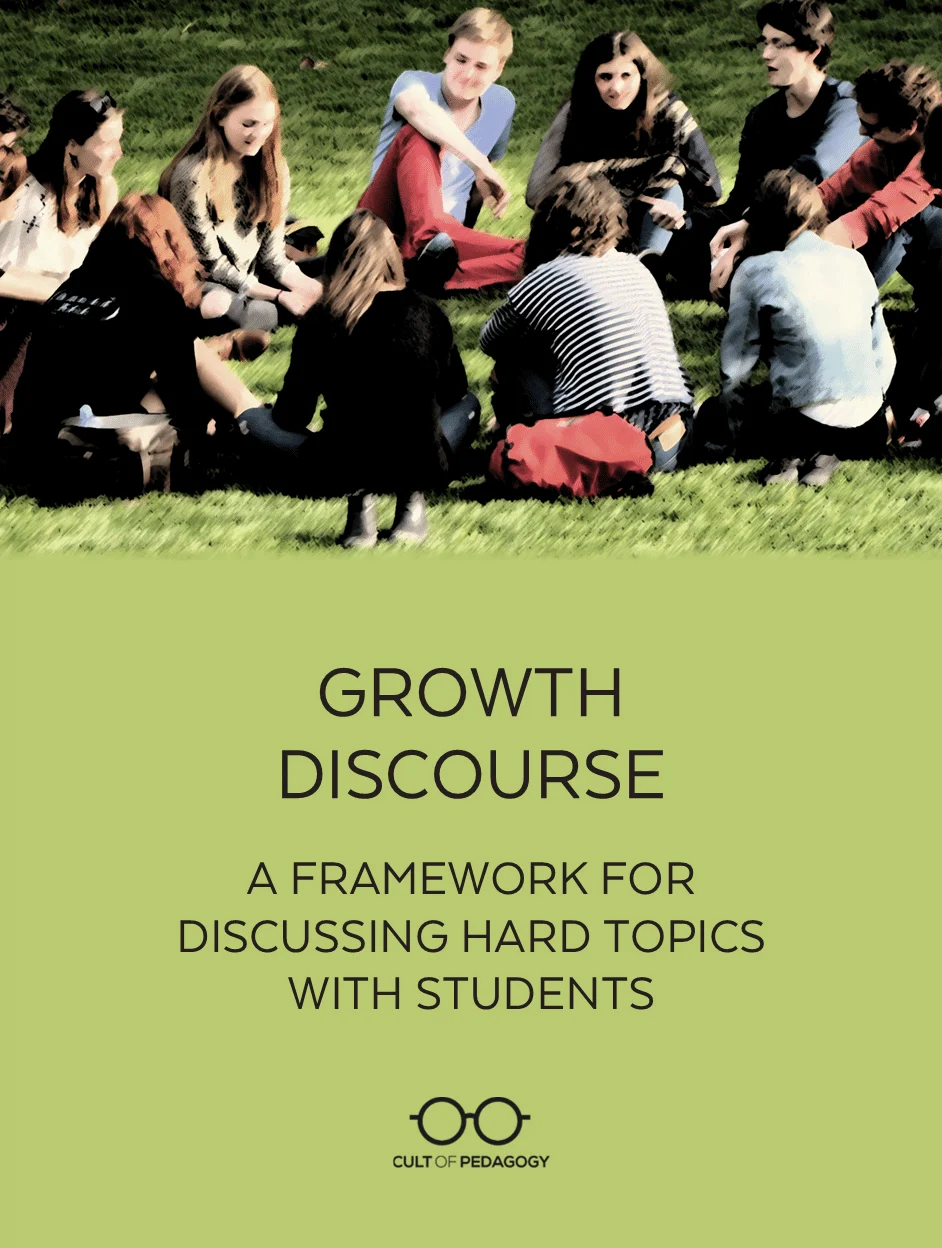
In an era increasingly defined by deep societal divisions and a palpable decline in constructive dialogue, the challenge of fostering meaningful conversations across differing viewpoints has become paramount. What was once considered a simple exchange of ideas has, for many, devolved into a "minefield of hurt feelings, emotional outbursts, and severed relationships," as one observer noted. This pervasive issue extends from public forums to private interactions, significantly impacting the ability of communities, and particularly educational institutions, to address complex topics effectively. Against this backdrop, the School for Ethics and Global Leadership (SEGL) has pioneered an innovative pedagogical approach known as "growth discourse," a framework designed not merely for civility, but for profound intellectual and personal development through challenging conversations.
The Genesis of Growth Discourse at SEGL
Founded in 2009 by Noah Bopp, SEGL is a unique semester-long residential program tailored for high school juniors from across the United States. Its curriculum is meticulously crafted to emphasize ethical thinking skills, leadership development, and a comprehensive understanding of international affairs. The school’s ambitious mission is to equip its students with the tools and mindset necessary to become agents of positive change in the world. From its inception, a foundational element of SEGL’s programming has been its distinctive approach to discussion, known as growth discourse. This model provides students with a robust methodology for engaging in productive conversations on subjects that many adults, let alone teenagers, would typically shy away from in a group setting. The program has garnered support from organizations like foundry10 and SchoolAI, which recognize the critical importance of cultivating such skills in the next generation.
Bopp’s initial vision for SEGL stemmed from a recognition that traditional educational models often fell short in preparing students for the ethical complexities and leadership demands of a globalized world. He observed that while many institutions aimed to teach critical thinking, few provided a structured environment for students to apply these skills to deeply personal and often emotionally charged issues. The evolution of "growth discourse" from general principles to a codified framework reflects a deliberate effort to move beyond superficial politeness, aiming instead for genuine intellectual and emotional engagement that facilitates learning and understanding.
Addressing a Societal Challenge: The Erosion of Constructive Dialogue
The urgency for a framework like growth discourse is underscored by contemporary trends in public discourse. Recent studies by organizations such as the Pew Research Center consistently highlight rising levels of political polarization, with significant ideological divides intensifying over the past two decades. For instance, data from 2022 indicated that the partisan gap in views on fundamental issues has reached historic highs, with fewer common ground areas than ever before. Social media platforms, while offering connectivity, have simultaneously contributed to the proliferation of "echo chambers" and "filter bubbles," where individuals are primarily exposed to information and opinions that reinforce their existing beliefs. This environment makes encounters with dissenting views feel more jarring and personal, often leading to immediate defensiveness rather than thoughtful consideration.

The impact on youth is particularly concerning. A 2023 survey found that a majority of high school students report feeling hesitant to discuss controversial topics in class, fearing judgment from peers or teachers. This reluctance stifles critical inquiry and prevents students from developing the vital skills needed to navigate a diverse and often discordant world. Educators, too, frequently express difficulty in managing classroom discussions on sensitive subjects, often lacking the specific tools to guide students toward constructive outcomes without inadvertently exacerbating tensions. Growth discourse directly confronts this challenge by acknowledging the heavy role emotions and vulnerability play in these conversations, while simultaneously prioritizing the courage and honesty required to move them forward. Its straightforward nature suggests a replicability that could benefit countless classrooms beyond SEGL.
Deconstructing Growth Discourse: Beyond Mere Civility
At its core, SEGL’s growth discourse model is intentionally designed to challenge students, not to make discussions facile or comfortable. Noah Bopp articulates the philosophy clearly: "The motivation for doing it is in the title. A lot of people are talking about civil discourse these days. But some people are asking, Why do I need to be civil in a time like this? We believe discourse that helps you grow is essential to our meaningful lives and is also central to a functioning civic ensemble."
This distinction is crucial. While "civil discourse" often emphasizes politeness and avoidance of offense, "growth discourse" reorients the objective. For students, the mindset shifts from merely "being nice" to actively seeking opportunities for personal and intellectual expansion, even if that involves navigating discomfort. For teachers, the goal transcends simple classroom management; it becomes a deliberate effort to curate conversations that genuinely foster student growth. This reframing acknowledges that true learning often occurs at the edges of one’s comfort zone, where perspectives are challenged, and assumptions are interrogated.
Navigating Nuance: Growth Discourse and the "Bothsidesism" Dilemma
One of the critical challenges in fostering open dialogue is avoiding the pitfall of "bothsidesism"—the erroneous practice of presenting opposing viewpoints as equally valid, even when one side lacks credible evidence or moral grounding. SEGL addresses this head-on with a clear declaration: "SEGL is nonpartisan. SEGL is not neutral," Bopp explains. "We don’t say, ‘The Holocaust, good or bad, you decide,’ right? We don’t say in our science classrooms, ‘Climate change, is that real or not real?’"
Instead, when a topic presents legitimate disagreement among "reasonable, educated people," SEGL equips students with robust critical thinking skills. This enables them to evaluate arguments rigorously before forming their own positions. The emphasis is on how to think, rather than what to think. Bopp argues that to dictate what students should believe "shortcuts the critical thinking process and makes that kid susceptible to the next demagogue who comes along. And there are a lot of demagogues in this world right now." This approach is vital for developing independent thinkers capable of discerning truth and resisting manipulation in an increasingly complex information landscape. SEGL’s mission explicitly states its aim "to convene and mentor students who have different values, viewpoints, experiences, and identities," underscoring the belief that a diversity of perspectives is essential for genuine growth and robust ethical inquiry.

The Foundational Pillars: SEGL’s Growth Discourse Principles
The growth discourse framework is built upon several interconnected principles, each designed to create an environment where challenging conversations can thrive:
1. Begin with Belonging
Before any student can engage authentically in a difficult conversation, they must feel a fundamental sense of belonging within the group. SEGL cultivates this by:
- Directly Stating It: The importance of belonging is explicitly communicated and embedded in their discourse guidelines.
- Identity-Sharing Activities: Early program activities encourage students to share their personal histories and identities, building empathy and understanding among peers.
- Diverse Representation: SEGL intentionally seeks to enroll a diverse student body and faculty, ensuring a wide range of backgrounds and viewpoints are present. Bopp highlights, "If we have a really homogenous group of students, it’s very hard for us to address a difficult topic like Trump’s immigration policy… But if I can set up an environment where I have students who represent many different backgrounds and many different points of view, and I show those students that they all belong here, then I can create an environment where those students are not on edge when we’re having these conversations." This psychological safety net allows students to voice potentially unpopular opinions without fear of ostracization.
2. Value Intent and Impact
Discussions on sensitive topics often raise the contentious question of whether the speaker’s intent or the listener’s experienced impact holds more weight. Growth discourse posits that both are critically important. Bopp explains, "If I use, Oh, I’m so sorry, that wasn’t my intent, as if it’s a get out of jail free card, I probably need to do some reflection on the impact I’m having on others. On the other end of the scale, for me to assign a motive to another human being solely based on what that person made me feel, I am at least being unreflective and incurious." This balanced perspective encourages self-awareness for speakers and empathetic curiosity for listeners. It prompts individuals to reflect on how their words land, while also encouraging them to seek clarification rather than immediately assuming ill intent.
3. Avoid Echo Chambers
The natural human inclination to gravitate towards like-minded individuals can, if unchecked, lead to intellectual stagnation. Growth discourse actively challenges this tendency. Bopp acknowledges, "It makes sense that sometimes you need to go to people with whom you share some things, some ideas, some identity, but at SEGL, we go to those conversations not to disengage, but to figure out how do we re-engage." This principle encourages students to leverage their comfort zones as a base from which to strategize re-entry into broader, more diverse dialogues. It frames the discomfort of encountering differing views not as a barrier, but as a catalyst for deeper understanding and growth.
4. Follow the STAR Model
Inspired by Harvard’s Project Zero Thinking Routines, the STAR model is a critical thinking framework that guides students through a structured process of understanding before judgment. SEGL’s adaptation emphasizes action and reflection, making it particularly relevant for leadership development. The model comprises four sequential parts:
- SEE: This initial phase prioritizes comprehensive understanding. Students are encouraged to explore a topic as fully as possible before forming an opinion. Key questions include: "What can I see? What can I understand before I judge? What do the experts say? What voices are missing from this conversation? How can we find those voices before we decide what we think?" This meticulous information gathering ensures that subsequent judgments are well-informed.
- THINK: After thoroughly seeing and understanding the situation, students are prompted to form their own reasoned judgment. This is the stage for critical evaluation: "Ultimately, and particularly as a leader, you do have to decide, what do I think about this situation? Is it good? Is it bad? Is it right? Is it wrong?"
- ACT: This is a significant addition by SEGL to the original Project Zero framework, emphasizing the leadership imperative. Once a judgment is formed, students must consider the implications for action: "As leaders, we have to decide what to do, how to act. We have to decide, do we vote for or do we vote against? Do we cheat on the test? Do we not cheat on the test? Do we lie to protect our friend or do we tell the truth? We have to act in the world." This component grounds ethical thinking in real-world decision-making.
- REFLECT: The final stage involves evaluating the outcomes of one’s actions and the overall process. "We want to reflect on what we just did. Did we like it? Did we not like it? What was the response that we got? What might we do next time?" Crucially, the "R" in STAR feeds back into the "S" of the next cycle, transforming reflection into new insights for future "seeing" and decision-making, creating a continuous loop of learning and improvement.
Implementing Growth Discourse: Practical Advice for Educators

For educators eager to adopt the growth discourse model in their own classrooms, Bopp offers practical guidance that emphasizes preparation, empathy, and a commitment to the process:
- Start Small and Build Trust Incrementally: Do not immediately dive into the most contentious issues. Begin with topics that allow students to practice the framework in a lower-stakes environment. Establish clear ground rules for respectful engagement and consistently model the desired behaviors as the instructor. This gradual approach allows students to build confidence and trust in both the process and their peers.
- Prioritize and Explicitly Teach Psychological Safety: Before challenging conversations can be productive, students must feel safe to express their authentic selves and evolving thoughts. This means dedicating time to the "Begin with Belonging" principle through identity-sharing activities and explicit discussions about valuing both intent and impact. Create a classroom culture where vulnerability is seen as a strength, and mistakes are treated as learning opportunities, not reasons for shame or withdrawal.
- Embrace Discomfort as a Catalyst for Growth: Teachers should frame challenging discussions not as potential conflicts to be avoided, but as essential opportunities for intellectual and personal growth. Help students understand that true learning often involves encountering ideas that are uncomfortable or that directly challenge their preconceived notions. By normalizing discomfort and teaching strategies for navigating it productively (such as active listening, asking clarifying questions, and focusing on arguments rather than personal attacks), educators can transform potential friction into profound learning experiences.
Broader Implications and a Vision for the Future
The growth discourse framework holds significant implications beyond the specialized environment of SEGL. In an educational landscape increasingly tasked with preparing students for complex civic engagement, it offers a scalable model for fostering critical thinking, empathy, and ethical leadership. As societies grapple with deepening divisions, the ability to engage in productive dialogue across differences is not merely a desirable skill but a vital one for democratic health and social cohesion.
Noah Bopp remains profoundly optimistic about humanity’s capacity to navigate this challenging chapter of intense division. Drawing inspiration from Plato’s Republic, he asserts, "Education is not about putting sight into blind eyes." He continues, "The effective educator assumes that the power to learn is already present in the soul of the learner. And that means the goal of the educator is to give the learner places to look and questions to ask." This philosophy underpins growth discourse: a belief in the inherent potential for goodness and growth within every individual. By providing students with robust frameworks for inquiry and engagement, Bopp believes that "the goodness that is already present in the learner will be uncovered." This foundational belief, though potentially seen as naive by some, serves as a powerful guiding principle for educators striving to cultivate a generation capable of thoughtful, ethical, and constructive leadership.
In a world clamoring for solutions to its most intractable problems, the growth discourse model offers a beacon of hope, demonstrating that with intentional design and dedicated practice, the art of productive disagreement can be reclaimed and mastered, transforming classrooms into crucibles for positive global change.
Educators and institutions seeking to implement or explore this transformative framework are encouraged to reach out to the SEGL faculty through their website or by contacting Noah Bopp directly at [email protected] for support and guidance.