




A familiar scenario unfolds across university campuses daily: a seasoned faculty member, minutes before a critical hybrid lecture, braces herself not for the academic challenge, but for the potential technological hurdles. Despite years of experience and mastery of her subject, she arrives early, driven by the hard-won habit of anticipating a misaligned camera, a stubbornly uncooperative projection screen, or a display defaulting to an incorrect input. Somewhere, in a campus IT department, a technician is already en route, summoned by a pre-emptive or desperate call. This isn’t an isolated incident; it’s a systemic issue, and one that many higher education institutions have quietly absorbed as an unavoidable cost of modern instructional technology. However, a growing chorus of voices argues this perception is fundamentally flawed. The persistent glitches, the constant troubleshooting, and the general unreliability aren’t inherent flaws of cutting-edge audiovisual (AV) equipment, but rather a direct consequence of building sophisticated technology environments on an unstable, overlooked foundation. The chasm between the sleek promises of a technology demo and the frustrating reality of its daily operation in a classroom is not a technology problem; it is, at its core, an infrastructure problem.
The Persistent Campus Challenge: When Technology Fails the User
The scene described above is a testament to a deeper, more pervasive challenge in higher education. Universities globally are investing hundreds of millions, if not billions, annually in state-of-the-art AV solutions, from interactive whiteboards and high-definition cameras to advanced collaboration platforms and robust learning management systems. Yet, despite these substantial financial commitments, the end-user experience for both faculty and students frequently falls short of expectations. According to a 2023 survey by EDUCAUSE, technology support remains a top-five concern for university IT departments, with AV-related issues consistently accounting for a significant percentage of helpdesk tickets. An informal poll of IT directors at the recent AV/IT Leadership Summit indicated that up to 40% of their daily support requests are directly tied to classroom technology functionality, often stemming from intermittent connectivity, incorrect display settings, or physical equipment malfunctions. This constant firefighting diverts valuable IT resources from strategic initiatives to reactive problem-solving, creating a cycle of frustration and inefficiency. Faculty members, already under immense pressure to deliver engaging content, become reluctant technology adopters, eroding the potential benefits of these powerful tools. Students, accustomed to seamless digital experiences in their personal lives, often express dissatisfaction with clunky, unreliable classroom tech, impacting their learning engagement and perception of institutional modernity.
A Decade of Digital Transformation and Its Unforeseen Strain
To understand the current predicament, it is essential to trace the evolution of classroom technology adoption. For decades, the primary AV tools in a classroom were relatively simple: an overhead projector, a chalkboard, and perhaps a VCR. The turn of the millennium brought the widespread adoption of data projectors and desktop computers, marking the first significant digital shift. By the 2010s, interactive whiteboards, document cameras, and basic video conferencing capabilities became standard in many new builds and renovations. This gradual integration, however, accelerated dramatically with the onset of the COVID-19 pandemic in early 2020. Almost overnight, universities were forced to pivot to remote and then hybrid learning models, transforming every classroom into a potential broadcast studio. This unprecedented demand for robust, reliable, and flexible AV infrastructure exposed critical weaknesses in existing systems. Campuses scrambled to install cameras, microphones, and streaming capabilities, often in an ad-hoc fashion, prioritizing speed over thoughtful, integrated design. While these rapid deployments enabled continuity of education, they often bypassed established planning protocols, exacerbating the foundational issues that now plague many institutions. The pandemic served as a stark, undeniable stress test, revealing that while the "car" (the AV technology) was getting faster and more feature-rich, the "road" (the underlying infrastructure) was crumbling.
The Root of the Problem: Misaligned Procurement Paradigms
The core of the issue lies in a deeply ingrained, yet fundamentally flawed, approach to AV procurement and classroom design. The typical process often unfolds in an inverted order:
- Architectural Design First: A new building or renovation project begins with architects laying out the physical space, often without early or substantive input from the AV or IT teams.
- Budget Allocation: A budget for the entire project, including a fixed allocation for AV, is often determined and locked in before the specific technological needs of the space are fully articulated or understood.
- Delayed AV Input: The AV team is brought in relatively late in the process, tasked with selecting specific brands and platforms, which may go through a committee for approval.
- Retrofitting Challenges: Only then do the AV specialists face the daunting task of figuring out how to physically integrate, mount, rack, cable, and power all the chosen equipment within pre-defined architectural constraints and often inadequate infrastructure provisions.
This sequence treats critical infrastructure components—such as display mounting systems, cabling pathways, rack enclosures, power management solutions, AV signal distribution, and dedicated wireless network infrastructure—as mere afterthoughts or add-ons, rather than fundamental architectural decisions. It’s akin to purchasing a high-performance sports car and only then realizing the road it must navigate is riddled with potholes, lacks proper signage, and has no reliable fueling stations. The problem is not the car’s engineering; it’s the compromised environment it operates within. When these foundational elements are neglected, the predictable outcome is a technology environment that functions intermittently, demands constant supervision from IT staff, and struggles to adapt when pedagogical models inevitably shift—a lesson powerfully reinforced by the rapid changes of the past few years.
Quantifying the Cost of Neglect: Data and Dollars
The financial implications of this misaligned approach are substantial, extending far beyond the initial purchase price of AV equipment. A 2022 report by a leading AV consultancy estimated that up to 25% of the total cost of ownership (TCO) for classroom technology in higher education is attributable to ongoing maintenance, troubleshooting, and unscheduled repairs directly linked to poor infrastructure. This figure doesn’t even account for the opportunity cost of misallocated IT resources. When technicians are constantly responding to "camera isn’t working" or "display won’t connect" calls, they are unable to focus on strategic planning, security enhancements, or the development of innovative educational technologies. Furthermore, the constant need for ad-hoc solutions and rapid fixes leads to a lack of standardization, creating a complex patchwork of unique configurations across campus. Each unique setup requires specialized knowledge, increasing training costs for IT staff and slowing down resolution times.

Beyond the direct financial outlays, there are significant intangible costs. Faculty morale can suffer, leading to resistance to adopting new technologies that could enhance teaching and learning. Student satisfaction, a key metric for institutional reputation and enrollment, is negatively impacted by unreliable technology. The institution’s ability to attract and retain top talent, both academic and technical, can also be hindered by a perception of technological backwardness or inefficiency. Ultimately, the return on investment (ROI) for expensive AV equipment diminishes significantly when its full potential cannot be realized due to a weak foundation.
Expert Voices and Institutional Reactions
The growing recognition of this problem has spurred calls for a fundamental shift in thinking. Dr. Elena Petrova, CIO of a major state university system, recently stated at a technology conference, "For too long, we’ve treated AV as a ‘plug-and-play’ afterthought. The pandemic forced us to confront the reality that robust learning environments demand robust foundations. We’re now advocating for AV infrastructure to be considered alongside structural and electrical planning from day one." Similarly, Professor David Chen, a veteran educator, voiced a common sentiment among faculty: "I don’t need the latest gadget; I just need the basic tools to work every single time. My focus should be on teaching, not on troubleshooting why my microphone isn’t picking up my voice for the remote students."
Industry analysts concur. "The ‘shiny object syndrome’ has plagued AV procurement for years," explains Sarah Thompson, a principal consultant at AV Solutions Group. "Universities are swayed by impressive demos of individual components, but neglect the ecosystem that allows those components to function harmoniously and reliably. We’re seeing a strong trend towards institutions demanding more integrated design processes, where infrastructure specialists are at the table with architects and educators from the very beginning." This sentiment is echoed by campus planning departments, some of whom are beginning to acknowledge the need for earlier collaboration. A spokesperson for a university facilities department, who preferred not to be named, conceded, "Historically, AV was often seen as a fit-out item. We’re learning that a truly smart building needs its technological arteries and veins planned with the same rigor as its plumbing and HVAC."
Shifting Towards an Ecosystem-First Philosophy

The necessary paradigm shift is profound yet entirely logical: instead of selecting technologies and then attempting to build an environment around them, institutions that prioritize reliability and longevity start with the ecosystem first. This approach begins by asking fundamental questions about the room’s purpose and future adaptability:
- What specific teaching and learning formats must this space support (e.g., traditional lecture, active learning, hybrid, fully remote, collaborative)?
- What are the pedagogical goals for this room?
- How will the technology in this room be serviced and maintained efficiently?
- How will the system scale or adapt to future technological advancements and pedagogical shifts?
When these strategic questions drive the procurement process, every layer of the infrastructure is recognized as the critical architectural decision it truly is. This includes, but is not limited to:
- Display and Projector Mounting Systems: Ensuring secure, accessible, and precisely positioned displays that can be easily serviced.
- Projection Screens: Selecting appropriate screen types and sizes for optimal viewing angles and ambient light conditions.
- Rack Systems and Power Distribution: Centralized, organized, and properly cooled equipment racks with resilient power management and uninterruptible power supplies (UPS).
- Structured Cabling and Cable Management: High-quality, future-proof cabling (e.g., Cat6a, fiber optics) run through dedicated, accessible pathways, meticulously labeled and managed to prevent tangles and facilitate troubleshooting.
- PTZ (Pan-Tilt-Zoom) and Fixed Cameras: Strategically placed cameras with appropriate fields of view and network connectivity for clear capture of presenters and participants.
- Wireless Access Points (WAPs): Sufficient density and placement of WAPs to ensure robust, high-bandwidth wireless connectivity for all devices, including personal laptops, tablets, and IoT classroom devices.
- Audio Solutions: Integrated microphones (ceiling, tabletop, wearable) and speaker systems designed for clear audio capture and delivery in all teaching modes.
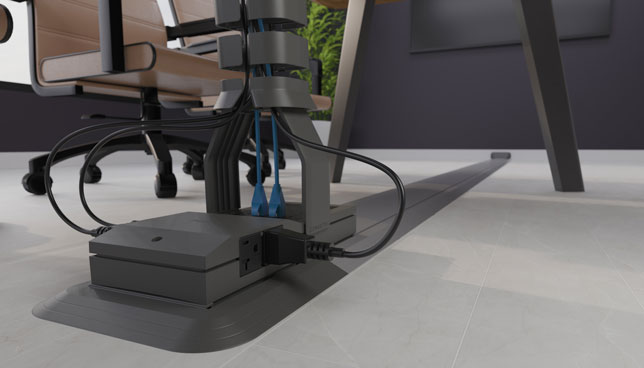
- Floor Connectivity Systems: Recessed floor boxes and flexible conduit systems for power and data, allowing for reconfigurable furniture layouts in active learning spaces.
The Blueprint for Future-Ready Learning Spaces: Practical Implementation
Implementing an ecosystem-first approach does not necessitate a complete overhaul of every campus space overnight. Instead, it involves a strategic shift in the sequence of decisions and a broadened definition of what constitutes an "AV decision."
- Early Collaboration: Integrate AV/IT specialists into the initial stages of architectural planning and design, alongside facilities, instructional design, and academic stakeholders.
- Needs Assessment: Conduct thorough needs assessments for each space, focusing on pedagogical requirements and user experience, rather than just a list of desired equipment.
- Infrastructure as Foundation: Prioritize the design and installation of robust, scalable infrastructure elements—cabling, power, network, physical mounting—before selecting specific endpoints.
- Standardization: Develop campus-wide standards for AV infrastructure components (e.g., rack configurations, cabling types, mounting hardware) to simplify maintenance and reduce complexity.
- Pilot Programs: Implement pilot projects in a few key classrooms or buildings to demonstrate the efficacy and benefits of the new approach, gathering feedback and refining processes.
- Phased Rollout: Plan for a phased rollout, focusing on new construction and major renovations first, then systematically upgrading existing spaces as budgets allow.
- Training and Documentation: Invest in comprehensive training for IT staff on standardized systems and ensure meticulous documentation of all installations.
This proactive strategy has an almost immediate practical payoff: standardization. When infrastructure decisions are made intentionally and consistently across campus, IT teams transition from troubleshooting a myriad of unique, one-off configurations to managing a coherent, predictable system. A technician who understands the rack layout, cable management, and power distribution in Building A can apply that knowledge directly to Building F. This isn’t merely an efficiency gain; it’s a profound improvement in operational sanity, reducing stress and burnout among IT professionals. When infrastructure is treated as the stable, well-engineered constant, the technology deployed within it can then become the adaptable, reliable variable.

Long-Term Implications: Beyond the Classroom
The implications of prioritizing AV infrastructure extend far beyond merely reducing helpdesk tickets. A robust, well-designed technological foundation contributes significantly to an institution’s long-term strategic goals:
- Enhanced Learning Outcomes: Reliable technology directly supports effective pedagogy, enabling faculty to leverage innovative teaching methods without fear of technical failure. This translates to a richer, more engaging learning experience for students.
- Faculty Empowerment and Retention: Empowered by technology that consistently works, faculty can focus on their core mission, reducing frustration and fostering a more positive work environment, which can aid in talent retention.
- Student Satisfaction and Recruitment: A technologically advanced and reliable campus environment enhances the student experience, acting as a powerful draw for prospective students who increasingly expect seamless digital integration in their academic lives.
- Operational Efficiency and Cost Savings: While the initial investment in robust infrastructure might seem higher, the long-term savings from reduced troubleshooting, extended equipment lifespans, and streamlined maintenance processes are substantial. It shifts expenditure from reactive fixes to strategic investments.
- Future-Proofing the Campus: A well-planned infrastructure provides the flexibility and scalability needed to adapt to unforeseen technological advancements and shifts in educational delivery models, ensuring the institution remains agile and relevant.
- Strategic Role of IT: By reducing the burden of constant reactive support, IT departments can elevate their role from mere troubleshooters to strategic partners in advancing the institution’s educational mission.
In conclusion, the journey to truly effective, reliable, and adaptable learning environments in higher education hinges on a fundamental re-evaluation of priorities. It demands a shift from viewing AV as a collection of devices to understanding it as an interconnected ecosystem, where the hidden layers of infrastructure are the most critical investment. By committing to an "infrastructure first" philosophy, universities can move beyond the daily frustrations, unlock the full potential of their technological investments, and build future-ready campuses that truly empower both educators and learners.