


The medical community has long regarded spinal cord injuries (SCI) as some of the most intractable challenges in modern neurology. Unlike peripheral nerves, which possess a limited capacity for self-repair, the central nervous system—comprising the brain and spinal cord—is notoriously resistant to regeneration. When the spinal cord is severed or crushed, the resulting damage is often permanent, leading to varying degrees of paralysis, loss of sensation, and chronic autonomic dysfunction. However, a groundbreaking study published in the journal Nature Materials by a research team at ETH Zurich suggests that the integration of nanotechnology and regenerative medicine may finally offer a viable pathway toward recovery. By utilizing microscopic, stem cell-infused robots, researchers have demonstrated a significant ability to bridge the gap in damaged neural tissue, facilitating regrowth and functional recovery in animal models.
The study, led by roboticists and bioengineers at ETH Zurich’s Multi-Scale Robotics Lab, introduces a novel class of "nanorobots" designed to navigate the complex environment of an injured spinal cord. These devices are not robots in the traditional sense of gears and circuits; rather, they are sophisticated bio-hybrid assemblies. Each unit consists of neural progenitor cells (NPCs) paired with specialized, magnetoelectric nanoparticles. Measuring approximately six micrometers in width—smaller than a human red blood cell—these microrobots are small enough to be injected directly into the site of an injury without causing further trauma to the surrounding delicate tissue.
The Biological and Mechanical Architecture of the Nanorobots
The core innovation of the ETH Zurich team lies in the dual-layered architecture of the nanoparticles. The first layer is engineered to be highly sensitive to external magnetic fields, allowing researchers to control the movement and positioning of the robots using magnetic resonance or specialized electromagnetic coils. The second layer performs a critical "translation" function: it converts the energy from the magnetic field into localized electrical signals.
Electrical stimulation has long been known to encourage neurite outgrowth—the process by which developing neurons produce new projections. However, delivering precise electrical pulses to a specific, internal injury site without invasive wiring has remained a significant hurdle. These nanorobots solve this problem by acting as wireless transducers. When an external magnetic field is applied, the nanoparticles generate a micro-electrical environment that mimics the natural signaling of the nervous system, essentially "tricking" the stem cells and the surrounding damaged nerves into a state of active growth and repair.
Salvador Pané i Vidal, a co-author of the study and a leading roboticist at ETH Zurich, explained that the process begins with a "lab-on-a-chip" system. In this controlled environment, neural progenitor cells—stem cells that have already begun the specialization process toward becoming neurons or glial cells—are placed into a reservoir. The magnetoelectric nanoparticles are then introduced, and the two components are allowed to bind through biochemical affinity. This creates a unified "bot" that carries its own regenerative payload.
Experimental Success in Animal Models
To test the efficacy of this technology, the research team conducted trials on mice with severe spinal cord injuries involving complete or partial transections. In a typical spinal cord injury, the body’s natural response is to form a "glial scar." While this scar tissue helps stabilize the injury site, it also acts as a physical and chemical barrier that prevents nerve fibers (axons) from regrowing across the gap.
The ETH Zurich trial sought to bypass this barrier. Millions of the stem cell-infused nanobots were injected into the lesion site. Once in place, the researchers applied specific magnetic fields to stimulate the magnetoelectric components. The results were observed over a period of 28 days, a standard window for neurological recovery studies in rodents.
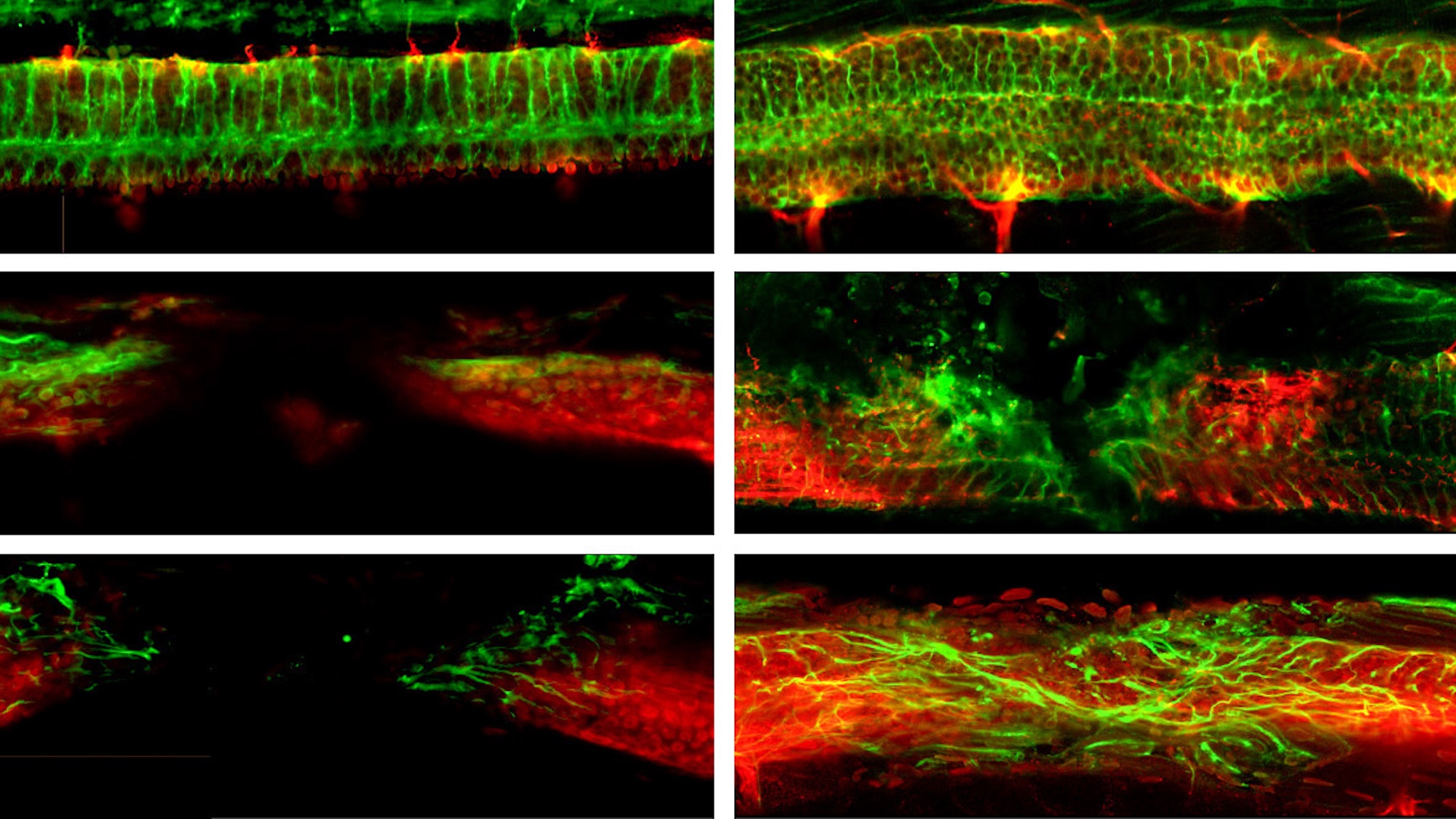
Within the first two weeks, imaging showed that the neural progenitor cells carried by the robots had begun to differentiate and integrate with the host tissue. By the 28th day, the nerve cells had successfully begun to reconnect across the injury site. Most significantly, the mice exhibited tangible functional improvements. Researchers documented a return of coordination and a more natural gait. The subjects also showed a marked increase in exploratory behavior, suggesting a reduction in the pain or physical limitations that usually follow such a traumatic injury. These findings were contrasted against a control group that received standard stem cell injections without the robotic, magnetoelectric stimulation; the control group showed significantly less neural bridge formation and minimal functional recovery.
The Context of Spinal Cord Injury Research
The significance of this breakthrough can only be understood within the broader context of the global burden of spinal cord injuries. According to the World Health Organization (WHO), between 250,000 and 500,000 people suffer a spinal cord injury every year. The majority of these cases result from preventable causes such as road traffic accidents, falls, or violence. The economic impact is staggering, with lifetime costs for a single patient often reaching millions of dollars, encompassing medical care, rehabilitation, and lost productivity.
Historically, treatment has focused on stabilization and physical therapy rather than biological reversal. In the late 20th and early 21st centuries, stem cell therapy emerged as a beacon of hope. The theory was simple: inject healthy cells into the spine to replace those that were lost. However, clinical results were often disappointing. Stem cells frequently failed to "take" at the injury site, or they lacked the necessary cues to grow in the right direction. The ETH Zurich study addresses these failures by providing both a delivery mechanism (the robotic movement) and the necessary growth cues (the electrical stimulation).
Chronology of Development and Future Research
The development of these nanorobots did not happen in isolation. It is the culmination of over a decade of research into microrobotics at ETH Zurich.
- 2015–2018: Initial research focused on using magnetic nanoparticles for targeted drug delivery in the bloodstream, specifically for treating strokes and blood clots.
- 2019–2021: The team began exploring "bio-hybrid" systems, experimenting with ways to attach living cells to synthetic materials without killing the cells.
- 2022–2024: Development of the magnetoelectric nanoparticle, allowing for the wireless conversion of magnetic energy into electrical stimulation.
- 2025–2026: Implementation of the lab-on-a-chip system for scalable production and the successful execution of the mouse trials published in Nature Materials.
Despite the success of the animal trials, the path to human application remains long. The team must now transition into larger animal models, such as non-human primates, whose spinal cord anatomy more closely resembles that of humans. A critical phase of future research will involve optimizing the magnetic field parameters. "We need to determine the most effective magnetic fields and how long to apply them to patients to maximize recovery without causing overstimulation," Pané i Vidal noted in his statement.
Analysis of Implications and Broader Applications
The implications of this technology extend far beyond the spinal cord. The ability to deliver stem cells to a specific internal location and then stimulate them wirelessly could revolutionize regenerative medicine across various fields.
- Cardiology: Nanorobots could potentially be used to repair cardiac tissue following a myocardial infarction (heart attack). By delivering progenitor heart cells to the scarred areas of the heart and stimulating them electrically, doctors might be able to restore lost contractile function.
- Dermatology and Wound Care: For chronic, non-healing wounds—such as those seen in diabetic patients—microrobots could be used to accelerate tissue regeneration and prevent infections.
- Oncology: While the current study focuses on growth, the same magnetic guidance system could be used to deliver highly localized chemotherapy or thermal therapy to tumors, minimizing the systemic side effects of cancer treatment.
Furthermore, the "lab-on-a-chip" production method highlighted by the researchers suggests that this technology could be manufactured at a scale necessary for widespread clinical use. The reproducibility of these microrobots is essential for gaining regulatory approval from bodies such as the European Medicines Agency (EMA) or the U.S. Food and Drug Administration (FDA).
Ethical and Safety Considerations
As with any breakthrough involving nanotechnology and stem cells, safety remains the paramount concern. Researchers must ensure that the nanoparticles are either biodegradable or can be safely sequestered by the body once their mission is complete. There is also the question of "cell wandering"—ensuring that the injected stem cells do not migrate to other parts of the body and form unintended tissues or tumors.
The ETH Zurich team has indicated that the nanoparticles used in the current study are designed to be biocompatible, but long-term toxicity studies are still required. The initial data suggests that the body’s immune system does not immediately reject the robots, likely because the neural progenitor cells provide a biological "cloak" for the synthetic nanoparticles.
Conclusion
The work coming out of ETH Zurich represents a synthesis of biology and engineering that was once the province of science fiction. By treating the problem of spinal cord injury as both a biological failure and a mechanical challenge, the research team has opened a new frontier in neurology. While it may be years before a "fleet of nanobots" is a standard treatment in trauma centers, the 28-day recovery observed in mice provides a powerful proof of concept. For the millions of people worldwide living with paralysis, these microscopic machines represent a significant step toward a future where "permanent" disability may no longer be a certainty.