


The NASA Psyche spacecraft, currently traversing the vast expanse of the inner solar system, has successfully completed a critical Mars gravity assist, utilizing the Red Planet’s orbital energy to catapult itself toward the outer reaches of the main asteroid belt. While the primary objective of the maneuver was to gain the velocity necessary for its 2.2-billion-mile journey, the mission team leveraged the close encounter to conduct a comprehensive "check-out" of the spacecraft’s sophisticated suite of scientific instruments. The result is a treasure trove of new data, including a high-definition time-lapse video and high-resolution imagery that provides a unique perspective of Mars, its moons, and the surrounding magnetic environment.
Launched in October 2023, the Psyche mission is the first of its kind, designed to explore a world that is not made of rock or ice, but largely of metal. The target is the asteroid 16 Psyche, a massive, potato-shaped body that scientists believe may be the exposed nickel-iron core of a planetesimal—an early building block of a planet that lost its outer rocky layers through violent collisions billions of years ago. To reach this distant destination, the spacecraft required a gravitational "kick" from Mars, which occurred in May 2026. As it swept past the planet at an altitude of approximately 2,864 miles (4,600 kilometers), Psyche’s instruments were powered on to capture the Red Planet in unprecedented detail.
A New Perspective on the Red Planet
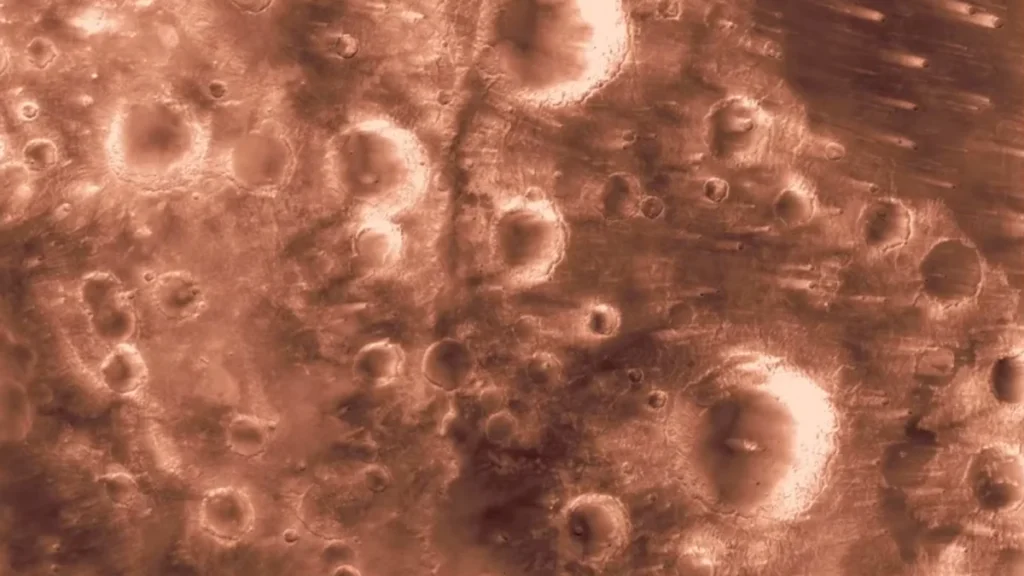
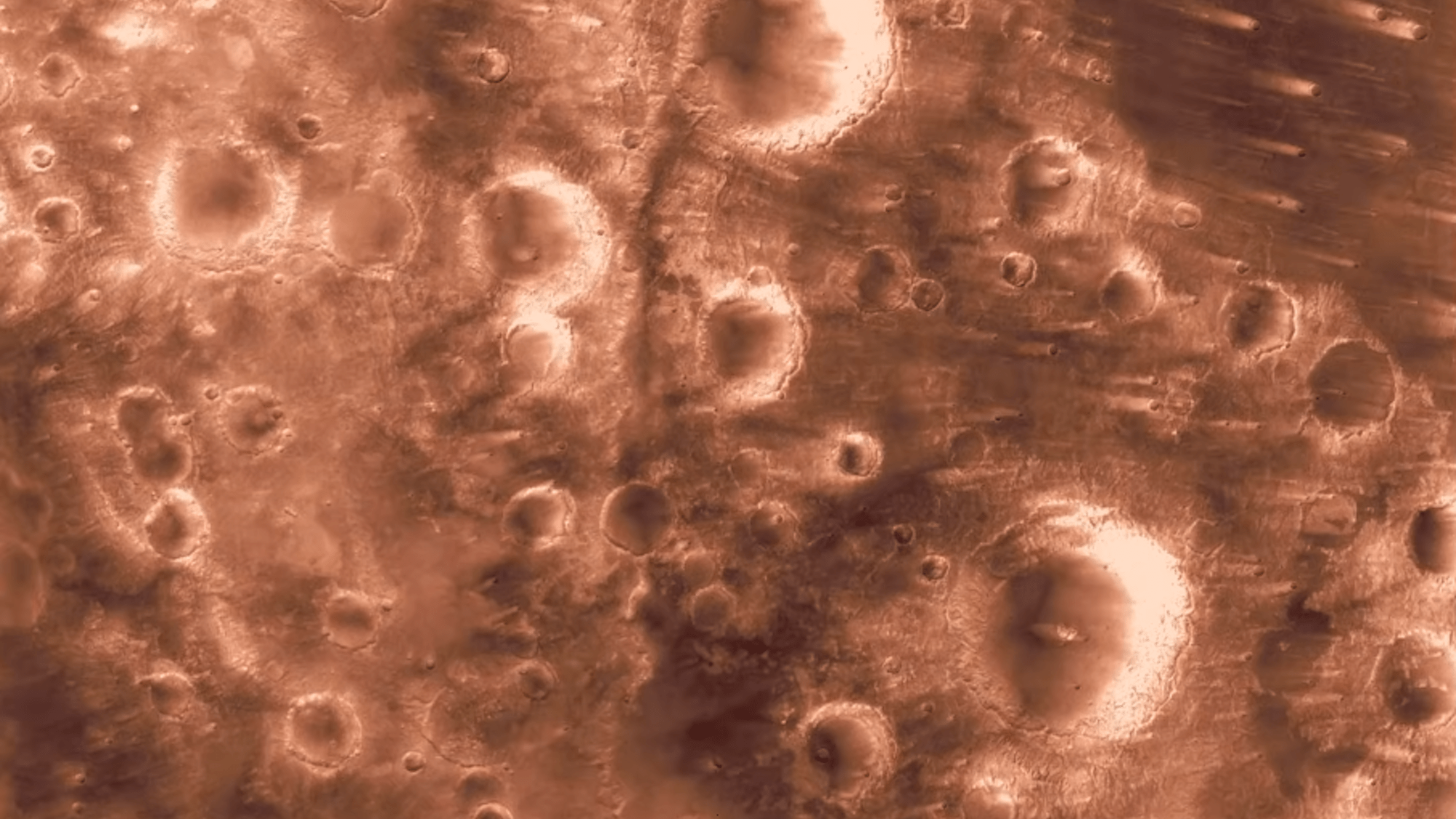
The imagery captured during the month-long approach and departure phase offers a striking look at the Martian landscape. Unlike the static, localized photos provided by rovers on the surface, Psyche’s dual multispectral imagers captured wide-angle views of the planet’s windswept plains, massive impact craters, and the distinct white expanse of the southern polar ice cap. The time-lapse video released by NASA’s Jet Propulsion Laboratory (JPL) chronicles the spacecraft’s approach, showing Mars growing from a distant point of light into a detailed sphere before receding back into the darkness of space.
Jim Bell, the lead for the Psyche imager instrument at Arizona State University, expressed high satisfaction with the hardware’s performance. "The imager performed brilliantly, delivering some rarely seen views of the Red Planet," Bell stated. Beyond the aesthetic value of the photos, the team used the flyby to test camera calibrations and assess the equipment’s sensitivity to scattered light. By photographing the Martian moons, Phobos and Deimos, the team practiced the specific techniques they will use to search for potential "moonlets" orbiting the asteroid 16 Psyche when the spacecraft arrives in 2029.
Testing the Limits of Spectrometry and Magnetometry
While the cameras provided the visual highlights, the mission’s more technical instruments underwent equally rigorous testing. The Gamma-Ray and Neutron Spectrometer (GRNS) was activated to detect the subatomic particles emitted from the Martian surface. Planetary bodies are constantly bombarded by high-energy cosmic rays; when these rays strike the surface, they trigger the emission of neutrons and gamma rays. By analyzing the energy signatures of these emissions, scientists can identify the chemical composition of the target.
Although the spacecraft’s flyby altitude of 2,864 miles was too high to detect a significant volume of gamma rays, the neutron spectrometer successfully recorded a "count-rate enhancement" as it passed the planet. David Lawrence, the spectrometer science lead at the Johns Hopkins Applied Physics Laboratory, noted that the data aligned perfectly with the team’s pre-flyby predictions. This successful detection confirms that the GRNS is fully operational and ready to map the elemental makeup of 16 Psyche, specifically searching for iron, nickel, and other metallic components.
Simultaneously, the spacecraft’s magnetometer was engaged to study the interaction between Mars and the solar wind. Unlike Earth, Mars lacks a global magnetic field generated by an internal dynamo, but it does possess localized magnetic "crustal fields." As Psyche approached the planet, the magnetometer detected a sharp increase in magnetic activity, signaling the spacecraft’s entry into the "bow shock" region—the area where the solar wind is diverted around the planet’s atmosphere.
Lindy Elkins-Tanton, the principal investigator for the Psyche mission at the University of California, Berkeley, emphasized that while Mars has been studied extensively by other missions, Psyche’s data provides a unique data point. "We didn’t anticipate big discoveries, given how extensively the planet has been studied, but we did complement Mars science with the data we collected through Psyche’s unique perspective," she said.
The Physics of the Gravity Assist: A Mission Chronology
The Mars flyby is a pivotal chapter in a mission timeline that began with a successful launch aboard a SpaceX Falcon Heavy rocket from Kennedy Space Center on October 13, 2023. The mission’s trajectory is a masterpiece of orbital mechanics, designed to minimize fuel consumption while maximizing speed.

Following its launch, the spacecraft spent its first year in a "cruise phase," testing its innovative solar-electric propulsion system. This system uses Hall thrusters—an advanced technology that accelerates ions of xenon gas to create thrust. While the thrust is gentle (roughly equivalent to the weight of a coin in one’s hand), it is incredibly efficient and can operate continuously for years, eventually allowing the spacecraft to reach speeds of up to 124,000 miles per hour relative to the sun.
The May 2026 Mars flyby served as a "gravity assist" or "slingshot" maneuver. By entering the planet’s gravitational well and exiting at a specific angle, the spacecraft effectively "stole" a small amount of Mars’ orbital momentum. This maneuver changed the spacecraft’s trajectory and increased its velocity without consuming the limited supply of xenon propellant. Following the flyby, the mission entered its next long-term cruise phase. The spacecraft is now on a three-year journey across the main asteroid belt, with an expected arrival at 16 Psyche in August 2029.
Technical Innovations and Deep Space Communication
Beyond its scientific instruments, the Psyche mission serves as a testbed for future deep-space exploration technologies. One of the most significant experiments onboard is the Deep Space Optical Communications (DSOC) system. This technology utilizes a near-infrared laser to transmit data back to Earth, rather than traditional radio waves.
In late 2023 and throughout 2024, DSOC successfully demonstrated that it could transmit data at rates significantly higher than current radio systems, even from distances exceeding 140 million miles. This capability is essential for future crewed missions to Mars, which will require high-bandwidth communication to transmit high-definition video and complex scientific data. During the Mars flyby period, the Psyche team continued to refine the pointing and tracking systems required to keep a laser beam locked onto a ground station on a rotating Earth while the spacecraft moved at tens of thousands of miles per hour.
The Ultimate Prize: A World of Metal
The successful Mars flyby brings NASA one step closer to solving one of the solar system’s most intriguing mysteries. 16 Psyche is an M-type (metallic) asteroid, measuring roughly 173 miles (280 kilometers) at its widest point. It is so dense and metal-rich that it accounts for about 1% of the total mass of the entire asteroid belt.

Scientific interest in 16 Psyche stems from the "exposed core" hypothesis. If 16 Psyche is indeed the core of a failed planet, it offers a unique opportunity to study the interior of a planetary body. Humans cannot travel to the Earth’s core because the pressure and temperature are far too high; 16 Psyche, however, provides a way to see a planetary core directly. By studying its magnetic field, composition, and topography, scientists hope to gain insights into the chaotic early days of the solar system when protoplanets were colliding and merging to form the worlds we see today.
There are alternative theories as well. Some researchers suggest that 16 Psyche might be a remnant of a different kind of iron-rich material that formed near the sun and was later moved to the asteroid belt. Others believe it could be a "piles of rubble" asteroid with a high metallic content. Regardless of the outcome, the data collected during the 2029-2031 orbital mission will rewrite textbooks on planetary formation.
Future Outlook and Next Steps
With Mars now receding in its rearview mirror, the Psyche spacecraft has transitioned back into its primary thrusting mode. Over the coming months, mission specialists at JPL will focus on restarting the solar-electric propulsion system to provide the sustained thrust needed for the final leg of the journey.
The spacecraft is currently in excellent health, with all primary and redundant systems functioning within expected parameters. The data collected during the Mars flyby has provided the engineering team with the confidence that the multispectral imagers, magnetometers, and spectrometers are ready for the harsh environment of the asteroid belt.
As Psyche continues its 2.2-billion-mile odyssey, it carries with it the hopes of the scientific community to finally glimpse a world of metal. The Mars encounter was more than just a navigational necessity; it was a successful dress rehearsal for the main event—a close-up exploration of a remnant from the very dawn of our solar system. For now, the "travel album" from Mars serves as a reminder of the precision and ingenuity required to navigate the celestial highway.