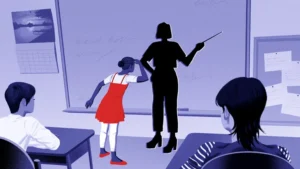



In the modern landscape of American elementary education, the relentless pursuit of standardized benchmarks, district-mandated mandates, and scripted instructional packages has fundamentally transformed the traditional classroom. As education agencies nationwide grapple with post-pandemic learning recovery and intensified pressures to raise reading and mathematics proficiency scores, instructional minutes are increasingly precious commodities. Yet, even as rigid curricular frameworks threaten to homogenize daily instruction, a dedicated contingent of elementary school educators is actively carving out protected space for creative expression, student journaling, and personal storytelling.
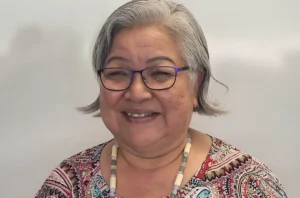
At the heart of this pedagogical tug-of-war is a fundamental question about the purpose of primary education: Is school merely a mechanism for compliance and data generation, or should it serve as a crucible for critical thinking, personal identity formation, and authentic self-expression? For teachers like Victoria Dotson, a fifth-grade educator at John W. Garvy Elementary School in Chicago and a member of the National Council of Teachers of English (NCTE) Elementary Teacher Cohort, the answer is clear. Despite the heavy administrative burdens of box-checked curriculums, Dotson and her peers are spearheading grassroots efforts to ensure that young learners retain the autonomy to explore their own lived experiences through the written word.
The Shift Toward Standardized Instruction and Its Discontents
To understand the urgency driving educators to protect creative writing time, one must examine the broader evolution of American elementary classrooms over the past two decades. The implementation of rigorous federal and state accountability measures historically prioritized narrow literacy metrics, often emphasizing phonics, reading comprehension drills, and algorithmic writing formulas—such as the ubiquitous five-paragraph essay structure. While proponents of these structured approaches argue they provide a necessary baseline for struggling readers, critics contend they have systematically starved the curriculum of open-ended creativity.
Education researchers note that when school districts adopt heavily scripted, commercially produced curriculum packages, the generation of original ideas is frequently sidelined in favor of passive consumption and repetitive skill practice. Teachers are often handed pacing guides that dictate down to the minute what concepts must be taught, leaving little room for spontaneous inquiry, cultural reflection, or emotional processing.
Within this high-stakes environment, creative writing and personal journaling are frequently treated as luxury items rather than foundational literacy tools. However, developmental psychologists and literacy experts argue that restricting children to formulaic writing exercises stunts their linguistic growth. True literacy, scholars suggest, requires students not only to decode and replicate text, but to understand themselves as active producers of culture and narrative.
Strategies for Overcoming the Blank Page
In her Chicago classroom, Dotson combats the stifling effects of rigid pacing guides by employing intentional, scaffolded strategies designed to demystify the writing process. Many elementary students, accustomed to having every step of an assignment prescribed by a worksheet, experience acute anxiety when confronted with a blank page and total creative freedom.
To bridge the gap between compliance and autonomy, Dotson utilizes "mentor texts"—published works by professional authors that serve as structural and thematic blueprints for student projects. By examining how established writers construct sentences, build tension, or develop characters, students learn to borrow techniques and apply them to their own personal narratives. This exposure helps demystify authorship, transforming writing from an intimidating academic test into an attainable craft.
Furthermore, Dotson implements multi-modal pre-writing strategies to help students generate authentic topics. Recognizing that not all children immediately connect with abstract writing prompts, she incorporates oral storytelling, brainstorming lists, and examining family photographs brought from home. By grounding writing prompts in tangible, personal artifacts, students are able to anchor their ideas in familiar territory, significantly reducing the cognitive load associated with writer’s block.
Reading as the Bedrock of Creative Output
A critical component of Dotson’s pedagogical philosophy is the inextricable link between extensive reading and prolific writing. Educational data consistently demonstrates that children who read widely display stronger vocabulary acquisition, advanced syntactic structures, and greater narrative flexibility. Dotson observes this phenomenon regularly in her classroom, noting that students who voraciously consume graphic novels, historical fiction, and chapter books naturally internalize the mechanics of storytelling.
When these young readers sit down to write their own pieces, the influence of their literary diet becomes immediately apparent. They adopt the pacing of adventure novels, the descriptive flair of historical fiction, or the visual framing techniques of comic books. For Dotson, the ultimate instructional objective is to foster a symbiotic relationship between literacy inputs and outputs—ensuring that students actively notice, analyze, and emulate the choices made by authors they admire.
Bridging Family History and the Classroom
For students who continue to struggle with writer’s block, Dotson leverages familial oral traditions as an accessible entry point into narrative construction. By encouraging children to retell stories they have repeatedly heard from parents, grandparents, and caregivers, educators can bypass the anxiety of inventing a plot from scratch. This approach not only provides a reliable scaffolding mechanism for reluctant writers, but it also honors the rich cultural capital that diverse students bring into the classroom.
The profound impact of this strategy is vividly illustrated by the experiences of multilingual learners. Dotson recalls a powerful instance involving a student who composed a multi-part verse poem chronicling her family’s harrowing journey seeking refuge in the United States. The student detailed the arduous trek across diverse landscapes—walking through the jungle, boarding boats, and securing flights—culminating in a bilingual presentation delivered in both Spanish and English.
The classroom reaction was transformative. The student’s peers sat in rapt attention, visibly engaged and collectively proud to bear witness to their classmate’s authentic lived experience. More importantly, this brave act of sharing catalyzed a cultural shift within the classroom ecosystem. Over time, other students began stepping forward to share their own complex stories of migration, geographic relocation, and family transitions.
The Pedagogy of Student-Led Sharing
Beyond the therapeutic and developmental benefits of narrative expression, Dotson emphasizes the structural importance of public sharing within the classroom community. When students are given the psychological safety and physical time to read their original work aloud, the traditional classroom hierarchy undergoes a subtle, powerful inversion.
In this model, the teacher steps back from the role of sole arbiter of knowledge, allowing the student author to assume the mantle of instructor. This dynamic enables educators to practice positive reinforcement by publicly identifying specific literary choices the child executed successfully—such as vivid imagery, emotional resonance, or structural innovation—and giving the student the floor to explain their creative process to their peers.
This practice aligns with broader pedagogical shifts toward student-centered, inquiry-based learning. By validating children’s lived experiences and positioning them as intellectual authorities on their own lives, educators cultivate a deep-seated sense of agency, self-worth, and intrinsic motivation that standardized testing regimes simply cannot replicate.
Broader Implications for Literacy Instruction
As school districts nationwide continue to navigate complex policy mandates and legislative demands regarding reading instruction, the grassroots defense of creative writing offers a crucial blueprint for holistic education. While standardized assessments remain a permanent fixture of the public school system, advocates argue that literacy frameworks must remain flexible enough to accommodate human nuance, cultural diversity, and emotional development.
The efforts of educators like Victoria Dotson underscore a vital truth: rigorous academic standards and creative autonomy are not mutually exclusive. By embedding mentor texts, leveraging family storytelling, and prioritizing student voice, elementary teachers are demonstrating that it is possible to meet rigorous district expectations while still empowering children to write their own stories, define their own identities, and discover the profound joy of authorship.