
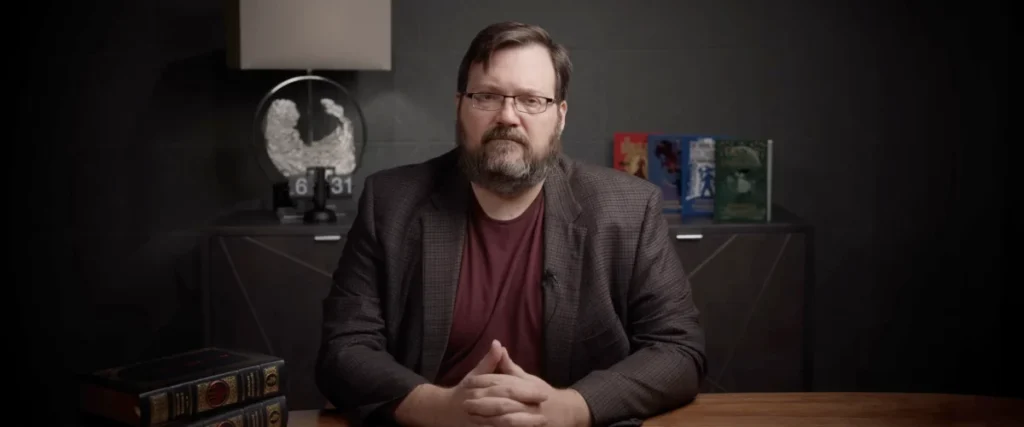

The traditional architecture of American education has long relied on the "test-prep" model, a system where the accumulation of facts often precedes the demonstration of understanding. However, a growing movement among curriculum experts is challenging this paradigm, advocating for a shift toward performance-based assessments that mirror professional environments. Jay McTighe, a preeminent voice in curriculum design and co-author of the seminal work Understanding by Design, has emerged as a central figure in this pedagogical evolution. His latest research, articulated in the book Designing Authentic Performance Tasks and Projects, suggests that the current reliance on standardized, written assessments is fundamentally disconnected from the cognitive requirements of the modern workforce.
The core of the issue lies in a misalignment of objectives. In professional sports or the performing arts, proficiency is measured by the quality of the performance—the game or the stage play. In contrast, many K-12 classrooms focus heavily on the "playbook"—the individual skills and discrete facts—without providing students the opportunity to synthesize these components in a simulated, authentic context. This disconnect often leaves students unable to transfer theoretical knowledge to practical scenarios, a limitation that has become increasingly apparent as global economies prioritize critical thinking and complex problem-solving over rote memorization.
The Evolution of Assessment Design
The historical roots of the current assessment crisis can be traced back to the early 20th-century emphasis on industrial-era efficiency. As schools were tasked with sorting large populations of students, standardized testing became the most scalable method of evaluation. By the mid-20th century, Benjamin Bloom’s Taxonomy of Educational Objectives provided a hierarchical structure for cognitive skills, yet the application of this framework often stalled at the lower levels of recall and comprehension.
In the 1990s, the "backward design" movement, spearheaded by McTighe and the late Grant Wiggins, began to shift the focus. Instead of starting with content coverage—the "what are we going to teach?" approach—they proposed that educators should begin with the desired results. This process involves identifying the end goal, determining what evidence constitutes success, and then planning the instructional path. This shift is not merely academic; it is a fundamental restructuring of how we measure human potential. Data from the OECD’s Programme for International Student Assessment (PISA) consistently shows that nations that emphasize the application of knowledge—rather than just the acquisition of facts—tend to produce students who are better equipped for the demands of 21st-century innovation.
Defining the Performance Task Framework
Central to McTighe’s methodology is the GRASPS framework, an acronym designed to help educators construct tasks that possess inherent validity. The framework requires teachers to define the Goal, Role, Audience, Situation, Product, and Standards for every major project.
For instance, rather than asking students to write an essay on local government—a task that often results in passive information gathering—a teacher utilizing GRASPS might assign the student the role of a policy advisor. The student must identify a specific community issue, craft a proposal for a city council (the Audience), and defend their solution based on data. This transition from "completing an assignment" to "solving a problem" is what McTighe defines as authentic learning.
This approach is supported by the principles of Depth of Knowledge (DOK). While Bloom’s Taxonomy focuses on the cognitive process, Norman Webb’s DOK framework focuses on the complexity of the task. McTighe argues that for students to reach DOK Level 3 or 4, they must move beyond the simple recall of facts and engage in strategic thinking, extended research, and the synthesis of disparate ideas.
Economic and Professional Implications
The implications of this shift extend well beyond the classroom. Industry leaders have noted a widening "skills gap," where graduates possess the theoretical knowledge required for entry-level positions but lack the ability to adapt, communicate, and collaborate effectively. A 2023 report from the World Economic Forum on the Future of Jobs highlights that analytical thinking and creative problem-solving are the top two skills requested by employers globally.
Educational institutions that fail to integrate performance-based assessment risk producing students who are "test-smart" but "work-unprepared." When students engage in performance tasks, they are effectively participating in a cognitive apprenticeship. By analyzing the "Making the Grade" math exercise—where students determine which statistical measure (mean, median, or mode) best represents their academic progress—students are not just learning math; they are learning how to use data to tell a story and advocate for themselves. This is a foundational skill in data science, finance, and marketing.
Addressing the Barriers to Implementation
Despite the clear benefits, the transition to performance-based assessment faces significant structural hurdles. Critics often point to the time-intensive nature of grading such projects, as well as the difficulty in maintaining objective standards compared to multiple-choice exams. McTighe addresses these concerns by emphasizing that performance tasks do not always need to be semester-long, labor-intensive projects.
"Authentic, but short-duration" tasks are the key to scaling these methods. By integrating smaller tasks throughout a unit, teachers can create a "scrimmage" environment. Just as a football coach uses short drills to prepare for a game, teachers can use short, focused performance tasks to provide formative feedback. This allows students to correct their course before the final summative evaluation, effectively blending the learning process with the assessment process.
Furthermore, the issue of subjectivity is mitigated by the development of clear rubrics. The goal is to move away from evaluating the "polish" or "presentation" of a project and toward evaluating the "evidence of understanding." If a student creates a beautiful poster but fails to demonstrate a grasp of the underlying historical principles, the rubric should reflect that discrepancy. By separating "impact criteria" (the quality of the communication) from "content criteria" (the depth of the understanding), educators can maintain rigorous standards.
The Role of the Educator as Coach
The final, and perhaps most important, piece of this paradigm shift is the change in the teacher’s role. In a traditional classroom, the teacher acts as the "sage on the stage," the primary source of information. In a performance-based model, the teacher acts as a coach. The coach’s primary responsibility is to provide the environment where the "game" can occur, observe the performance, and provide constructive, real-time feedback.
This role requires a departure from the "coverage" mindset. Many educators feel pressured by standardized testing mandates and curriculum pacing guides to "cover the playbook" at the expense of student mastery. McTighe’s work suggests that "covering" is not the same as "teaching." If the objective is for students to internalize knowledge, they must be given the autonomy to apply it. The evidence of learning is found in the application, not the recitation.

Looking Toward the Future
The shift toward performance assessment is not a rejection of traditional knowledge, but a necessary evolution in how that knowledge is validated. As artificial intelligence and automation continue to automate the tasks of information retrieval and basic calculation, the human element of synthesis and judgment becomes the primary value proposition of the educated citizen.
Educational systems that adopt these practices are essentially future-proofing their students. By prioritizing the ability to design, analyze, and evaluate, schools are ensuring that their graduates can function in an environment where the "right answer" is rarely given and must be constructed through inquiry and evidence.
As districts and schools continue to grapple with how to modernize their curricula, the consensus among pedagogical experts remains clear: the path forward lies in closing the gap between the classroom and the world beyond it. By framing the curriculum around meaningful performance tasks, educators can ensure that the time students spend in school is not merely a rehearsal for a test, but a genuine preparation for the challenges of their professional and civic lives. The transition will require time, teacher support, and a cultural shift in how we define success, but for the next generation of learners, the stakes of this evolution could not be higher.