


A persistent challenge in contemporary education is the gap between student engagement and genuine ownership of learning. Despite the widespread adoption of innovative pedagogical approaches such as project-based learning, Universal Design for Learning (UDL), and makerspace initiatives, many educators still express frustration that students, while compliant, often fail to internalize and direct their own learning processes. This observation, echoed by a teacher in a recent instructional round who lamented, "They do what I ask, but they just won’t own it," underscores a critical missing piece in modern teaching paradigms. The answer, increasingly supported by cognitive science and championed by educational leaders like Zaretta Hammond, lies in explicitly coaching students in "learn-to-learn" skills, a framework detailed in her forthcoming work, Rebuilding Students’ Learning Power (Corwin, 2025).
The Imperative for Learner Ownership
The fundamental truth of education is that learning is an intrinsically internal process; it cannot be externally imposed. A teacher can meticulously plan lessons, craft engaging activities, and provide extensive scaffolding, yet the ultimate act of information processing and knowledge construction resides solely with the learner. If a student’s intellectual curiosity is not ignited, if the learning environment does not foster intellectual safety, or if the student lacks the requisite skills to navigate the attention, elaboration, and consolidation phases of information processing, then meaningful learning remains elusive. The brain’s capacity to absorb, integrate, and retain new information is a complex, self-directed endeavor. When teaching practices do not equip students with the tools to actively manage this process, even the most well-intentioned instruction may fall short of fostering deep, lasting understanding.
The concept of "learn-to-learn" skills is not a novel invention but rather a formalized approach to what educational theorists have long recognized as metacognition – the awareness and understanding of one’s own thought processes. David Perkins of Harvard’s Project Zero refers to this as the "game of learning," while Ron Berger, founder of EL Education, calls it the "craftsmanship of learning." Hammond frames these as the "trade secrets" of learning, often hidden curriculum elements that, when made explicit, can significantly bridge opportunity gaps and advance equitable academic outcomes. These skills differ fundamentally from executive function skills, which primarily concern organizational and planning aspects of learning, such as managing binders or study schedules. While valuable, executive function skills do not directly enhance a student’s capacity to carry the cognitive load required for deep information processing.
Differentiating Skills and Moves in the Learning Process

To effectively teach these metacognitive strategies, Hammond introduces a precise distinction between a "move" and a "skill." A "move" is defined as a specific, discrete action or technique executed at a particular moment—concrete, with a clear beginning and end. Examples might include a specific note-taking method or a particular questioning strategy. In contrast, a "skill" is a broader, developed ability or competency that encompasses understanding, judgment, and the capacity to effectively execute various moves. Skills involve the knowledge of when, how, and why to employ different moves adaptively. For instance, in basketball, a crossover dribble is a move, but ball-handling is a skill that integrates various dribbling moves with an understanding of court awareness and defensive pressure. Skills are cultivated through the deliberate practice of moves, fostering the judgment and adaptability that transcend any single technique. This hierarchical relationship ensures that students not only learn specific tactics but also develop the overarching competence to deploy them strategically.
The Five Foundational Learn-to-Learn Moves
Hammond’s framework delineates five core learn-to-learn moves, designed to guide students through the critical phases of information processing:
-
Move 1: Size It Up and Break It Down
This initial move centers on task analysis and strategic planning. Students are prompted to engage in a structured cognitive routine to comprehend the demands of a task. This involves asking a series of decision-making questions that help them identify the appropriate emotional stance and formulate a plan of action. For example, a student might ask: "What exactly is this task asking me to do?", "What resources do I have?", "What might be the hardest part?", or "How much time do I have?" The "Break It Down" component focuses on segmenting the task into its constituent cognitive activities and pre-assessing the tools and strategies required for completion. This proactive approach ignites the information processing cycle by establishing clarity and direction. -
Move 2: Scan the Hard Drive
Central to effective learning is the activation of prior knowledge, or "funds of knowledge." The "Scan the Hard Drive" move directs students to fire neural pathways holding their background knowledge in preparation for integrating new content. Cognitive science consistently demonstrates that new learning must be coupled with existing learning for meaning-making to occur. When encountering new information, the brain instinctively searches its schema for related experiences, definitions, or concepts, no matter how tangential. This move can be deployed immediately after task analysis or whenever a learner encounters novel or confusing information, prompting a "scavenger hunt" through their mental archives to establish connections. -
Move 3: Chew and Remix
This move directly addresses the elaboration phase of information processing. Once students have activated their schema, they must actively blend the new content with the identified related knowledge. "Chewing and Remixing" involves integrating newly presented information into existing background knowledge. This active process of meaning-making necessitates productive struggle within the student’s zone of proximal development (ZPD), enabling them to grapple with complex, conflicting, or competing information. This active engagement moves students beyond surface-level understanding to deeper learning, aligning with higher-order thinking skills articulated in Bloom’s Taxonomy or Webb’s Depth of Knowledge.
-
Move 4: Engage in Skillful Practice
While "Chew and Remix" focuses on general meaning-making, "Skillful Practice" is dedicated to deepening understanding of core concepts and building automaticity with specific skills and procedures, particularly in subjects like mathematics and reading. This move emphasizes deliberate practice, a focused and repetitive effort aimed at myelinating new neural pathways to build proficiency and automaticity. Students use this move when they need to refine how they apply a strategy or execute a skill. It involves continuous refinement, where the learner uses metastrategic awareness to identify weak points in their execution and concentrate on improving small, specific moves. This iterative process of repetition with refinement is crucial for mastery. -
Move 5: Make It Sticky
The final move, "Make It Sticky," is critical for strengthening the consolidation phase of information processing and counteracting the brain’s natural pruning mechanism. Neural pathways formed by new learning are fragile and can be pruned if not used within 24 to 48 hours. This move focuses on transforming these fragile dendrites into robust neural pathways through the application of newly acquired content in varied settings. Students are encouraged to use this move at the conclusion of a learning episode and within a short timeframe thereafter, often outside of school hours. Strategies include teaching the concept to someone else, explaining it in their own words, creating a visual representation, or applying it to a real-world scenario. This active application deactivates the brain’s pruning feature, ensuring long-term retention.
Cultivating Cognitive Independence: Implementing the Framework
The true challenge lies not just in introducing these moves but in empowering students to adopt and utilize them consistently without constant teacher prompting—the hallmark of a cognitively independent learner. Simply explaining these moves or using them as whole-class engagement strategies is often insufficient, as students may merely follow directions rather than internalize the strategies for their own benefit. For students to genuinely own their learning, they must understand that they are the primary agents in working these moves, akin to an athlete practicing a technique with self-awareness and corrective action.
Hammond proposes three key strategies to foster this shift towards learner ownership:
-
Initiate a Cognitive Apprenticeship:
Drawing parallels to traditional apprenticeships in crafts like carpentry or culinary arts, educators are encouraged to establish classrooms as cognitive apprenticeships. This involves an explicit onboarding process, followed by phases of skill-building and habit formation, culminating in mastery of learning how to learn. This initiation period, ideally lasting 4-6 weeks, explicitly lays out the path to becoming a proficient learner. The ultimate goal is to develop six key capacities of a good information processor: self-awareness, planning, monitoring, evaluating, adapting, and persisting. These capacities empower students to understand their own learning styles, plan effectively, track their progress, assess their understanding, adjust their strategies, and persevere through challenges.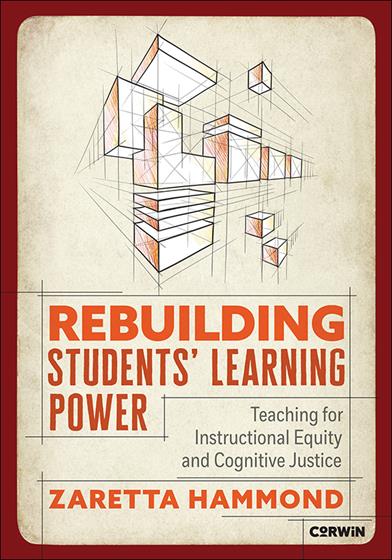
-
Invite Revision of Learner Identity:
Integral to the cognitive apprenticeship is inviting students to reconsider their self-perception as learners. Learner identity encompasses an individual’s beliefs about their abilities, motivations, and their place within the academic landscape. It is a crucial determinant of belonging and engagement in school. Many underperforming students struggle not only with content mastery but also with a diminished sense of themselves as capable learners, often manifesting in statements like, "I’m not a math person." By explicitly addressing these self-limiting beliefs and framing learning as a malleable skill set, educators can foster a growth mindset, enhancing self-efficacy and empowering students to embrace productive struggle. -
Integrate Regular Opportunities for Reflection:
Developing learning power is an iterative process that demands continuous reflection and feedback. Students need structured instructional conversations several times a week to discuss their learning journey. These reflections should delve into how they manage their learning process, navigate mistakes, confront confusions, and strategically deploy the learn-to-learn moves to correct their course. This reflective practice helps students identify "choke points"—natural constraints in the information processing cycle, such as the limited capacity of working memory (typically 3-5 "chunks" of new content) or the brain’s short retention span before forgetting sets in. Students must learn to work within these inherent cognitive limitations. Equally important is identifying "pitfalls"—forms of self-sabotage, such as cramming by re-reading the night before a test instead of utilizing spaced self-quizzing, or multitasking during new content acquisition. Through guided reflection, students can develop metacognitive awareness to navigate both intrinsic cognitive limits and self-imposed barriers.
Broader Implications and the Future of Education
The explicit teaching of learn-to-learn skills represents more than just a set of individual strategies; it constitutes a "hidden equity curriculum" essential for every student to become a truly independent learner. By creating the conditions for students to take up these metacognitive skills, educators are actively teaching for instructional equity, ensuring that all learners, regardless of their background or prior academic experience, have access to the tools needed for academic success. This paradigm shift redefines the teacher’s role from a sole content deliverer to a cognitive coach and facilitator, guiding students in developing their "craftsmanship of learning."
The implications extend to curriculum design, advocating for the integration of metacognitive instruction across all subjects rather than as an isolated unit. Policy makers are increasingly recognizing the long-term benefits of fostering self-regulated learners who are adaptable and resilient in the face of new challenges. In an era characterized by rapid technological advancement and ever-evolving knowledge bases, the ability to continuously learn and adapt is paramount. Equipping students with these foundational learn-to-learn skills prepares them not only for academic achievement but also for lifelong learning and success in an unpredictable future. Every student deserves the opportunity to master the craftsmanship of learning, transforming the educational landscape into one where intellectual independence and equitable outcomes are the norm.