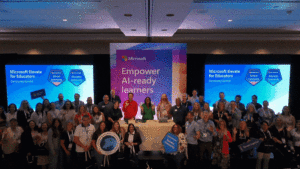



Microsoft has officially launched Microsoft Elevate Washington, a comprehensive statewide initiative designed to provide artificial intelligence (AI) tools, training, and financial support to every high school and community college in the state. This program marks a significant expansion of the company’s philanthropic efforts in its home state, targeting a widening "opportunity gap" between urban tech hubs and rural communities. By offering advanced AI software, including Copilot Studio and Microsoft 365, to over 600,000 students and educators, the initiative aims to ensure that Washington’s workforce remains competitive in an increasingly automated global economy. The launch follows a decade of Microsoft’s involvement in rural broadband expansion and represents the next phase of digital equity: moving from physical connectivity to technological fluency.
The State of AI Diffusion: A Growing Geographic Disparity
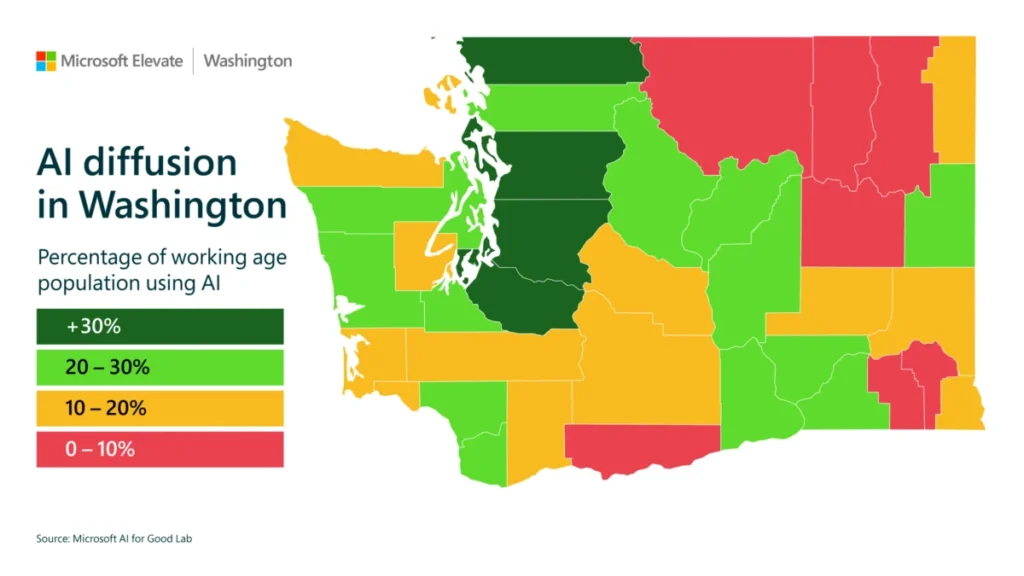
The impetus for Microsoft Elevate Washington stems from new data released by Microsoft’s AI for Good Lab, which reveals a stark divide in how AI technologies are being adopted across the state. While Washington has long been a global epicenter for software development and aerospace engineering, the benefits of the current AI revolution are not being distributed equally.
According to the analysis, AI adoption is heavily concentrated in the Puget Sound region. In Snohomish County, 35 percent of the working-age population is currently utilizing AI tools in their daily lives or professional tasks. King, Pierce, and Whatcom counties follow closely, with adoption rates exceeding 30 percent. These areas benefit from proximity to major tech employers, high-speed infrastructure, and a workforce already integrated into the digital economy.
In contrast, rural eastern Washington is trailing significantly. In seven rural counties, AI usage drops below 10 percent. The most extreme disparity is found in Ferry County, where only 2.5 percent of residents are using AI—a tenfold gap compared to Snohomish County. This "AI divide" mirrors the historical challenges of the broadband era, where rural communities were the last to receive high-speed internet, subsequently lagging in economic growth and educational outcomes. Microsoft leadership characterizes this trend not merely as a technological lag but as a systemic "opportunity gap" that could leave rural students ill-equipped for future labor markets.
Comprehensive Support for Educational Institutions
To address these disparities, Microsoft Elevate Washington introduces a multi-tiered support system for school districts and community colleges, focusing on infrastructure, administrative efficiency, and classroom integration.
Copilot Studio for School Districts and Colleges
Starting in January 2026, Microsoft will provide Copilot Studio free of charge for three years to all 295 public school districts and 34 community and technical colleges in Washington. Copilot Studio is a low-code platform that allows users to create custom AI agents. For educational administrators, this tool is intended to streamline complex logistical tasks.
District officials can deploy AI agents to manage student scheduling, analyze district-wide performance data, and assist in long-term school year planning. By automating these administrative burdens, the initiative seeks to "lighten the load" for staff, allowing more resources to be redirected toward direct student engagement. To ensure successful implementation, Microsoft is also offering $25,000 in dedicated technology consulting to 10 selected school districts and 10 community colleges to help build tailored AI solutions that can later be modeled by other institutions across the state.
High School and Community College Student Access
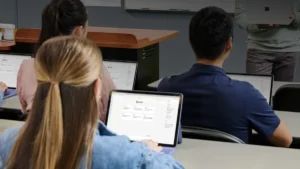
The program places a heavy emphasis on student fluency. Beginning in July 2026, all Washington high school students (grades 9–12) will receive free three-year access to a suite of tools including Copilot Chat, Microsoft 365 desktop applications, and Teams for Education.
A key component of this offering is the "Learning Accelerators." These are AI-powered tools designed to help students improve reading fluency, comprehension, and information literacy. By providing real-time, tailored feedback to students based on their individual learning pace, these tools aim to democratize personalized tutoring, which has traditionally been an expensive resource unavailable to many lower-income families.
For community college students, the support is more immediate. Microsoft is offering 12 months of free Microsoft 365 Personal, which includes Copilot integration in Word, Excel, and PowerPoint, as well as one terabyte of cloud storage. This offer is currently available through November 15, 2025, providing a bridge for adult learners and vocational students to integrate AI into their professional development.
Empowering the Educator Workforce
The success of Microsoft Elevate Washington is predicated on the readiness of the state’s 100,000 educators. Recognizing that many teachers feel overwhelmed by the rapid pace of technological change, Microsoft has partnered with the Washington Office of Superintendent of Public Instruction (OSPI), the Washington Education Association (WEA), and the National Education Association (NEA).

These partnerships will facilitate a statewide AI professional development program. The training focuses on two primary areas:
- Administrative Efficiency: Using generative AI to handle lesson planning, grading assistance, and parent communication to reduce teacher burnout.
- Pedagogical Integration: Teaching educators how to use AI as a classroom tool to foster critical thinking rather than just as a shortcut for assignments.
Microsoft will also support an AI Innovation Summit, an in-person and virtual conference hosted by K–12 agencies. This event is expected to bring together over 1,000 educators and board members to share best practices and develop ethical guidelines for AI use in schools. Furthermore, the company is providing cash grants to help schools integrate these technologies into their specific curricula.
Chronology of the Microsoft Elevate Initiative
The Washington-specific program is part of a broader global strategy. In July 2025, Microsoft announced the formation of "Microsoft Elevate," a new business unit dedicated to supporting the public sector and nonprofits. This global initiative includes a commitment of $4 billion over five years in cash and cloud services to advance the missions of educational and nonprofit institutions worldwide.
The timeline for the Washington rollout is structured to allow for infrastructure preparation:
- July 2025: Global announcement of the Microsoft Elevate business unit.
- November 2025: Deadline for community college students to claim 12 months of free Microsoft 365 Personal.
- January 2026: Rollout of Copilot Studio for all 295 school districts and 34 community colleges.
- July 2026: Comprehensive access to Copilot Chat and Microsoft 365 for all high school students begins.
- 2026–2029: Three-year period of free service and ongoing professional development for educators.
Collaboration and Official Responses
Microsoft’s approach emphasizes that technology alone cannot solve the educational divide; it requires a "statewide movement." The company is collaborating with nonprofits such as Code.org to implement the "Hour of AI" in classrooms across the state. Additionally, Microsoft is mobilizing its 50,000 Washington-based employees to volunteer in workshops and student-led innovation projects.
While official statements from state legislators have been broadly supportive, emphasizing the need for Washington to maintain its status as a "launchpad for innovation," educators have expressed a mix of optimism and caution. Representatives from the Washington Education Association (WEA) have noted that while AI tools can provide significant benefits, the priority must remain on human-centric teaching and ensuring that AI does not replace the critical role of the educator.
State Superintendent Chris Reykdal has previously highlighted the importance of "AI literacy" as a fundamental skill for the 21st-century graduate. By partnering with Microsoft, the state aims to create a standardized framework for AI education that prevents a "patchwork" system where only wealthy districts have access to the latest tools.
Analysis of Broader Impacts and Implications
The Microsoft Elevate Washington initiative represents a strategic shift in corporate social responsibility. By investing heavily in its "backyard," Microsoft is effectively cultivating its future workforce and ensuring the regional economy remains robust enough to support its own operations.
From an economic perspective, the tenfold gap in AI usage between Snohomish and Ferry counties is a warning sign of potential "economic stagnation" in rural zones. If the agricultural and manufacturing sectors in eastern Washington do not adopt AI-driven efficiencies, they risk falling behind global competitors. This initiative attempts to preempt that decline by training the next generation of rural workers to be "AI-native."
However, the initiative also raises questions regarding data privacy and the long-term dependency of public institutions on proprietary corporate software. As school districts integrate Copilot Studio into their administrative cores, they will become deeply embedded in the Microsoft ecosystem. While the first three years are free, the long-term fiscal impact on school budgets after the grant period ends remains an area for future policy discussion.
Ultimately, Microsoft Elevate Washington is a high-stakes experiment in digital equity. If successful, it could serve as a national model for how technology giants can collaborate with state governments to bridge the gap between innovation and education. By focusing on both the "how" (training) and the "what" (tools), the program seeks to ensure that the AI era is defined by expanded opportunity rather than increased isolation for the state’s most vulnerable communities.