


The proliferation of generative artificial intelligence has fundamentally altered the landscape of digital communication, creating a world where the line between human-authored and machine-generated content is increasingly blurred. As Large Language Models (LLMs) like ChatGPT, Claude, and Gemini become more sophisticated, they have moved beyond simple data retrieval to producing polished, nuanced, and stylistically consistent prose. This shift has triggered an urgent demand for "AI detectors"—tools designed to reverse-engineer the writing process and identify the subtle, often invisible, hallmarks of algorithmic composition.
While many users point to supposed "telltale signs" of AI writing, such as an over-reliance on em dashes or a specific cadence of introductory phrases, the reliability of detection software remains a subject of intense debate. To assess the current state of this technology, a rigorous comparative analysis was conducted, pitting five leading AI detection platforms against a controlled set of text samples. The objective was to determine whether these tools could accurately distinguish between the original work of a professional journalist and the output of the world’s most advanced AI models.
The Methodology of the Test
The experiment was designed to reflect real-world scenarios in professional publishing and academia. The control group consisted of several article introductions recently authored by David Nield, a professional technology journalist, whose work is confirmed to be entirely human-generated. These samples represented a baseline for human stylistic variability.
To create the experimental group, three prominent AI models—OpenAI’s ChatGPT, Google’s Gemini, and Anthropic’s Claude—were tasked with writing their own 150-word versions of the same articles, using only the original titles and premises as prompts. This ensured that the AI-generated text would cover the same subject matter as the human samples, forcing the detectors to focus on syntax, structure, and "predictability" rather than topical cues.
The five detectors selected for this evaluation included Pangram, Grammarly, GPTZero, Scribbr, and Copyleaks. Each tool was evaluated on its ability to correctly identify the origin of four distinct samples: two human-authored and two machine-generated.
Performance Analysis: The Top Tier
The results revealed a significant disparity in accuracy among the platforms, with two tools emerging as clear leaders in the field of digital forensics.
Pangram
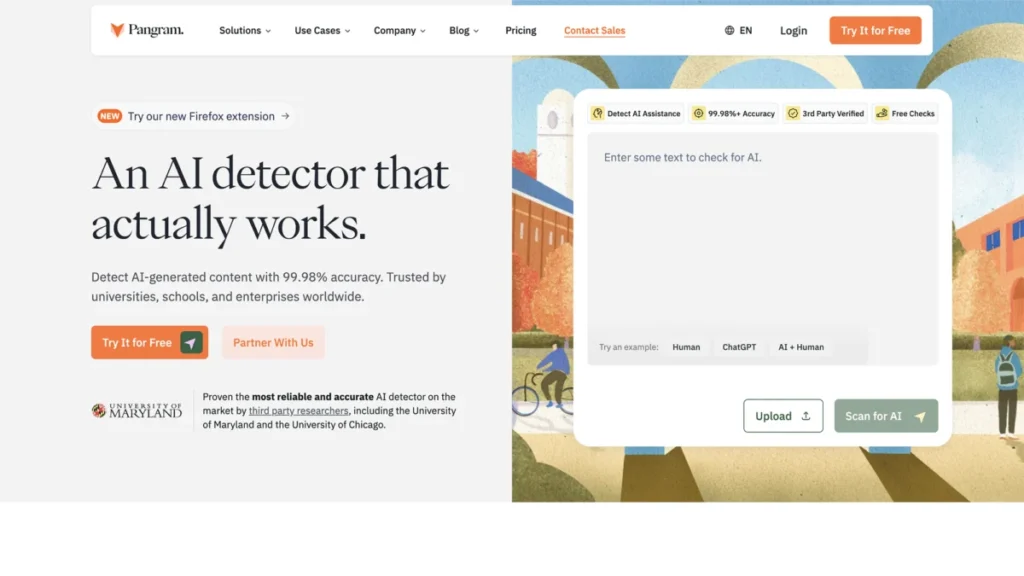
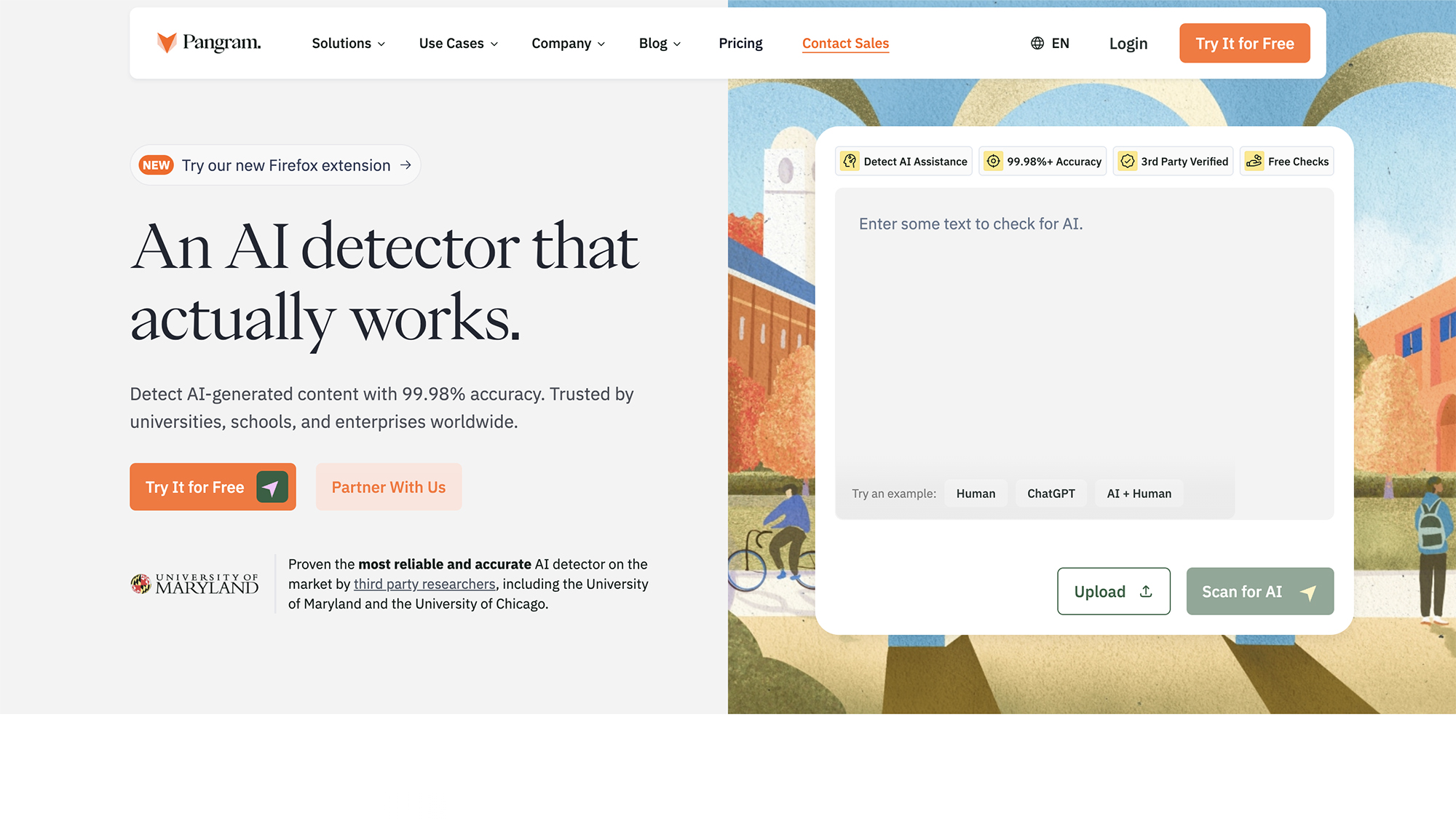
Pangram marketed itself as a solution that "actually works," and the data supported this claim. In the evaluation, Pangram achieved a perfect 4-out-of-4 score. It correctly identified both human samples as 100 percent human-written with a "high" level of confidence. Crucially, it also flagged the ChatGPT and Claude samples as 100 percent AI-generated. Beyond a simple binary score, Pangram provided qualitative feedback, identifying specific phrases—such as "from the moment you…"—that served as algorithmic indicators.
GPTZero
Originally developed by Edward Tian at Princeton University, GPTZero has become a standard in academic circles. In this test, it maintained its reputation, correctly identifying all four samples. The tool expressed "high confidence" in the human-authored text and successfully isolated the AI-generated sentences within the machine-made samples. While it flagged specific phrases as "AI-like," the logic behind these flags remains somewhat opaque to the casual user, relying on complex metrics of perplexity and burstiness.
Performance Analysis: The Mixed Results
While some tools demonstrated high reliability, others struggled with "false negatives"—instances where AI-generated text was incorrectly identified as human-authored.
Grammarly
Long established as a grammar and spell-checking utility, Grammarly has recently integrated AI detection into its suite of services. While it correctly identified the human samples as 0 percent AI, it showed hesitation when analyzing machine-generated text. It marked samples from Claude and Gemini as being 68 percent and 66 percent AI-written, respectively. While these scores are technically correct in their classification, the lack of a 100 percent certainty suggests that Grammarly’s algorithms may be more conservative, potentially to avoid the legal and ethical pitfalls of false accusations.
Copyleaks
Copyleaks, which also offers detection for AI-generated images and video, provided a mixed performance. It successfully identified the human samples and correctly flagged a Gemini-authored piece as 100 percent AI. However, it failed to detect a sample written by Claude, marking it as human-authored. This 3-out-of-4 score highlights a growing trend in the industry: certain AI models, particularly Claude, are increasingly capable of mimicking human "burstiness" to bypass standard detection filters.
Scribbr
The least effective tool in this specific test was Scribbr. Although it correctly verified the human-authored text, it failed to identify samples from both ChatGPT and Claude, labeling them as entirely human-written. Despite a disclaimer on the site acknowledging that AI detectors are not 100 percent reliable, the high level of confidence Scribbr placed in its incorrect conclusions raises concerns for educators and recruiters relying on the platform.
The Chronology of the AI Arms Race
The development of these detection tools is best understood as a reactive measures within a rapidly evolving timeline.
- November 2022: The public release of ChatGPT (GPT-3.5) by OpenAI creates an immediate crisis in academia and publishing, as the model demonstrates the ability to write high-quality essays.
- January 2023: GPTZero is launched by Edward Tian, becoming one of the first widely accessible tools for identifying AI-generated content.
- July 2023: In a surprising move, OpenAI shuts down its own internal AI classifier tool, citing a "low rate of accuracy." This admission underscores the technical difficulty of the task.
- 2024: Companies like Anthropic and Google release Claude 3 and Gemini 1.5, respectively. These models are specifically tuned to produce more "natural" sounding language, making detection significantly more difficult.
- April 2025: The legal landscape shifts as Ziff Davis, the parent company of Popular Science, files a lawsuit against OpenAI. The litigation alleges that OpenAI infringed on copyrights by using Ziff Davis’s vast library of human-authored content to train its AI systems, further complicating the relationship between human creators and AI developers.
Technical Analysis: Perplexity and Burstiness
The reason detection tools often fail lies in the mathematical nature of Large Language Models. Most detectors rely on two primary metrics: Perplexity and Burstiness.
Perplexity measures the randomness of the text. If a detector finds a sentence highly predictable—meaning the AI chose the most statistically likely next word in a sequence—it flags it as AI. Burstiness refers to the variation in sentence length and structure. Human writers tend to vary their sentence structure significantly, alternating between long, complex thoughts and short, punchy statements. AI models, by contrast, often produce a more uniform "cadence" that detectors are trained to spot.
However, as AI models are trained on more diverse datasets, they are learning to artificially inject burstiness into their output. Advanced users can also use "adversarial" prompts, instructing the AI to "write with high perplexity and burstiness," effectively cloaking the machine-generated nature of the text.
Broader Implications for Education and Employment
The inconsistency of AI detectors has profound implications for society. In educational settings, the "false positive"—where a human student is accused of using AI—can have devastating consequences, including expulsion or damaged reputations. Research from Stanford University has indicated that AI detectors often exhibit a bias against non-native English speakers, whose more structured and formal use of the language can be misinterpreted as algorithmic.
In the job market, the use of these tools to screen cover letters and resumes could lead to the unfair rejection of qualified candidates. If a candidate uses an AI tool to brainstorm but writes the final draft themselves, a "partial" AI score from a tool like Grammarly could lead to their disqualification by automated HR systems.
The Future of Authenticity
The results of this test suggest that while AI detection is possible, it is far from a settled science. The most reliable approach currently involves using multiple detectors in tandem and treating their results as "signals" rather than definitive proof.
As the industry moves forward, the focus may shift from post-publication detection to "watermarking"—a process where AI developers embed invisible digital signals into the text at the moment of generation. Until such standards are universally adopted and legally mandated, the battle between those who generate AI text and those who seek to unmask it will remain a high-stakes game of digital cat-and-mouse. The 2025 litigation between major publishers and AI developers suggests that the resolution of this conflict will likely be found in the courtroom as much as in the software lab.