


The economic theory known as the Jevons Paradox, a concept articulated in the 19th century, has seen a sudden and significant resurgence in contemporary discourse, particularly within technology and economics circles. Named after the pioneering neoclassical economist William Stanley Jevons, the paradox posits a counterintuitive observation: increasing the efficiency with which a resource is used often leads not to a reduction in its overall consumption, but rather to an increase. While initially gaining traction in discussions surrounding artificial intelligence’s potential impact on labor markets, a more profound and often overlooked aspect—the "dark side"—warns of unexpected negative side effects arising from this surge in demand, necessitating a vigilant approach to technological progress.
The Genesis of a Paradox: Jevons and "The Coal Question"
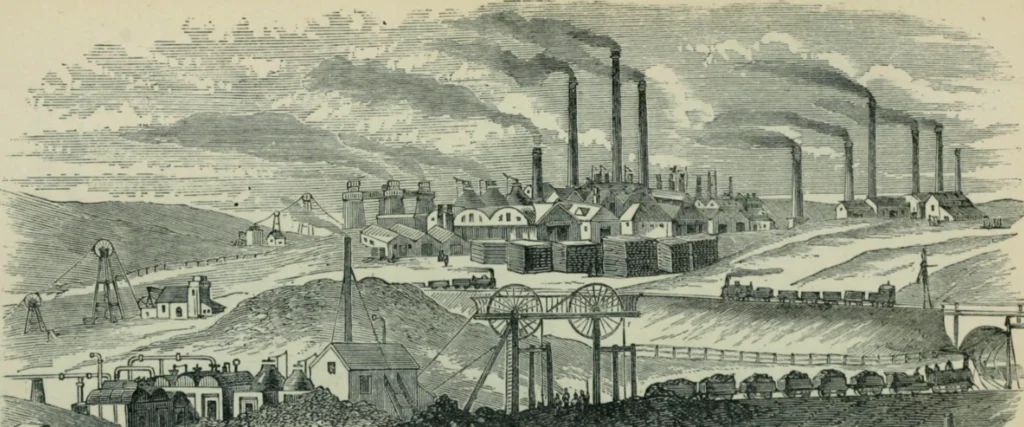
William Stanley Jevons first introduced this concept in his seminal 1865 work, "The Coal Question: An Inquiry Concerning the Progress of the Nation, and the Probable Exhaustion of Our Coal-Mines." At the heart of his argument was the pressing concern of England’s dwindling coal reserves, a critical resource powering the nation’s burgeoning industrial might. Jevons observed that advancements in steam engine technology, which made engines considerably more fuel-efficient, did not alleviate the demand for coal. Instead, by making steam power cheaper and more accessible, these efficiencies stimulated broader applications across industries, from factories and railways to maritime transport. This expanded utility, in turn, led to an overall increase in coal consumption, accelerating the very depletion it was intended to mitigate.
Jevons’s predictions proved remarkably accurate. The late 19th and early 20th centuries witnessed an unprecedented expansion of coal usage, fueling the second Industrial Revolution. While new mining techniques and discoveries of vast coalfields in other parts of the world ultimately averted the immediate exhaustion of England’s domestic supplies, the fundamental principle of the paradox held true: efficiency gains in resource utilization often unlock new avenues for consumption, leading to a net increase rather than a decrease. This historical precedent serves as a foundational warning against simplistic assumptions about the benefits of efficiency.
AI and the Labor Market: A Modern Application of Jevons’s Insight
The contemporary relevance of the Jevons Paradox stems primarily from its application to the rapidly evolving landscape of artificial intelligence. Many initial analyses of AI’s impact on employment have focused on a pessimistic scenario: if AI makes workers, such as software programmers, significantly more efficient—enabling one individual to perform the work previously requiring five—then companies would logically reduce their workforce by a corresponding margin, leading to widespread job displacement. This "labor market contraction" fear has been a dominant narrative in popular media and policy discussions.
However, the Jevons Paradox offers an alternative, more optimistic, but equally complex, prognosis. It suggests that if AI significantly boosts worker efficiency, the effective cost of the output (e.g., software development, content creation, data analysis) will decrease dramatically. This reduction in cost could unlock a vast, previously untapped demand for these services. For instance, if the cost of creating software becomes exceptionally low, numerous individuals and organizations—from small businesses to non-profits and even hobbyists—who previously found bespoke software too expensive, might now invest in developing their own tools and applications. This surge in demand could not only absorb the more efficient workforce but potentially necessitate an even larger one, as new markets and applications emerge.
This perspective aligns with historical patterns where technological advancements, while disrupting existing roles, have also been powerful engines for the creation of entirely new industries and job categories. The advent of personal computers, the internet, and mobile technology, for example, initially sparked fears of widespread unemployment, yet ultimately led to an explosion of new jobs in software development, digital marketing, e-commerce, and various online services.
The Unforeseen "Dark Side": Historical Echoes and Contemporary Warnings
While the potential for AI to stimulate demand and create new jobs is a compelling counter-argument to the automation apocalypse narrative, the Jevons Paradox also carries a crucial "dark side" warning: the sudden increase in demand for a resource, even if beneficial economically, can trigger unanticipated and often negative side effects. History provides potent examples, and the current trajectory of AI offers fresh concerns.
The Industrial Revolution’s Environmental Scars: The most immediate and stark historical illustration comes directly from Jevons’s original subject: coal. The increased efficiency of steam engines, while driving industrial growth, led to an unprecedented surge in coal consumption. This, in turn, unleashed vast quantities of soot and pollutants into the atmosphere, leading to severe urban air quality issues in industrial centers like London and Manchester. The "pea-souper" fogs, a toxic blend of smoke and mist, became a notorious characteristic of the era, causing widespread respiratory illnesses and premature deaths. More profoundly, this period marked the true genesis of human-driven climate change, as the burning of fossil fuels began to significantly alter atmospheric composition, an impact whose full scale would only be understood much later. The pursuit of efficiency, without foresight into the systemic consequences of expanded usage, laid the groundwork for enduring environmental challenges.
Digital Communication and the "Infinite Workday": A more recent and relatable example arises from the proliferation of digital communication tools. The advent of email, followed by instant messaging platforms like Slack, Microsoft Teams, and WhatsApp, dramatically enhanced the efficiency of workplace communication. Information exchange became instantaneous, asynchronous, and geographically unbounded. The initial promise was streamlined collaboration and increased productivity. However, this efficiency paradoxically led to an explosion in the demand for communication itself.
What was once a deliberate, scheduled activity became a constant, pervasive expectation. Studies by institutions like Microsoft’s Work Trend Index have shown that the average knowledge worker is now interrupted, on average, once every two minutes. This incessant stream of notifications, messages, and meeting requests has fractured attention spans, reduced deep work capabilities, and blurred the boundaries between professional and personal life, leading to the phenomenon often termed the "infinite workday." The "always-on" culture, born from hyper-efficient communication, has contributed to widespread burnout, increased stress, and a pervasive sense of being overwhelmed, undermining the very productivity it sought to enhance. Leading thinkers in productivity and digital wellness, such as Cal Newport, have extensively documented this descent into communication madness, arguing for a fundamental reimagining of how organizations communicate.
The Looming Shadows of AI’s Expansion:
As AI technologies mature and their efficiency gains become more pronounced, the "dark side" of the Jevons Paradox presents several critical areas of concern.
1. Environmental Footprint of Computational Power: The training and operation of large AI models are incredibly resource-intensive. They require vast amounts of electricity to power massive data centers filled with specialized hardware like GPUs. If AI makes complex computational tasks significantly cheaper and more accessible, the demand for these services will skyrocket. This could lead to a dramatic increase in energy consumption globally, exacerbating concerns about carbon emissions and climate change. Furthermore, data centers consume enormous quantities of water for cooling, posing additional environmental strains, particularly in drought-prone regions. The lifecycle of AI hardware, from mining rare earth minerals to manufacturing and eventual disposal, also carries significant environmental costs that will amplify with increased demand.
2. Data Proliferation and Privacy Erosion: AI systems thrive on data. As AI tools become more efficient and ubiquitous, the incentive to collect, process, and store ever-increasing volumes of data will grow exponentially. This could lead to a further erosion of privacy as more aspects of human activity are digitized and analyzed. The cheaper it becomes to extract insights from data, the more entities—governments, corporations, and even individuals—will seek to do so, creating a surveillance society by default rather than by design. Ethical considerations around data ownership, consent, and algorithmic bias will become even more complex and urgent.
3. Algorithmic Overload and Societal Impact: The increased efficiency of AI in tasks like content generation, personalization, and decision-making could lead to an "algorithmic overload." If AI-generated content becomes cheaper and more personalized, the sheer volume of information (and misinformation) could overwhelm human cognitive capacity, making it harder to discern truth from falsehood, or authentic human expression from synthetic creation. The societal implications, from the erosion of critical thinking to the amplification of echo chambers and filter bubbles, could be profound. Furthermore, if AI-driven decision-making tools become ubiquitous due to their efficiency, biases embedded within these algorithms could be scaled across society, impacting everything from credit scores and legal judgments to healthcare access and employment opportunities.
4. The Intensification of Work and Digital Addiction: Drawing parallels with digital communication, if AI tools make workers immensely more efficient, the expectation might not be reduced working hours, but rather a greater volume of output in the same timeframe. This could intensify work demands, leading to new forms of stress and burnout. Moreover, the pervasive integration of highly personalized and adaptive AI interfaces could foster new forms of digital dependency, further blurring the lines between work and leisure, and potentially impacting mental well-being.
Navigating the Paradox: A Call for Vigilance and Proactive Governance
The Jevons Paradox compels a nuanced understanding of progress. While the potential for AI to drive unprecedented economic growth, create new industries, and elevate human capabilities is immense and desirable, assuming that increased efficiency automatically translates into unqualified societal benefit is a dangerous oversight. Economic history, from the sooty skies of the Industrial Revolution to the fragmented attention spans of the digital age, tells a more complicated tale.
Policymakers, technologists, ethicists, and the public must engage in a proactive and comprehensive dialogue to anticipate and mitigate the "dark side" effects of AI’s burgeoning efficiency. This requires:
- Robust Environmental Impact Assessments: Mandating thorough environmental reviews for large-scale AI infrastructure and developing sustainable AI practices, including energy-efficient algorithms and hardware.
- Ethical AI Frameworks and Regulation: Implementing strong regulatory frameworks for data privacy, algorithmic transparency, and accountability to prevent the misuse and unintended consequences of widespread AI adoption.
- Promoting Digital Literacy and Well-being: Educating the public on how to navigate an AI-saturated information environment and advocating for workplace policies that protect against algorithmic overload and ensure a healthy work-life balance.
- Investing in Interdisciplinary Research: Fostering collaboration between computer scientists, economists, sociologists, environmental scientists, and ethicists to holistically understand AI’s long-term impacts.
- Fostering a Culture of Responsible Innovation: Encouraging developers and companies to prioritize ethical design and societal well-being alongside efficiency and profit.
As we stand on the precipice of an AI-driven future, the Jevons Paradox serves as a vital reminder that technological progress, while offering immense promise, demands constant vigilance. It is tempting to embrace efficiency as an unalloyed good, but ignoring the potential for unforeseen negative consequences would be to repeat the mistakes of history, trading short-term gains for long-term, systemic challenges. The imperative is clear: to harness AI’s power for progress while meticulously guarding against its inherent shadows.