



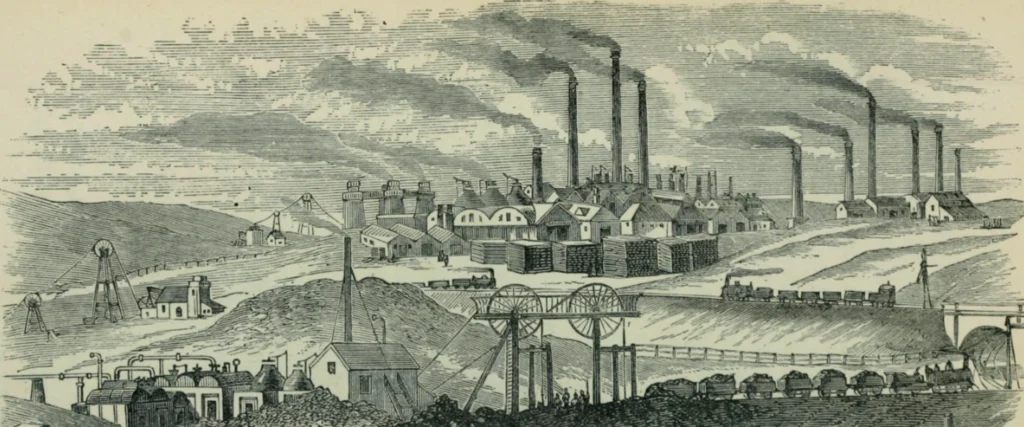
The economic theory known as the Jevons Paradox, a concept articulated in the mid-19th century, is experiencing a remarkable resurgence in contemporary discourse, particularly as the world grapples with the profound implications of artificial intelligence (AI). Named after the neoclassical economist William Stanley Jevons, this paradox fundamentally challenges the intuitive notion that increasing the efficiency of a resource will necessarily lead to a reduction in its overall consumption. Instead, it posits that enhanced efficiency can, counterintuitively, spur greater demand and, consequently, increased consumption of that very resource. While its current relevance is often framed through the lens of AI’s potential impact on labor markets, a deeper historical and analytical dive reveals a "dark side" to the Jevons Paradox: the propensity for increased demand to unleash a cascade of unforeseen and often negative societal and environmental consequences.
Unpacking the Jevons Paradox: A Historical Foundation
William Stanley Jevons, a prominent British economist and logician, first meticulously outlined this observation in his seminal 1865 work, "The Coal Question: An Inquiry Concerning the Progress of the Nation, and the Probable Exhaustion of Our Coal-Mines." The mid-19th century was a period of unprecedented industrial expansion in Britain, largely fueled by coal and the burgeoning power of steam engines. Concerns were mounting regarding the finite nature of Britain’s coal reserves, a vital resource underpinning its global economic dominance.
Jevons’s genius lay in his counterintuitive prediction. Conventional wisdom suggested that improving the efficiency of steam engines – making them consume less coal to generate the same amount of power – would alleviate the pressure on coal supplies. However, Jevons argued precisely the opposite. He posited that as steam engines became more efficient and, by extension, the cost of their power generation effectively decreased, industries and individuals would find an ever-expanding array of applications for steam power. This broader adoption and intensified utilization, he predicted, would lead to an overall increase in coal consumption, not a decrease.
His prediction was largely borne out by history. While new mining techniques and discoveries did avert the immediate fear of exhaustion, coal consumption in Britain soared dramatically in the decades following Jevons’s publication. Between 1865 and the turn of the century, coal output in the United Kingdom more than doubled, driven by the very efficiency gains that were initially hoped to conserve it. This historical episode serves as a powerful testament to the paradox’s validity, demonstrating how technological advancements, while improving individual unit efficiency, can paradoxically exacerbate the aggregate demand for the underlying resource. This phenomenon is often referred to by economists as the "rebound effect," where efficiency gains are partially or entirely offset by increased consumption.
From Coal Mines to Code: The Paradox in Modern Times
The Jevons Paradox has found a renewed and compelling application in the ongoing debate surrounding artificial intelligence and its transformative potential for the global labor market. A common apprehension, widely reported across technology news outlets and economic forums, is that AI will make human workers so efficient that it will lead to widespread job displacement. The fear is often articulated as: "If one programmer, aided by AI, can now accomplish the work of five, then companies will inevitably downsize their programming teams by 80%." This perspective forecasts a significant contraction in the labor market for numerous professions.
However, proponents of the Jevons Paradox offer an alternative, and potentially more optimistic, scenario. They suggest that AI-driven efficiency gains could lead to a different outcome: an expansion of demand for human services, even in AI-augmented roles. If AI makes workers dramatically more efficient, the effective cost of the output they produce decreases significantly. This reduction in cost could, in turn, unlock a vast, previously untapped demand for those services.
Consider the programmer example: if AI empowers one programmer to achieve the output of five, the effective cost of developing software plunges. This cost reduction would make software development accessible and economically viable for a much wider array of individuals, small businesses, and niche organizations that previously couldn’t afford custom applications or specialized tools. The result might not be fewer programmers, but rather a massive expansion in the overall volume of software being created, potentially leading to a sustained or even increased demand for human programmers, albeit in roles that are likely to be fundamentally reshaped by AI collaboration. This shift would redefine the nature of work, moving from rote tasks to more supervisory, creative, and strategic functions in partnership with AI.
The Unseen Costs: Historical Precedents of Unintended Consequences
While the potential for AI to expand labor markets offers a glimmer of hope against mass unemployment, the Jevons Paradox carries a "dark side" that demands careful consideration: the tendency for sudden increases in resource demand to generate unforeseen and often negative side effects. History is replete with examples where efficiency-driven consumption surges have led to profound, detrimental societal and environmental impacts.
Environmental Degradation: The Industrial Revolution’s Legacy
The very context in which Jevons formulated his paradox offers a stark warning. The efficiency gains in steam power that led to increased coal consumption also ushered in an era of unprecedented environmental degradation. The relentless burning of coal choked industrial cities with dense smog, staining buildings black, causing respiratory illnesses, and fundamentally altering urban landscapes. Beyond localized pollution, the vast quantities of carbon released into the atmosphere from coal combustion laid the groundwork for anthropogenic climate change, an existential threat that humanity continues to grapple with today. The Industrial Revolution, while a period of immense progress and wealth creation, simultaneously sowed the seeds of a global environmental crisis, a direct consequence of efficiency driving overwhelming resource demand without adequate foresight regarding waste and emissions. According to historical estimates, global coal consumption rose from approximately 10 million tons annually in 1800 to over 1 billion tons by 1900, a hundredfold increase that dramatically accelerated atmospheric carbon dioxide concentrations.
Digital Overload: The Price of Hyper-Connectivity
More recently, the advent of digital communication tools provides another compelling illustration of the Jevons Paradox’s darker implications, this time in the realm of knowledge work and human well-being. The introduction and widespread adoption of email, followed by instant messaging platforms like Slack and Teams, were heralded as revolutionary advancements designed to make communication dramatically more efficient. They eliminated geographical barriers, reduced delays, and streamlined information exchange.
However, instead of leading to less communication or more focused interactions, these tools triggered an explosion in the demand for fast, constant interaction. The effective "cost" of sending a message became virtually zero, leading to an exponential increase in message volume. Knowledge workers found themselves inundated, caught in a perpetual loop of notifications, replies, and "reply-alls." Studies, including those cited by Microsoft’s Work Trend Index, indicate that the average knowledge worker is now interrupted, on average, once every two minutes. This constant digital barrage fragments attention, diminishes deep work capacity, and contributes significantly to workplace stress, burnout, and a pervasive "always-on" culture that erodes the boundaries between professional and personal life. The very efficiency that promised to liberate workers has, for many, resulted in a state of perpetual cognitive overload, a testament to the Jevons Paradox operating on the resource of human attention and time.
AI’s Double-Edged Sword: Economic Promise and Latent Risks
As AI continues its rapid advancement, presenting both unprecedented economic opportunities and profound societal challenges, understanding the Jevons Paradox becomes critically important.
Economic Optimism and Productivity Gains
On the optimistic front, AI is poised to unlock monumental productivity gains across virtually every sector. From automating routine tasks and optimizing complex logistics to accelerating scientific discovery and personalizing education, the economic potential is staggering. Consultancies like McKinsey & Company estimate that generative AI alone could add trillions of dollars to the global economy annually by boosting labor productivity and creating new products and services. Investments in AI are soaring, with global spending on AI systems projected to reach hundreds of billions of dollars in the coming years, indicating a widespread belief in its transformative power to make processes and human efforts significantly more efficient. This increased efficiency is expected to lower production costs, stimulate demand, and potentially lead to economic expansion and the creation of entirely new industries, much as the internet did.
The Resource Intensity of AI: A New Environmental Frontier
However, the "dark side" looms large, particularly concerning the environmental and resource implications of an AI-driven world. The immense computational power required to train and run sophisticated AI models, particularly large language models (LLMs), translates into substantial energy consumption. Data centers, the physical infrastructure of the digital age, already consume significant amounts of electricity, and the proliferation of AI is set to exacerbate this demand. Estimates suggest that the energy footprint of AI could grow exponentially, potentially rivaling that of entire countries within the next decade. This increased energy demand, if not met by rapidly scalable renewable sources, risks intensifying reliance on fossil fuels, thereby contributing to greenhouse gas emissions and accelerating climate change.
Furthermore, the hardware underpinning AI — microchips, GPUs, and advanced processors — relies on the extraction of rare earth minerals and other finite resources, often sourced under questionable ethical and environmental conditions. An explosion in AI adoption, driven by efficiency, could lead to a corresponding surge in demand for these materials, intensifying mining operations, increasing electronic waste, and putting additional strain on global supply chains and ecological systems. The paradox manifests here as the pursuit of digital efficiency leading to greater physical resource depletion and environmental impact.
Societal and Ethical Implications
Beyond the environmental, AI’s efficiency-driven expansion could also trigger a host of complex societal and ethical challenges. The concentration of AI power and data in the hands of a few dominant corporations raises concerns about market monopolies, data privacy, and surveillance. Algorithmic biases, embedded in training data, could be amplified and propagated at scale, exacerbating existing societal inequalities in areas like employment, credit, and justice. The sheer volume of AI-generated content, if unchecked, could overwhelm information ecosystems, making it harder to discern truth from falsehood, and potentially leading to new forms of digital noise and cognitive overload, mirroring the email phenomenon.
In the labor market, even if the Jevons Paradox helps prevent mass unemployment by expanding demand for services, the nature of work is undeniably shifting. This transformation could lead to increased pressure on workers to constantly adapt, acquire new skills, and potentially work in more intense, AI-supervised environments. While the "effective cost" of output may decrease, the "human cost" in terms of stress, reskilling burden, and job insecurity could rise for many, creating a new class of digital laborers constantly chasing the next wave of technological efficiency.
Expert Perspectives and Policy Considerations
The multifaceted implications of the Jevons Paradox in the age of AI have prompted varied responses from economists, technologists, ethicists, and policymakers.
Economists are divided on the precise net effect of AI on employment. While some, echoing Jevons, foresee expanded demand, others caution that the elasticity of demand for certain human-performed tasks might be too low to fully offset efficiency-induced displacement, particularly for highly specialized or creative roles. There’s a consensus on the need for sophisticated economic modeling to predict these dynamics more accurately.
Technologists and Ethicists are increasingly advocating for a "responsible AI" paradigm. This involves not only focusing on technical advancements but also embedding ethical considerations, environmental sustainability, and social equity into the design and deployment of AI systems. Calls for "green AI" initiatives, aiming to reduce the energy footprint of AI development and operation, are growing louder.
Policymakers face a formidable challenge. They must navigate the dual imperative of fostering innovation to harness AI’s economic benefits while simultaneously mitigating its potential downsides. This includes developing robust regulatory frameworks for AI governance, investing heavily in renewable energy infrastructure to power data centers, promoting circular economy principles for critical mineral extraction and e-waste management, and implementing comprehensive reskilling and education programs to prepare the workforce for evolving job landscapes. Labor organizations, in particular, emphasize the need for strong social safety nets, protections against algorithmic management, and collective bargaining rights to ensure that the benefits of AI-driven efficiency are broadly shared.
Mitigating the "Dark Side": Strategies for a Sustainable Future
Addressing the darker implications of the Jevons Paradox requires a proactive, multi-pronged approach that transcends mere technological optimism.
- Sustainable Innovation: Future technological development, especially in AI, must prioritize energy efficiency and sustainable design from inception. This includes research into less computationally intensive AI architectures, optimizing data center energy use, and developing hardware that utilizes recycled or abundant materials.
- Proactive Policy and Governance: Governments and international bodies must develop foresightful policies that anticipate the environmental, social, and economic consequences of AI’s proliferation. This includes carbon pricing for data centers, regulations on data usage and algorithmic transparency, and investments in public infrastructure that supports a green and inclusive digital economy.
- Education and Adaptability: Continuous learning and reskilling initiatives are crucial to empower the workforce to adapt to AI-driven changes. This requires collaboration between educational institutions, industry, and government to ensure that individuals possess the skills necessary to thrive in an AI-augmented world, focusing on uniquely human capabilities like creativity, critical thinking, emotional intelligence, and complex problem-solving.
- Redefining Progress: Society must critically re-evaluate its definition of "progress" beyond mere efficiency and economic growth. A holistic view that incorporates environmental sustainability, human well-being, social equity, and resilience is essential. This involves fostering a culture that values responsible consumption and thoughtful innovation over unchecked expansion.
Conclusion: A Call for Vigilance and Balanced Perspectives
The resurgence of the Jevons Paradox serves as a potent reminder that technological advancement, while often heralded as unequivocally beneficial, rarely comes without complex trade-offs. As AI reshapes our world, its capacity to enhance efficiency and potentially expand economic opportunities is undeniable. However, we must remain acutely vigilant about its "dark side" – the potential for increased demand to unleash unforeseen environmental degradation, exacerbate societal pressures, and redefine the very fabric of work in challenging ways.
History, from the soot-stained skies of the Industrial Revolution to the constant digital interruptions of the modern knowledge worker, repeatedly tells a complicated tale. Efficiency, without foresight and responsible stewardship, can lead to unintended consequences that outweigh initial benefits. To truly harness the transformative power of AI, humanity must engage in a careful balancing act, actively seeking to mitigate the darker implications of the Jevons Paradox through thoughtful innovation, robust policy, and a commitment to a future where technological progress serves both prosperity and planetary well-being.