

The taste of a madeleine famously sent French writer Marcel Proust spiraling back into the vivid, sensory-rich memories of his childhood. While literature has long romanticized the link between flavor and recollection, modern neuroscience is now revealing that this phenomenon is rooted in a complex biological highway connecting the stomach to the mind. Groundbreaking research recently published in the journal Nature Communications suggests that the digestive system is not merely a fuel processor, but an active participant in determining which food-related experiences are etched into our long-term memory.
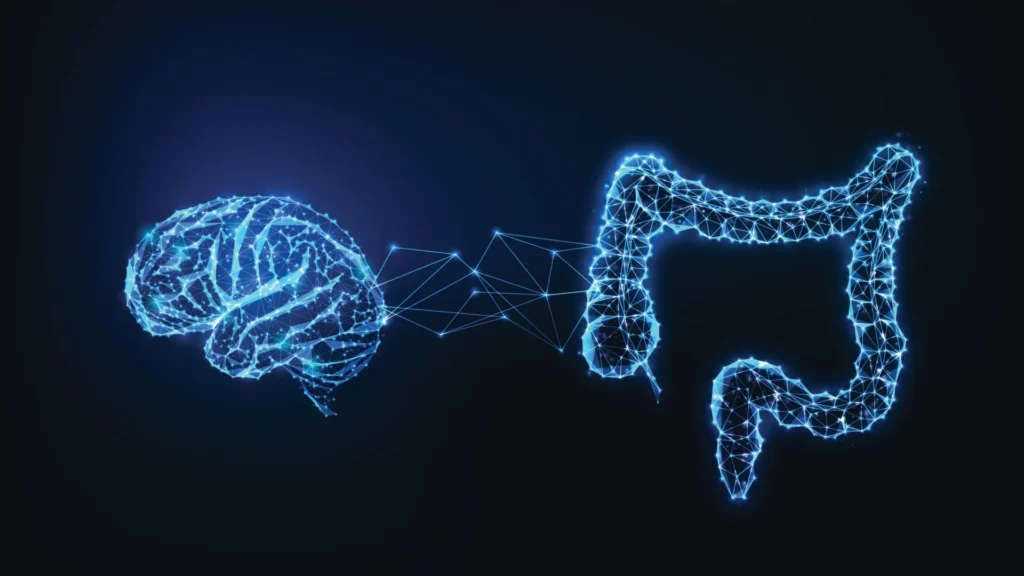
Led by Scott Kanoski, a professor of biological sciences at the USC Dornsife College of Letters, Arts and Sciences, the study illuminates the role of the vagus nerve—the primary conduit between the gut and the brain—in cognitive function. By bridging the gap between nutritional intake and hippocampal activity, this research challenges the traditional view of the brain as the sole architect of memory, suggesting instead that the gut acts as a biological gatekeeper, signaling which experiences are significant enough to be stored for survival.
The Mechanism of Memory Formation
To understand how the gut influences cognition, researchers focused on the vagus nerve, a sprawling network of fibers that regulates internal organ functions, including digestion, heart rate, and respiratory health. The team hypothesized that this nerve does more than signal satiety; it transmits information about the nutrient density of consumed food to the hippocampus, the brain’s center for learning and memory.
In a controlled study involving rat subjects, the research team monitored the release of acetylcholine, a neurotransmitter critical for cognitive focus and the formation of new neural connections. The results were stark: when the animals consumed nutrient-rich food, the vagus nerve signaled the brain, prompting a surge of acetylcholine in the hippocampus. This biochemical spike effectively "flagged" the event as important, ensuring the memory of where the food was found and how it was acquired remained intact.
Conversely, when the researchers surgically or chemically disrupted communication along the vagus nerve, the acetylcholine surge ceased. The animals subsequently struggled to navigate tasks that required remembering the location of food sources. This finding provides empirical evidence that the hippocampus requires a "green light" from the digestive system to allocate the metabolic resources necessary for memory encoding.
Dissecting Nutrient Density Versus Sensory Pleasure
A critical aspect of the study was its investigation into whether the brain reacts to the taste of food or its nutritional utility. By comparing the reactions of subjects given nutrient-dense, calorie-rich solutions against those given non-caloric, artificially sweetened liquids, the researchers identified a distinct biological bias.
The brain’s memory pathways exhibited strong activation only when the subjects consumed foods with genuine nutritional value. Sweet taste alone—devoid of caloric density—failed to trigger the same acetylcholine response. This suggests that the evolutionary architecture of the brain is designed to prioritize survival. As Logan Lauer, the study’s first author and a doctoral candidate in Kanoski’s lab, explains, the mechanism likely evolved to assist animals in identifying and recalling reliable food sources. In the wild, remembering where a nutrient-dense plant sprouts in the spring can be the difference between life and death. The gut effectively tells the brain, "This provided life-sustaining energy; archive this location for future use."
The Long-Term Consequences of Unhealthy Diets
While the gut-brain axis functions as an adaptive tool for survival, the study also highlights its vulnerability to the modern dietary landscape. The researchers examined the effects of high-fat and high-sugar diets on the same hippocampal pathways. While these foods initially produced robust memory responses, their long-term impact was detrimental.
Prolonged consumption of calorie-dense, low-nutrient foods early in the life of the animal subjects led to a measurable decline in the efficacy of the vagus nerve-to-hippocampus pathway. Even after these subjects were transitioned to a healthier diet, the deficit in memory performance persisted. This suggests that a poor diet may "dull" the communication channel between the digestive system and the brain, effectively degrading the biological mechanism responsible for spatial and event-based memory.
Implications for Human Health and Cognitive Decline
The findings carry significant weight for public health, particularly as global rates of obesity and metabolic syndrome continue to climb. There is an established correlation between poor nutrition, diabetes, and an increased risk of cognitive decline in human populations. The USC Dornsife study provides a plausible biological mechanism for this link: chronic, poor-quality dietary intake may be physically damaging or desensitizing the communication lines between the gut and the brain.
Furthermore, the research offers a new lens through which to view neurodegenerative conditions. Professor Kanoski notes that the reduction of acetylcholine signaling in the hippocampus is one of the earliest neurochemical markers of Alzheimer’s disease. By confirming that this specific neurotransmitter system is directly bolstered by gut signaling via the vagus nerve, the study opens the door to potential new therapeutic targets. If the gut-brain highway can be rehabilitated or stimulated, it might provide a novel avenue for mitigating the onset of cognitive impairment.
Future Horizons: Vagus Nerve Stimulation
The medical community has already begun exploring vagus nerve stimulation (VNS) as a treatment for conditions ranging from epilepsy to treatment-resistant depression. With this new evidence, memory preservation may be added to the list of potential applications for VNS.
The prospect of "gut-health-based" cognitive therapy is an emerging field. If scientists can determine how to optimize the signals sent from the digestive tract to the brain, it could lead to dietary interventions or clinical procedures designed to support neurological health. However, researchers urge caution, noting that while the rodent models provide a clear proof-of-concept, human physiology is significantly more complex. Translating these findings into clinical practice will require extensive longitudinal studies to verify that the vagus nerve-hippocampal link functions identically in humans.
Chronology of Discovery and Research Context
The study, which includes a broad coalition of researchers from USC Dornsife, Bucknell University, and the Université de Montréal, represents years of investigation into the intersection of metabolic and neurological health. This work builds upon a decade of research into the gut-brain axis, moving beyond the historical focus on the gut microbiome and toward the structural communication pathways that dictate systemic health.
The project was supported by a robust framework of institutional grants, including funding from the National Institute of Diabetes and Digestive and Kidney Diseases and the Alzheimer’s Association. This backing underscores the urgency of the research, as healthcare systems worldwide struggle with the dual crises of rising obesity and an aging population facing dementia.
Conclusion
The research conducted by Kanoski and his team reinforces the concept of the "second brain," a term often used to describe the enteric nervous system, but now elevated to include its critical role in cognitive architecture. The study suggests that our memories are not formed in isolation within the skull; they are shaped by the fuel we provide our bodies.
As the medical community continues to peel back the layers of this gut-brain connection, the findings serve as a stark reminder of the body’s interconnectedness. If the gut is indeed the gatekeeper of memory, then the future of cognitive health may well depend on the health of our digestive systems. As scientists move toward human trials, the hope is that we might one day leverage this biological communication system to not only protect our memories but to understand the fundamental mechanics of how we experience and record the world around us. For now, the study provides a vital piece of the puzzle, confirming that the path to a sharp mind may, quite literally, pass through the stomach.