




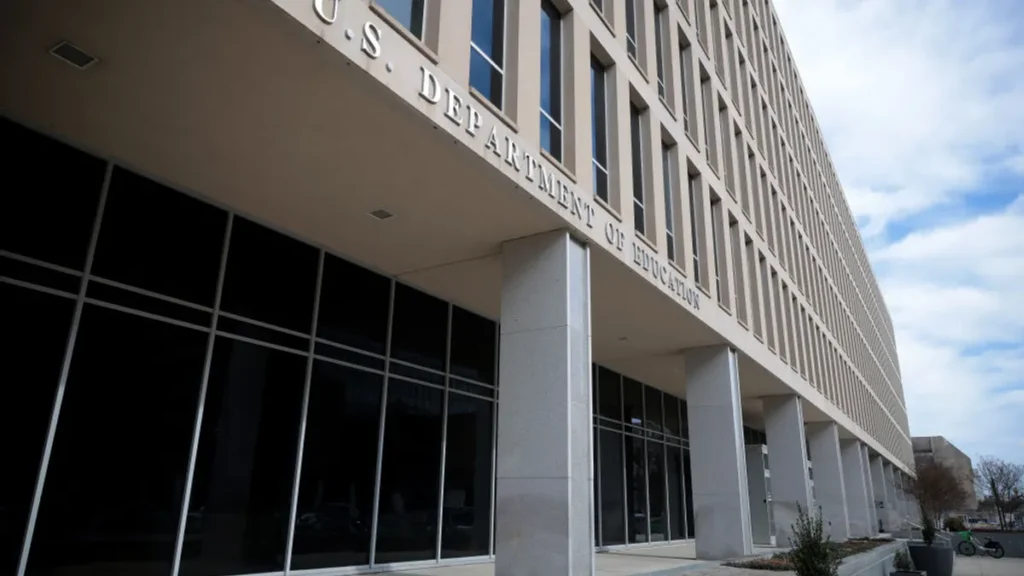
The sudden decision by the Trump administration to cancel more than a hundred federal educator training grants has left a profound and damaging footprint on the American public education system, forcing teacher candidates to abandon their studies and exacerbating chronic staffing shortages across vulnerable school districts. A comprehensive new report released Thursday by the National Center for Teacher Residencies (NCTR), the American Association of Colleges for Teacher Education (AACTE), and Deans for Impact details the severe operational and human toll of the funding revocations.
According to the findings, which draw on survey data collected between late February and early June, the abrupt termination of funding under two flagship federal initiatives—the Teacher Quality Partnership (TQP) and the Supporting Effective Educator Development (SEED) programs—created immediate financial crises for aspiring educators. Without promised scholarships and living stipends, many candidates found themselves unable to shoulder the economic burdens of tuition and unpaid student teaching requirements, ultimately leading to dropouts, enrollment declines, and unfilled vacancies in critical-need classrooms.
The Fallout for Aspiring Educators and Teacher Preparation Programs
The new report underscores that the primary casualties of the federal funding cuts were not abstract ideological battles, but real people striving to enter the teaching profession. Survey respondents revealed that their canceled grants had been actively supporting teacher training initiatives across 210 distinct school districts nationwide. Among the 36 surveyed grantees alone, nearly $263 million had been awarded for these programs, roughly half of which was abruptly clawed back by the administration.
Crucially, the data shows that 74% of the affected grantees were utilizing federal dollars to provide direct financial aid, including scholarships and living stipends, to teacher candidates. At least 1,800 aspiring teachers had been receiving this direct financial support before the rug was pulled out from under them. Because many teacher preparation programs require candidates to complete immersive, full-time student-teaching residencies that preclude outside employment, these stipends often served as the singular financial bridge enabling individuals to complete their education.
During an online presentation detailing the report’s findings, Erica Romero, managing director of policy at the National Center for Teacher Residencies, emphasized the human cost of the administration’s actions. "We know that we had teacher candidates who were very close to finishing their programs who dropped out because many of these cancellations impacted the stipends, and they were unable to continue because it was a financial burden to them," Romero stated.
Furthermore, Romero pointed out that the grant cancellations struck a direct blow at the exact educator shortage areas that the United States most acutely needs to fortify. Programs supporting candidates training to teach multilingual learners, students with disabilities, and children in rural communities bore the brunt of the administrative cuts.
Background and Chronology of the Grant Terminations
The origins of the current crisis trace back to sweeping policy shifts enacted by the Trump administration regarding federal grant distribution and ideological compliance. The controversy came to formal light in a March 12 court filing, in which the U.S. Department of Education confirmed an aggressive administrative action: the cancellation of 104 out of 109 active TQP and SEED grants.
The justification provided by the Education Department for this unprecedented mass cancellation centered on the assertion that federal funds were allegedly being utilized to train teachers using what officials termed "divisive ideologies." This rationale was tied to broader administration directives targeting diversity, equity, and inclusion (DEI) initiatives across federal agencies and educational institutions receiving federal funding. In total, the administration’s actions placed roughly $600 million in awarded TQP, SEED, and related teacher preparation grants in jeopardy, halting projects designed to recruit, train, and retain high-quality educators.
The sudden nature of the cuts caught universities, non-profit educator preparation programs, and local school districts entirely off guard. Programs that had spent months or years building pipelines to recruit diverse candidates from local communities suddenly found themselves facing severe budget deficits, forcing them to either scale back operations, downsize cohorts, or absorb costs they were ill-equipped to handle.

Judicial Intervention and the Legal Battle Over Federal Funding
The administrative maneuvers, however, quickly collided with the judicial system. A coalition of states launched legal challenges against the Education Department, arguing that the cancellation of congressionally appropriated funds exceeded executive authority and violated administrative law.
Those legal challenges bore fruit in September when U.S. District Judge Angel Kelley issued a decisive ruling. Judge Kelley vacated the Education Department’s anti-DEI directive, which had served as the legal and administrative bedrock for the cancellation of the TQP and SEED grants. In her September 17 ruling, Judge Kelley declared that the administration’s anti-DEI directive and the subsequent termination of the teacher training grants were unlawful.
Despite the clear mandate of the federal court, the ongoing administrative turmoil has left educational institutions in a state of limbo. As of publication time on Friday, the Education Department had not filed an appeal against Judge Kelley’s order, leaving stakeholders waiting to see how the federal government intends to comply with the ruling and whether frozen or revoked funds will be restored to impacted programs.
Broader Implications for National Teacher Shortages
Education policy experts warn that the ripple effects of the TQP and SEED cancellations will be felt for years, even if the legal victories ultimately force the restoration of funds. The disruption has shaken institutional confidence in the reliability of federal grant programs, making long-term planning difficult for universities and alternative certification programs striving to combat national teacher shortages.

For decades, the Teacher Quality Partnership program has served as a critical mechanism for strengthening educator preparation by forging partnerships between institutions of higher education and high-need local school districts. Similarly, the SEED program has provided vital grants to national and regional organizations to validate, expand, and evaluate innovative strategies for preparing effective teachers and school leaders. By dismantling these networks overnight, the administration disrupted pipelines that produce thousands of qualified educators annually at a time when school districts across the country are struggling to recruit and retain staff.
Data from the Economic Policy Institute and various educational research bodies consistently demonstrates that teacher shortages are driven by uncompetitive pay, stressful working conditions, and the high out-of-pocket costs associated with entering the profession. Financial assistance programs like those funded through TQP and SEED were specifically designed to lower these barriers to entry, particularly for underrepresented candidates who might otherwise be priced out of the profession. Undermining these programs directly undercuts national efforts to diversify the teaching workforce and ensure every classroom is staffed by a fully certified professional.
Legislative Recommendations and Future Outlook
In response to the crisis documented in their new report, NCTR, AACTE, and Deans for Impact are pivoting toward legislative advocacy to safeguard federal educational funding against future executive overreach. The coalition is actively urging Congress to appropriate robust funding for the upcoming fiscal cycle, specifically calling for the TQP program to be funded at $130 million and the SEED program at $132 million for fiscal year 2027.
Beyond raw funding levels, the higher education and educator preparation groups are demanding systemic structural safeguards. They are advocating for explicit statutory language to be embedded within all future appropriations bills. Specifically, this language would mandate that executive agencies expend appropriated funds strictly as designated by Congress, erecting a legislative firewall designed to prevent arbitrary funding terminations, political interference, or administrative diversions.
As Congress weighs these budgetary requests and the fallout from the judicial rulings continues to unfold, the message from the education community remains clear. Without reliable federal support and protection from shifting political crosswinds, the systems responsible for preparing the nation’s next generation of teachers will remain perpetually vulnerable—with the nation’s students and classrooms bearing the ultimate cost.








