

Microsoft is significantly advancing its enterprise artificial intelligence strategy with the introduction of new capabilities designed to provide measurable return on investment (ROI) for AI agents and to integrate its Copilot AI assistant more deeply into everyday productivity tools like Microsoft Forms. These dual announcements underscore a pivotal shift in the enterprise AI landscape, moving beyond experimental deployments to focus on tangible business value and pervasive user adoption. The company’s latest offerings aim to equip organizations with the tools to not only deploy sophisticated AI agents but also to precisely quantify their impact, while simultaneously empowering a broader base of business users to leverage AI for enhanced productivity.
The introduction of "ROI for agents in Microsoft Foundry," currently in private preview, directly addresses a burgeoning challenge for businesses grappling with the financial justification of their AI investments. This capability is engineered to establish a clear connection between the operational costs of AI agents and the concrete business outcomes they generate. Concurrently, Microsoft has rolled out an "upgraded Copilot experience" in Microsoft Forms, seamlessly embedding the familiar Microsoft 365 Copilot chat interface directly into the application. This integration allows users to harness AI for creating, refining, and analyzing surveys and quizzes with unprecedented ease.
These strategic developments reflect Microsoft’s overarching ambition to mature enterprise AI from isolated, often experimental, prompts into fully integrated, value-driven components of organizational workflows. Microsoft Foundry, a platform primarily catering to developers and IT leaders, now offers the crucial metrics needed to evaluate and optimize agent performance. The enhanced Copilot in Forms, conversely, extends sophisticated AI functionalities to a vast user base, democratizing access to agent-like actions within a widely used business application. This two-pronged approach solidifies Microsoft’s commitment to delivering AI solutions that are both powerful and practical, addressing the needs of both technical implementers and end-users.
Quantifying AI Value: The Imperative of ROI Tracking for Agents
The rapid proliferation of artificial intelligence, particularly generative AI, has spurred immense excitement and investment across industries. However, a persistent challenge for many enterprises has been the difficulty in demonstrating a clear, measurable return on these significant AI investments. While technical metrics such as token usage, latency, and error rates provide insights into an AI agent’s operational performance, they often fail to translate directly into understandable business value – such as time saved, cost reductions, or increased revenue. This gap between technical performance and financial impact has frequently hindered the scaling and broader adoption of AI initiatives.
Recognizing this critical need, Microsoft’s new "ROI for agents in Microsoft Foundry" capability emerges as a timely solution. Designed for private preview, this feature directly links the operating expenditures of an AI agent with the tangible business benefits it delivers. It systematically tracks a comprehensive suite of metrics, including task completion rates, the amount of time saved by employees, and overall cost efficiency. These operational costs and business results are then presented cohesively within the Foundry portal or can be accessed via an API, providing unprecedented transparency into an AI agent’s true economic contribution.

For IT leaders, developers, and financial stakeholders, this capability offers a robust framework for making informed decisions. Organizations can now compare the performance of different agent versions, monitor daily trends to identify anomalies or improvements, and delve into individual traces associated with suboptimal results. This granular level of insight is invaluable for justifying ongoing investments in AI, prioritizing development efforts, and identifying specific areas for refinement and optimization. By providing concrete data on business value, Microsoft aims to de-risk AI deployments, making it easier for enterprises to scale their AI initiatives with confidence.
The Role of Microsoft Foundry in Enterprise AI Governance
Microsoft Foundry serves as a foundational platform within the Azure AI ecosystem, designed to facilitate the end-to-end lifecycle of building, evaluating, and managing AI agents. Introduced at the recent Build 2024 conference, Foundry provides a comprehensive suite of tools for tracing, evaluation, and monitoring, which are now significantly augmented by the ROI tracking feature. This integration means that the financial performance of an AI agent is no longer an afterthought but an intrinsic part of its lifecycle management, alongside its technical efficacy and ethical considerations.
The tracing capabilities within Foundry allow developers to understand the execution path of an AI agent, debugging issues and optimizing its performance. Evaluation tools enable systematic testing against benchmarks and real-world scenarios, ensuring agents meet desired quality and accuracy standards. Monitoring features provide real-time insights into an agent’s operational health and performance in production. The addition of ROI tracking completes this picture, providing the business context necessary for strategic decision-making. This holistic approach empowers organizations to move AI agents from proof-of-concept to production with greater confidence in their value proposition.
While the "ROI for agents" feature is currently in private preview, its eventual broad availability is anticipated to significantly influence how enterprises approach AI governance and investment. It represents a crucial step towards establishing AI as a core, measurable component of business operations rather than a speculative technology.
Empowering Every User: Copilot’s Evolution in Microsoft Forms
Parallel to its efforts in enabling robust AI agent governance, Microsoft is simultaneously expanding the reach and utility of AI for everyday business users through its Copilot integrations. The upgraded Copilot experience in Microsoft Forms is a prime example of this strategy, bringing advanced AI capabilities directly into a widely used productivity application. This move underscores Microsoft’s commitment to democratizing AI, ensuring that its benefits are accessible to a broad spectrum of users, regardless of their technical expertise.
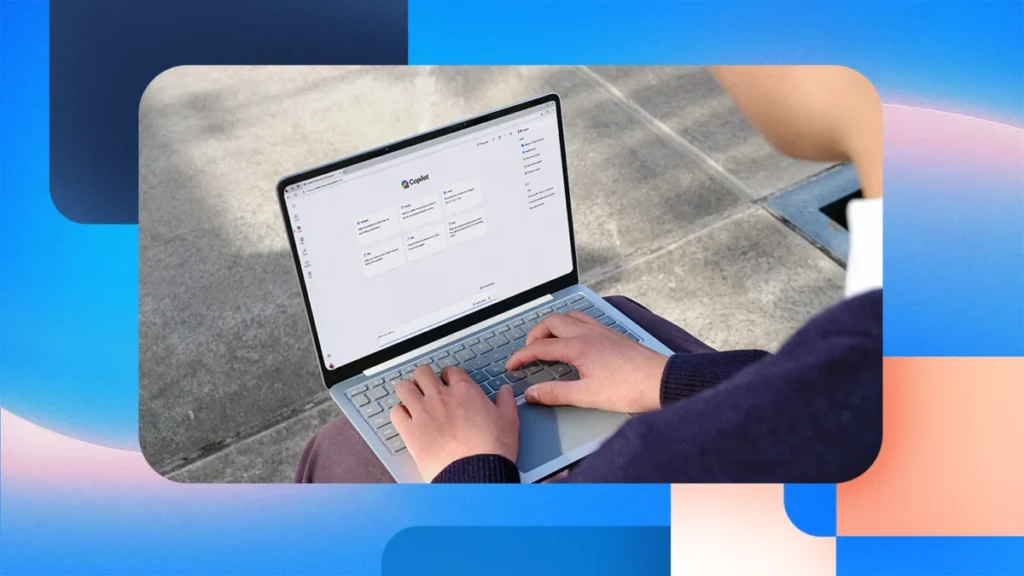
The core of this enhancement is the "seamless integration with a Microsoft 365 Copilot chat experience" within Microsoft Forms. Users will now find a prominent Copilot button positioned in the lower-right corner when they create or open a form or quiz. Clicking this button activates a chat pane, grounding Copilot within the context of the current form. This contextual understanding allows Copilot to perform a wide array of intelligent actions, transforming the way users interact with survey creation and analysis.

Transforming Survey Creation and Analysis with AI
The expanded Copilot capabilities in Forms empower users to go beyond basic survey construction. For instance, users can engage Copilot to:
- Review Questions: Ask Copilot to identify missing questions or suggest alternative phrasing for clarity and effectiveness.
- Recommend Structural Changes: Request Copilot to reorganize sections, improve flow, or optimize the survey for specific data collection goals.
- Edit Settings: Flag settings that might conflict with the survey’s intended purpose or suggest optimal configurations for response collection.
- Make Bulk Changes: Efficiently replace placeholders throughout a form, mark multiple questions as required, or apply consistent formatting across sections.
- Analyze Submitted Responses: While the original Copilot had some analytical capabilities, the upgraded experience is designed to provide "clear insights and actionable takeaways" from collected data, helping users quickly grasp key trends and patterns without manual data crunching.
Furthermore, the updated experience introduces support for several advanced functionalities that streamline the survey process. Users can now leverage Copilot to implement basic branching logic, ensuring respondents only see relevant questions based on their previous answers. It also assists in crafting custom thank-you messages, setting specific closing dates for surveys, and generating follow-up questions about survey results, facilitating deeper engagement and iterative feedback loops. While Copilot provides powerful assistance, Microsoft wisely advises users to continue reviewing branching configurations before distribution, emphasizing the human oversight crucial for effective AI deployment.
Existing capabilities, such as "Draft with Copilot" for initial content generation, question rewriting for improved clarity, and quiz answer explanations for educational contexts, remain fully available, complementing the new features. This comprehensive suite of tools positions Copilot in Forms as an indispensable assistant for anyone involved in data collection, feedback gathering, or assessment.
Availability and Broader Impact on Productivity
The new Copilot experience in Forms is currently rolling out worldwide to customers holding Microsoft 365 Copilot commercial licenses. This phased deployment ensures that organizations already invested in Microsoft’s broader AI productivity suite can immediately benefit from these enhancements. The integration of AI directly into familiar applications like Forms significantly lowers the barrier to entry for advanced functionalities, empowering a broader demographic of users – from educators and HR professionals to marketing teams and project managers – to leverage AI for their daily tasks.
This expansion aligns with Microsoft’s overarching vision for Microsoft 365 Copilot: to transform how individuals and teams interact with their digital workspace. By embedding AI directly into applications like Word, Excel, PowerPoint, Outlook, and now Forms, Microsoft is striving to create a seamless, intelligent work environment where AI acts as a proactive assistant, enhancing creativity, efficiency, and decision-making across the board. This strategy is critical in an era where organizations seek to maximize the productivity of their workforce and extract greater value from their existing software ecosystems.
Strategic Vision: Bridging AI Potential with Business Reality
Microsoft’s simultaneous announcements regarding ROI tracking for AI agents and enhanced Copilot integration in Forms represent a cohesive, strategic response to the evolving landscape of enterprise AI. These initiatives, while seemingly distinct in their immediate application, are intrinsically linked by a common goal: to bridge the gap between the immense potential of artificial intelligence and the practical realities of business implementation.

The "ROI for agents" in Foundry addresses the fundamental need for accountability and measurable value in AI deployments. In an economic climate where every investment is scrutinized, the ability to demonstrate concrete returns for AI initiatives is paramount for securing executive buy-in and sustaining long-term investment. Industry reports consistently highlight that a lack of clear ROI is a significant barrier to AI adoption and scaling. For instance, a recent survey by McKinsey indicated that while many companies are experimenting with generative AI, a smaller percentage have managed to scale it across their organizations, often citing difficulty in measuring impact as a key challenge. Microsoft’s new feature directly confronts this hurdle, aiming to convert speculative investments into quantifiable assets.
Concurrently, the expanded Copilot in Forms addresses the human element of AI adoption. The most sophisticated AI models are ineffective if they are not accessible and intuitive for end-users. By integrating Copilot deeply into a user-friendly application like Forms, Microsoft is democratizing access to AI-powered capabilities, empowering non-technical users to perform tasks that previously required specialized skills or significant manual effort. This approach not only boosts individual productivity but also fosters a culture of AI literacy and adoption across the enterprise, minimizing the "talent gap" often cited as another major impediment to AI integration.
Industry Trends and Competitive Landscape
The enterprise AI market is intensely competitive, with tech giants like Google, Amazon, and IBM also vying for dominance. Microsoft’s strategy leverages its unique position as a leading provider of both cloud infrastructure (Azure) and widely used productivity software (Microsoft 365). By tightly integrating AI capabilities across these platforms, Microsoft offers a compelling, end-to-end solution for businesses looking to harness AI. This integrated ecosystem approach provides a significant advantage, as it allows for seamless data flow, consistent user experiences, and robust security frameworks across various applications and services.
The emphasis on measurable ROI is also a direct response to the maturing AI market. After years of initial experimentation and "hype," enterprises are now demanding practical applications that deliver demonstrable business benefits. This shift from novelty to utility is driving a new wave of innovation focused on operationalizing AI. Microsoft’s Foundry enhancements are positioned to be at the forefront of this trend, providing the necessary tools for rigorous performance management and financial justification.
Looking ahead, the synergy between these two types of announcements is clear. As organizations become more adept at tracking the ROI of their AI agents through platforms like Foundry, they will be better positioned to justify further investment in AI-powered tools that enhance productivity across their workforce, such as Copilot in Forms. This creates a virtuous cycle where demonstrable value drives greater adoption, leading to more data for optimization, and ultimately, a more intelligent and efficient enterprise.
The Future of Work and AI
These developments signify a profound transformation in the future of work. As AI agents become more sophisticated and their value more quantifiable, they will increasingly take on repetitive, data-intensive, or even complex analytical tasks, freeing human workers to focus on higher-level strategic thinking, creativity, and interpersonal interactions. Tools like Copilot in Forms are not just about automating tasks but about augmenting human capabilities, enabling individuals to achieve more with less effort and to gain deeper insights from their data.

However, the widespread adoption of AI also necessitates ongoing considerations regarding responsible AI development and deployment. Data privacy, algorithmic fairness, and transparency remain critical concerns that must be addressed as AI becomes more embedded in core business processes. Microsoft’s focus on structured evaluation within Foundry, while primarily centered on ROI, also provides a framework that can be extended to include ethical performance metrics.
In conclusion, Microsoft’s latest AI initiatives are a testament to its strategic vision for enterprise AI. By simultaneously empowering developers and IT leaders with robust ROI tracking for AI agents and democratizing AI access for business users through enhanced Copilot integrations, the company is laying the groundwork for a future where AI is not just a technological marvel, but an indispensable, measurable, and accessible engine of business value and productivity across every facet of the modern enterprise.