


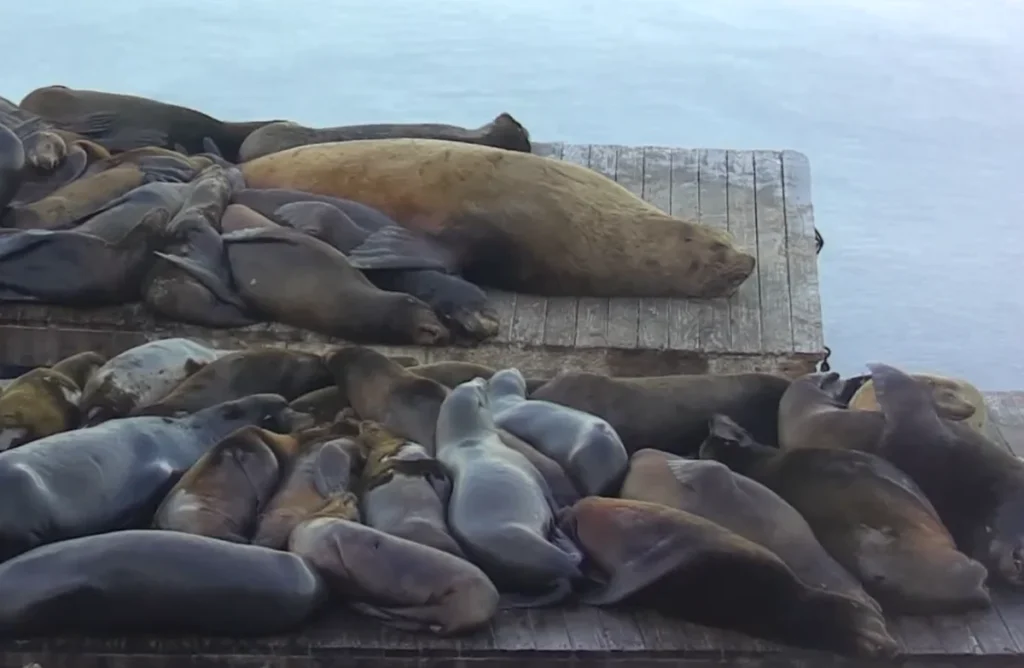
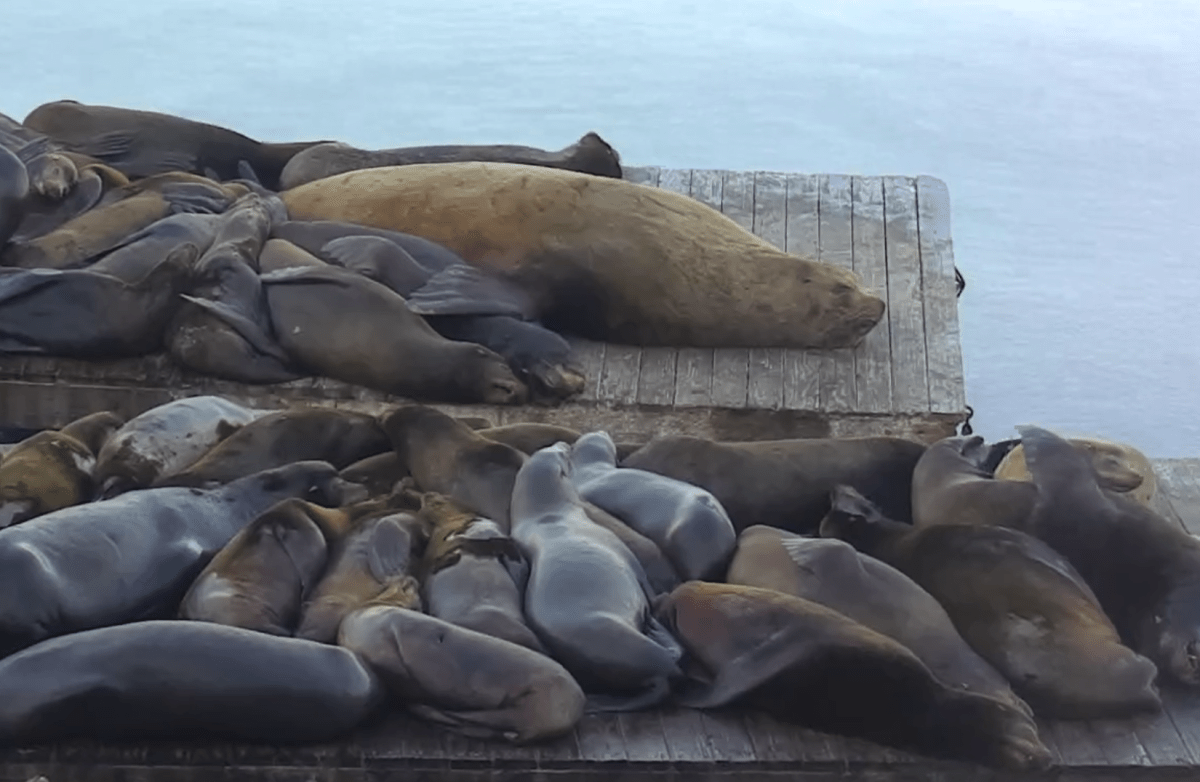
The waterfront of San Francisco has long been a theater for the boisterous displays of marine life, but the arrival of a particularly massive guest has recently turned the local spectacle into a global viral sensation. Since early April, a Steller sea lion (Eumetopias jubatus) affectionately nicknamed "Chonkers" by the Reddit community has taken up residence at Pier 39’s K-Dock. While the pier is famous for its resident California sea lions, Chonkers stands out not only for his species but for his staggering proportions. Estimated to weigh approximately 2,000 pounds, Chonkers is nearly double the weight of the average male Steller sea lion, which typically tips the scales at 1,200 pounds and reaches lengths of 10 feet.
His presence has introduced a chaotic element to the social order of the marina. For weeks, tourists and locals have gathered to witness the sheer scale of the animal, whose girth and assertive behavior have strained the physical infrastructure of the docks and the patience of his smaller pinniped cousins. The arrival of such a large predator in the heart of a major metropolitan tourist hub serves as a vivid reminder of the intersecting lives of humans and wildlife in the 21st century.
The Physical Impact and Infrastructure Strain
The primary concern for marina officials has been the structural integrity of the wooden floats that serve as resting platforms for the animals. Pier 39’s floats were designed to accommodate the California sea lion (Zalophus californianus), a species where males typically peak at around 800 pounds. When Chonkers hauls his one-ton frame onto these platforms, the results are often dramatic.
Viral footage captured by the Pier 39 live camera and shared across social media platforms illustrates the physics of the situation. In several instances, Chonkers is seen launching himself from the water onto a crowded float. The impact has been described by witnesses as sounding like a "snapping oak tree." The weight of the animal causes the floats to submerge significantly, often sending dozens of California sea lions sliding off the slick wood and back into the San Francisco Bay.
Sheila Chandor, the harbormaster at Pier 39, expressed the challenges of managing such an oversized guest during an interview with The Wall Street Journal. "We didn’t build those floats for 2,000-pound animals," Chandor noted. Despite the visible strain on the equipment, no permanent damage to the marina property has been reported yet. However, the sheer frequency of Chonkers’ visits—which have lasted weeks rather than the usual few days typical for his species—has forced the marina to monitor the situation closely.
Biological Distinctions: Steller vs. California Sea Lions
To the untrained eye, a sea lion is simply a sea lion, but Chonkers belongs to a species that is biologically and behaviorally distinct from the usual Pier 39 residents. The Steller sea lion is the largest of the otariids (eared seals) and the fourth largest of all pinnipeds, surpassed only by the walrus and two species of elephant seals.
Steller sea lions are generally found in colder waters, with their range extending from the Kuril Islands and the Sea of Okhotsk in Russia, across the Gulf of Alaska, and down the Pacific coast to central California. While they are known to visit the San Francisco Bay to feed on seasonal surges of salmon, herring, and rockfish, they rarely linger in the urban environment for extended periods.
In contrast, California sea lions are the "locals" of Pier 39. They are smaller, sleeker, and possess a darker coat compared to the tawny or light-tan fur of the Steller. Behaviorally, both species are thigmotactic—a scientific term describing animals that seek physical contact with one another or solid surfaces for security, warmth, and social cohesion. This drive for closeness is what leads to the dense "piles" of sea lions seen on the docks. Chonkers shares this instinct, but his attempt to "cuddle" with animals a fraction of his size often results in him unintentionally displacing the entire group.
A Chronology of the Pier 39 Phenomenon
The history of pinnipeds at Pier 39 is a relatively recent development in San Francisco’s long maritime history. The animals first began arriving in significant numbers following the Loma Prieta earthquake in October 1989. For reasons still debated by marine biologists—ranging from shifts in prey patterns to a perceived safety from predators like great white sharks—the sea lions abandoned their traditional hauling grounds at Seal Rocks and moved into the protected marina.
By early 1990, the population at the pier had swelled to over 300, leading to a conflict between boat owners and the animals. Ultimately, the marina decided to cede the K-Dock to the sea lions, a move that transformed the pier into one of the city’s top tourist attractions.
The arrival of Chonkers in April represents a new chapter in this history. While Steller sea lions have made cameo appearances in the past, they are usually transient males passing through during migration. Chonkers’ decision to remain for several weeks suggests an abundance of local prey or a particular comfort with the environment. His nickname, coined by the "r/sanfrancisco" subreddit, quickly transitioned from internet slang to mainstream media usage, cementing his status as a local celebrity.
Ecological Context and Conservation Status
The presence of a healthy, 2,000-pound male Steller sea lion is, in many ways, a conservation success story, though it comes with a complex history. Since the 1970s, Steller sea lion populations along the Pacific coast, particularly the western stock in Alaska, faced a precipitous decline. Researchers pointed to several contributing factors, including commercial overfishing of their primary prey, incidental catch in fishing gear, and illegal culling.
For over 15 years, the species was classified as "Endangered" under the U.S. Endangered Species Act and occupied a similar status on the IUCN Red List. However, the eastern stock—the population to which Chonkers likely belongs—has shown remarkable resilience. Due to protective measures and improved fishery management, their numbers have stabilized and even increased in certain regions. In recent years, the IUCN has moved the species to the "Near Threatened" category, reflecting a cautious optimism regarding their long-term survival.

The fact that an animal of Chonkers’ size can thrive suggests that the marine food web in the Pacific remains capable of supporting apex predators, provided they can find refuge from human interference. However, the concentration of these animals in urban areas like San Francisco Bay also highlights the dwindling availability of traditional, secluded hauling grounds.
Broader Implications of Human-Wildlife Interaction
Chonkers is part of a growing global trend of large marine mammals entering human-dominated spaces. As climate change alters ocean temperatures and shifts the migratory patterns of fish, marine mammals are increasingly forced to seek food and rest in unconventional locations.
This proximity often leads to "human-wildlife conflict." A notable and tragic parallel occurred in July 2022 in Norway, where a 1,300-pound walrus named Freya became a national celebrity for basking on boats in the Oslo Fjord. Despite pleas from biologists for the public to maintain their distance, crowds continued to swarm the animal. Citing concerns for public safety and the animal’s stress levels, Norwegian authorities eventually made the controversial decision to euthanize Freya.
The situation at Pier 39 has, fortunately, been managed with more restraint. The marina provides a physical barrier between the tourists on the walkway and the animals on the floats, reducing the risk of direct interaction. However, the "Chonkers" phenomenon highlights the need for robust public education regarding marine mammal behavior. While they may appear "cute" or "clumsy" on land, these are powerful, wild predators capable of inflicting serious injury if provoked or startled.
Analysis of the "Chonkers" Effect
From a journalistic and ecological perspective, Chonkers represents more than just an internet meme. He is a biological indicator of the health of the California Current. His massive size suggests he is a successful hunter, likely at the peak of his reproductive years. His presence in the Bay Area also underscores the importance of San Francisco as a critical ecological corridor.
The economic impact is also noteworthy. Local businesses at Pier 39 have reported increased foot traffic as visitors flock to catch a glimpse of the "giant sea lion." This symbiotic relationship between urban commerce and wildlife tourism is a cornerstone of San Francisco’s identity, but it requires constant balance. The Harbormaster’s office and organizations like the Marine Mammal Center in Sausalito continue to monitor the health of the animals at the pier, ensuring that the spectacle does not come at the cost of the animals’ well-being.
As the spring migration continues, it is unclear how much longer Chonkers will remain at K-Dock. Eventually, the biological drive to return to breeding rookeries—likely further north in Oregon, Washington, or British Columbia—will pull him away from the sun-drenched floats of San Francisco. Until then, he remains a heavy, huffing reminder of the wildness that still exists just a few feet from the city’s concrete edges. His stay at Pier 39 is a fleeting intersection of natural history and modern viral culture, leaving an indelible mark on the marina and the people who have watched him claim his space.