


The month of June 2026 presents a significant period for both amateur and professional astronomers, characterized by a series of high-profile celestial events that highlight the mechanics of our solar system. As the Northern Hemisphere transitions into the summer season, the combination of lengthening days and specific planetary alignments offers a unique window for observation. This month’s astronomical calendar is anchored by a rare visual proximity between Jupiter and Venus, the arrival of the summer solstice, the appearance of the Full Strawberry Moon, and the international observance of Asteroid Day. These events provide not only a visual spectacle but also an opportunity to reflect on planetary defense, orbital dynamics, and the cultural history of timekeeping.
The Jupiter-Venus Conjunction: A Rare Planetary Alignment
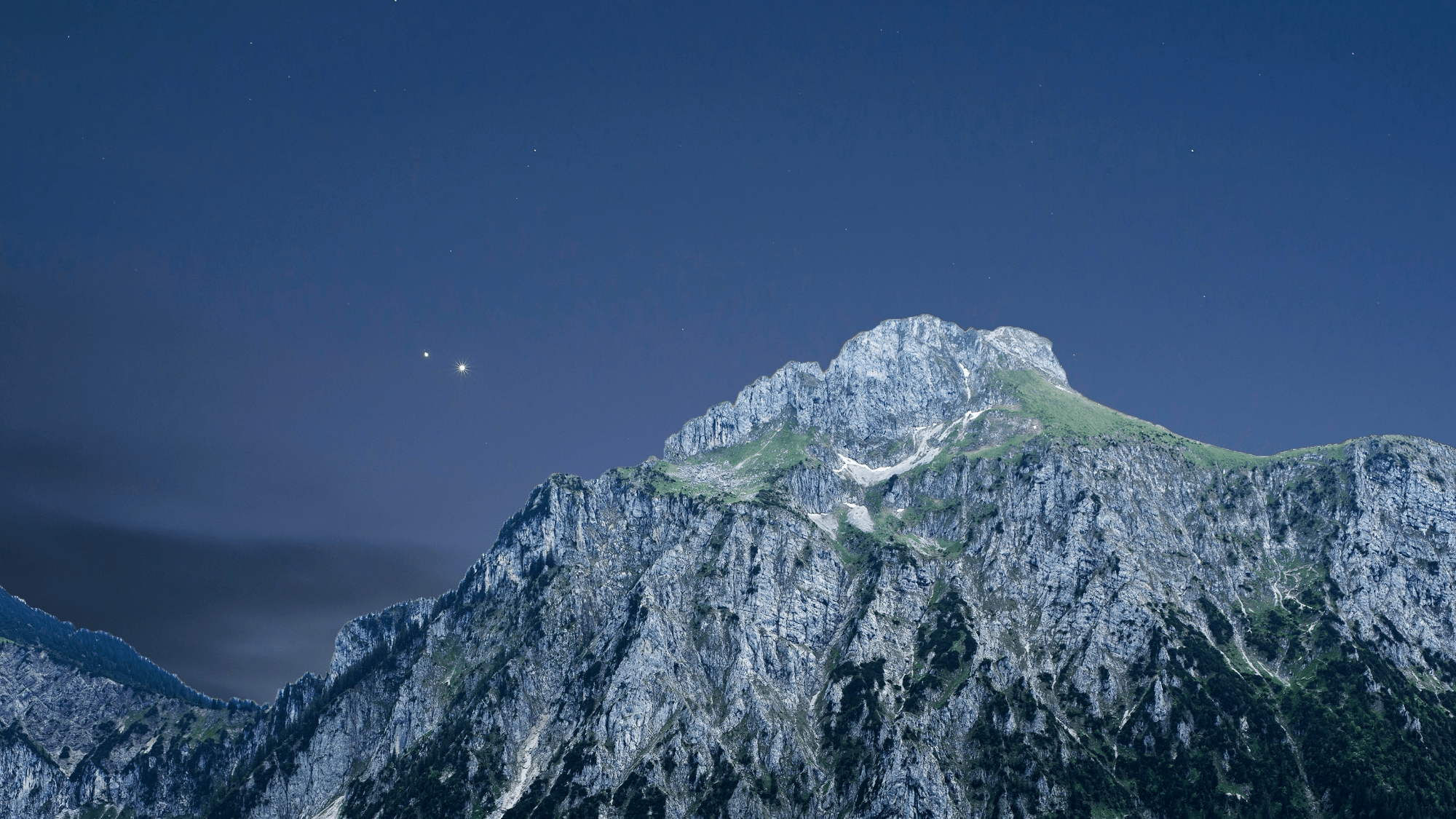
On June 9, 2026, observers will witness one of the most visually striking events of the year: a conjunction between Jupiter and Venus. In astronomical terms, a conjunction occurs when two celestial bodies appear close to one another in the sky as viewed from Earth, typically sharing the same right ascension or ecliptic longitude. While Jupiter and Venus remain hundreds of millions of miles apart in space, their alignment relative to Earth’s position creates the illusion of cosmic neighborliness.
Venus, often referred to as the "Evening Star" when positioned to the east of the Sun, is the brightest planet in our sky due to its highly reflective sulfuric acid clouds. Jupiter, the largest planet in the solar system, follows closely in brilliance. During the peak of the conjunction on the evening of June 9, the two planets will be visible just after sunset above the northwestern horizon. This event is particularly noteworthy because both planets are at high magnitudes of brightness, making them easily distinguishable even in areas with moderate light pollution.
Accompanying this planetary pair are the stars Castor and Pollux, the "twins" of the Gemini constellation. Located to the right of the conjunction, these stars provide a stellar backdrop that aids in orienting the observer. While Jupiter and Venus will be visible to the naked eye, binoculars or a small telescope will reveal further details, such as Jupiter’s four Galilean moons—Io, Europa, Ganymede, and Callisto—and the phase of Venus, which may appear as a brilliant gibbous or crescent depending on its orbital position.
The Science and Significance of the Summer Solstice
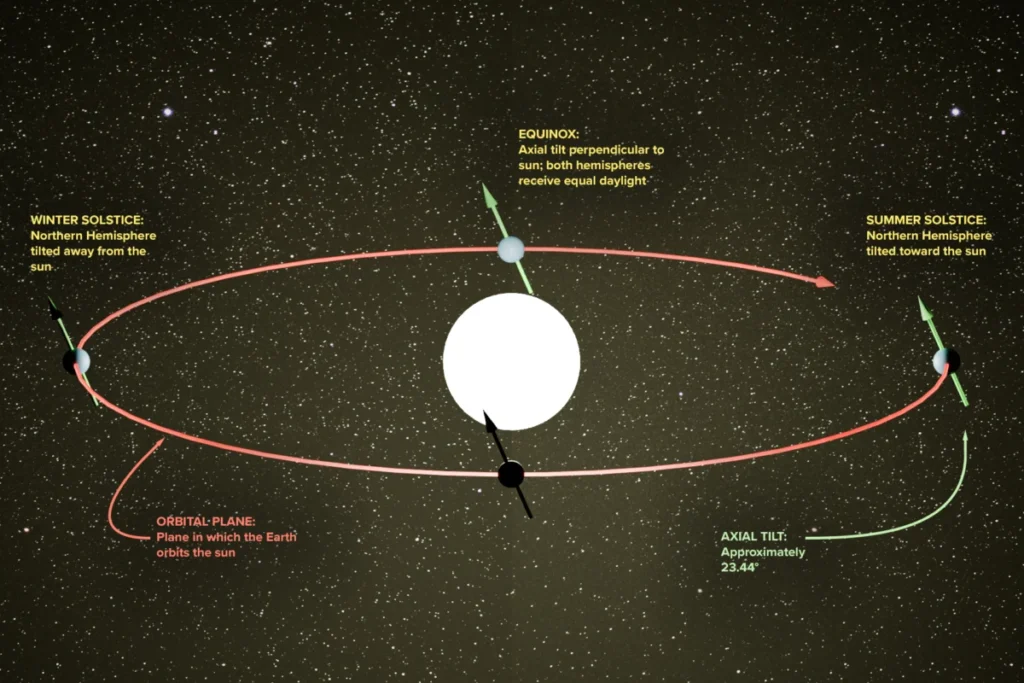
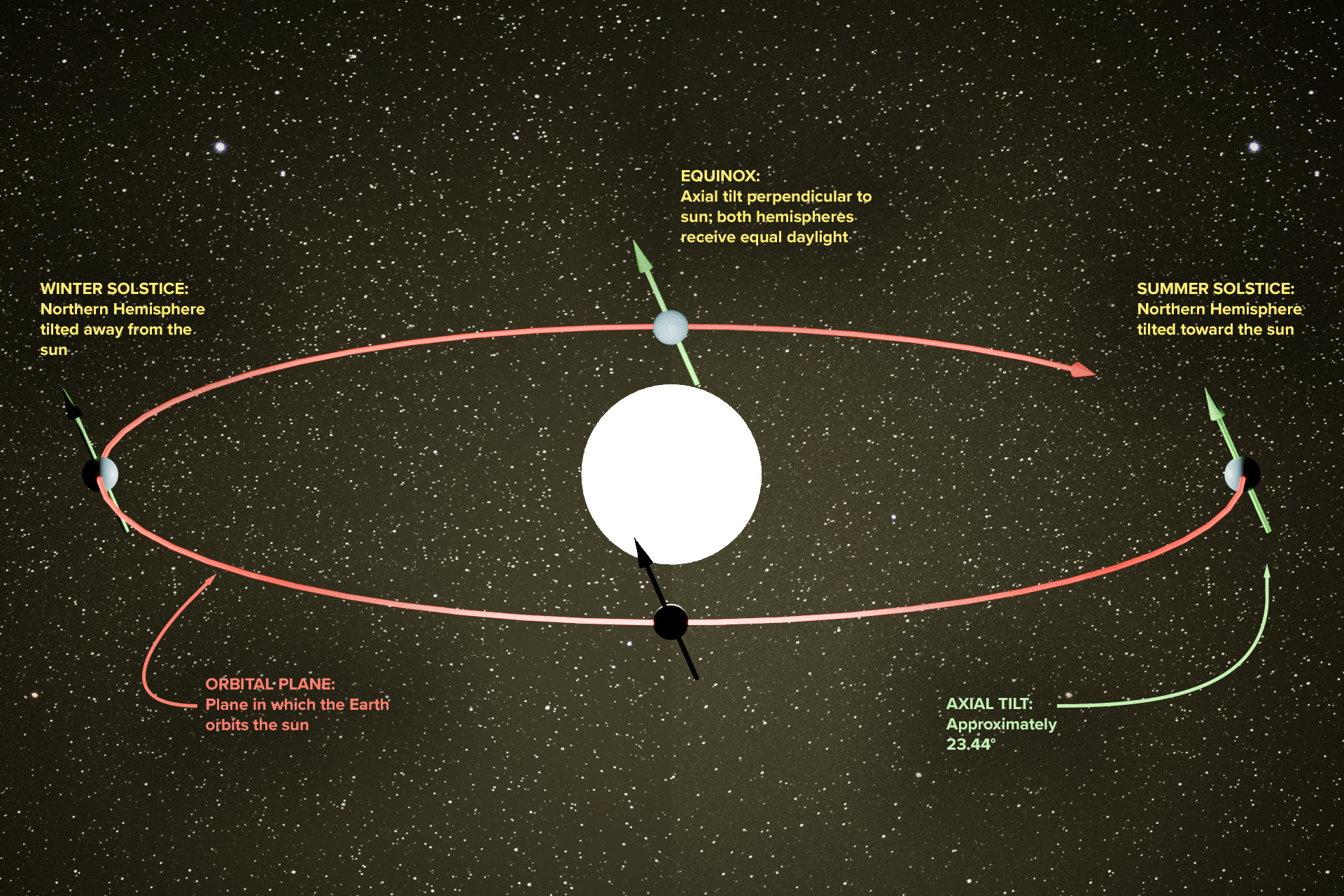
The astronomical transition to summer occurs on June 21, 2026, at precisely 10:22 p.m. EDT. This moment, known as the summer solstice, marks the point when the Earth’s North Pole reaches its maximum tilt of approximately 23.44 degrees toward the Sun. This tilt is the fundamental driver of Earth’s seasons. During the June solstice, the Sun reaches its highest point in the sky for observers in the Northern Hemisphere, resulting in the longest period of daylight and the shortest night of the calendar year.
The solstice is not merely a calendar date but a reflection of Earth’s constant axial tilt as it orbits the Sun. While the planet maintains a consistent tilt relative to its orbital plane, the orientation of that tilt changes in relation to the Sun as Earth moves through its 365.25-day journey. Consequently, while the Northern Hemisphere celebrates the start of summer, the Southern Hemisphere experiences the winter solstice, marking its shortest day and the official start of the cold season.
Historically, the solstice has served as a critical marker for human civilizations. From the alignment of the Heel Stone at Stonehenge to the solar orientations of Mayan temples, the ability to predict the solstice allowed ancient societies to manage agricultural cycles and religious observances. In the modern era, the solstice remains a point of interest for climatologists and solar energy researchers, as it represents the peak of solar radiation influx for the northern half of the globe.
The Full Strawberry Moon and Lunar Chronology
Toward the end of the month, on June 29, the moon will reach its full phase. This particular lunation is widely known as the Strawberry Moon. The nomenclature is derived from the traditions of various Indigenous North American peoples, including the Algonquian, Ojibwe, Dakota, and Lakota nations. The name signifies the ripening of wild strawberries during this time of year, serving as a seasonal indicator rather than a description of the moon’s physical appearance.
The timing of the 2026 Strawberry Moon is influenced by the lunar cycle’s 29.5-day synodic month. Because the previous month featured a "Blue Moon"—a term used when two full moons occur within a single calendar month or when a season contains four full moons instead of three—the June full moon arrives later in the month than usual.
From an observational standpoint, the Strawberry Moon often appears larger and more golden when it is near the horizon due to the "moon illusion" and atmospheric scattering. As the moon’s light passes through a thicker layer of Earth’s atmosphere at low angles, shorter wavelengths of light (blue and violet) are scattered, leaving the longer wavelengths (red and orange) to reach the observer’s eyes. This can result in a warm, amber hue that complements the "strawberry" moniker.
Asteroid Day: Commemorating the Tunguska Event and Planetary Defense
June 30 marks International Asteroid Day, a United Nations-sanctioned day of global awareness regarding the risks of asteroid impacts. The date was selected to commemorate the anniversary of the 1908 Tunguska event, the largest recorded asteroid impact in human history. The impact occurred over a remote region of Siberia, releasing energy estimated to be 1,000 times greater than the atomic bomb dropped on Hiroshima. It leveled approximately 800 square miles of forest, flattening an estimated 80 million trees.
Asteroid Day was co-founded in 2014 by Dr. Brian May, an astrophysicist and lead guitarist for the band Queen, alongside filmmaker Grig Richters and Apollo 9 astronaut Rusty Schweickart. The initiative seeks to educate the public on the importance of tracking Near-Earth Objects (NEOs). According to NASA’s Planetary Defense Coordination Office (PDCO), there are more than 30,000 known NEOs, with more being discovered every week.
The broader implications of Asteroid Day involve the support of missions like NASA’s DART (Double Asteroid Redirection Test), which successfully demonstrated the ability to alter the trajectory of an asteroid in 2022. Experts argue that while a significant impact is a low-probability event in any given year, the potential consequences necessitate a robust international detection and mitigation strategy. Asteroid Day serves as a call to action for governments to fund sky surveys and space-based infrared telescopes, such as the upcoming NEO Surveyor, which will significantly enhance our ability to find "dark" asteroids that are difficult to spot with ground-based equipment.
Observational Logistics and the Impact of Light Pollution
For those planning to observe these events, atmospheric conditions and light pollution remain the primary challenges. Dark sky preservation has become an increasingly urgent topic within the scientific community. The rise of satellite constellations and urban expansion has led to a steady increase in skyglow, which can obscure the subtle details of planetary conjunctions and stellar backdrops.
Professional astronomers recommend that observers seek out locations designated by the International Dark-Sky Association (IDA) to maximize visibility. Additionally, allowing the human eye approximately 20 to 30 minutes to adjust to the darkness is essential for spotting fainter objects like the stars Castor and Pollux. The use of red-light flashlights is encouraged, as red light does not disrupt the production of rhodopsin, the photopigment in the eye responsible for night vision.
Conclusion and Scientific Outlook
The celestial events of June 2026 offer a comprehensive look at the various scales of astronomy, from the orbital mechanics of our nearest planetary neighbors to the global security concerns of asteroid tracking. The Jupiter-Venus conjunction serves as a reminder of the aesthetic beauty of the cosmos, while the summer solstice and the Strawberry Moon connect us to the historical and cultural roots of timekeeping. Finally, Asteroid Day underscores the necessity of scientific vigilance and international cooperation in protecting the planet.
As we move further into the decade, the integration of amateur observations with professional data continues to grow. Citizen science projects and mobile astronomical applications have made the sky more accessible than ever, fostering a new generation of enthusiasts dedicated to understanding our place in the universe. Whether viewed through a high-powered telescope or the naked eye, the events of this June provide a vital link between the Earth and the vast expanse of the solar system.