



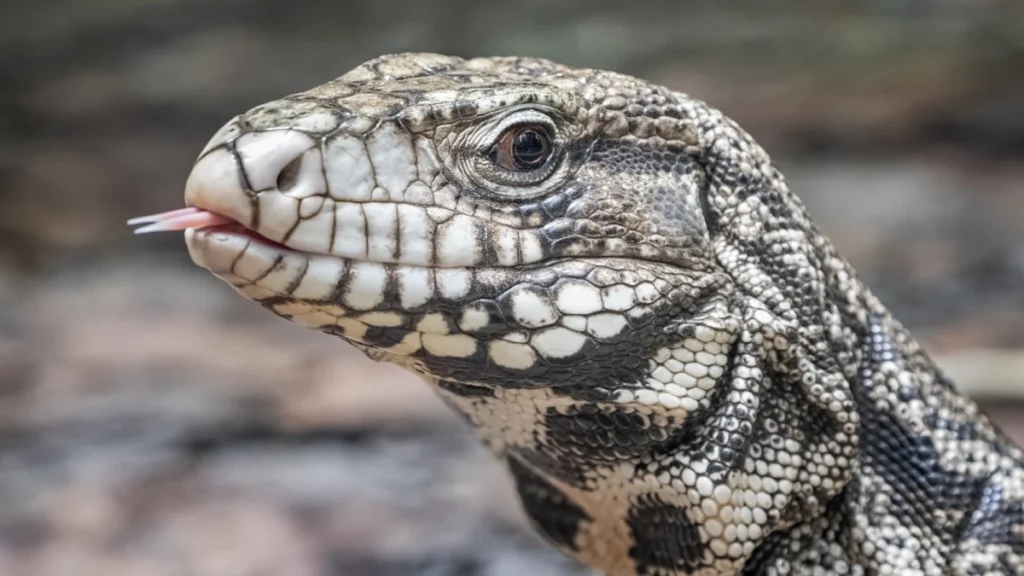
The Argentine black and white tegu (Salvator merianae), a formidable lizard capable of reaching lengths of four feet and weighing over ten pounds, has transitioned from a sought-after exotic pet to a significant ecological threat in the state of Georgia. Wildlife experts from the Georgia Department of Natural Resources (DNR) are currently intensifying their efforts to monitor and control the population of these non-native reptiles, which have established a firm foothold in the southeastern part of the state. While the tegu may appear to the untrained eye as a misplaced tropical curiosity, its presence represents a growing danger to native species, local agriculture, and the delicate balance of the Southern ecosystem.
The Biological Profile of an Efficient Invader
The Argentine black and white tegu is a highly adaptable omnivore native to the subtropical regions of South America, specifically Brazil, Paraguay, Uruguay, and Argentina. In its native habitat, it plays a specific role in the food chain, but in the United States, it lacks natural predators that can effectively keep its numbers in check. Often mistaken for the monitor lizard, to which it is only distantly related, the tegu is distinguished by its speckled black-and-white patterning and its powerful, muscular build.
What makes the tegu particularly dangerous to Georgia’s environment is its reproductive capacity. A single mature female can lay approximately 35 eggs in a single clutch each year. These eggs are typically laid in the spring and hatch during the peak of summer, between June and July. This high reproductive rate, combined with a lifespan that can exceed 20 years in the wild, allows a small introduced population to balloon into a self-sustaining colony within a few years.
Furthermore, the tegu possesses a biological advantage that many other invasive reptiles, such as the Burmese python, do not: a degree of cold tolerance. While most reptiles are strictly ectothermic and struggle in temperate winters, tegus are known to engage in brumation—a state of dormancy similar to hibernation. This allows them to survive the freezing temperatures of a Georgia winter by retreating into burrows, often stolen from native species, where they remain until the warmth of spring returns.
A Chronology of the Georgia Invasion
The emergence of the tegu in Georgia is a relatively recent phenomenon, but its progression has been steady and concerning to biologists. The first official reports of the lizards living in the wild began to surface in 2018. Initial sightings were concentrated in Toombs and Tattnall counties in southeastern Georgia. Since that time, the Georgia DNR’s Wildlife Resources Division has been working to map the extent of the infestation and remove as many individuals as possible from the landscape.
The primary theory regarding their introduction points toward the exotic pet trade. Experts believe that the initial wild population was established through "illegal releases"—instances where pet owners, overwhelmed by the size, diet, and longevity of the lizard, released them into the woods. Some may have also escaped from outdoor enclosures during severe weather events. Once released, the tegus found the sandy soils and pine forests of southeastern Georgia to be an ideal surrogate for their native South American habitats.
By 2020, the DNR began active trapping programs in the affected counties, utilizing live traps baited with eggs. Despite these efforts, the population has persisted. In 2023 and 2024, sightings have continued to trickle in, suggesting that the lizards may be expanding their range northward and westward from their original point of introduction.
Ecological Risks and the Threat to Native Species
The Argentine black and white tegu is a generalist predator with a voracious appetite. Its diet includes everything from fruits and vegetables to insects, small mammals, and ground-nesting birds. However, the most significant ecological concern involves the lizard’s penchant for raiding nests to consume eggs.
Georgia is home to the gopher tortoise (Gopherus polyphemus), a keystone species whose burrows provide shelter for more than 350 other species, including the federally protected eastern indigo snake. Tegus are known to invade gopher tortoise burrows, not only to use them for shelter and brumation but to consume the tortoise’s eggs and hatchlings. If the tegu population continues to grow, it could lead to a catastrophic decline in gopher tortoise numbers, triggering a domino effect that harms hundreds of other native species.
Beyond tortoises, the tegu poses a direct threat to Georgia’s game birds. Northern bobwhite quail and wild turkeys, both of which are economically and culturally significant in the state, nest on the ground. A single tegu can easily wipe out an entire nest of eggs in a single sitting. Agricultural interests are also at risk; tegus have been known to enter chicken coops to consume eggs and young chicks, causing distress to small-scale farmers and backyard poultry enthusiasts.
Public Health and Safety Concerns
While tegus are not generally aggressive toward humans, they are wild animals and can be defensive if cornered or handled. Their powerful jaws are capable of delivering a painful bite, and their sharp claws can cause significant lacerations. However, the primary health risk associated with tegus is not physical trauma, but the transmission of disease.
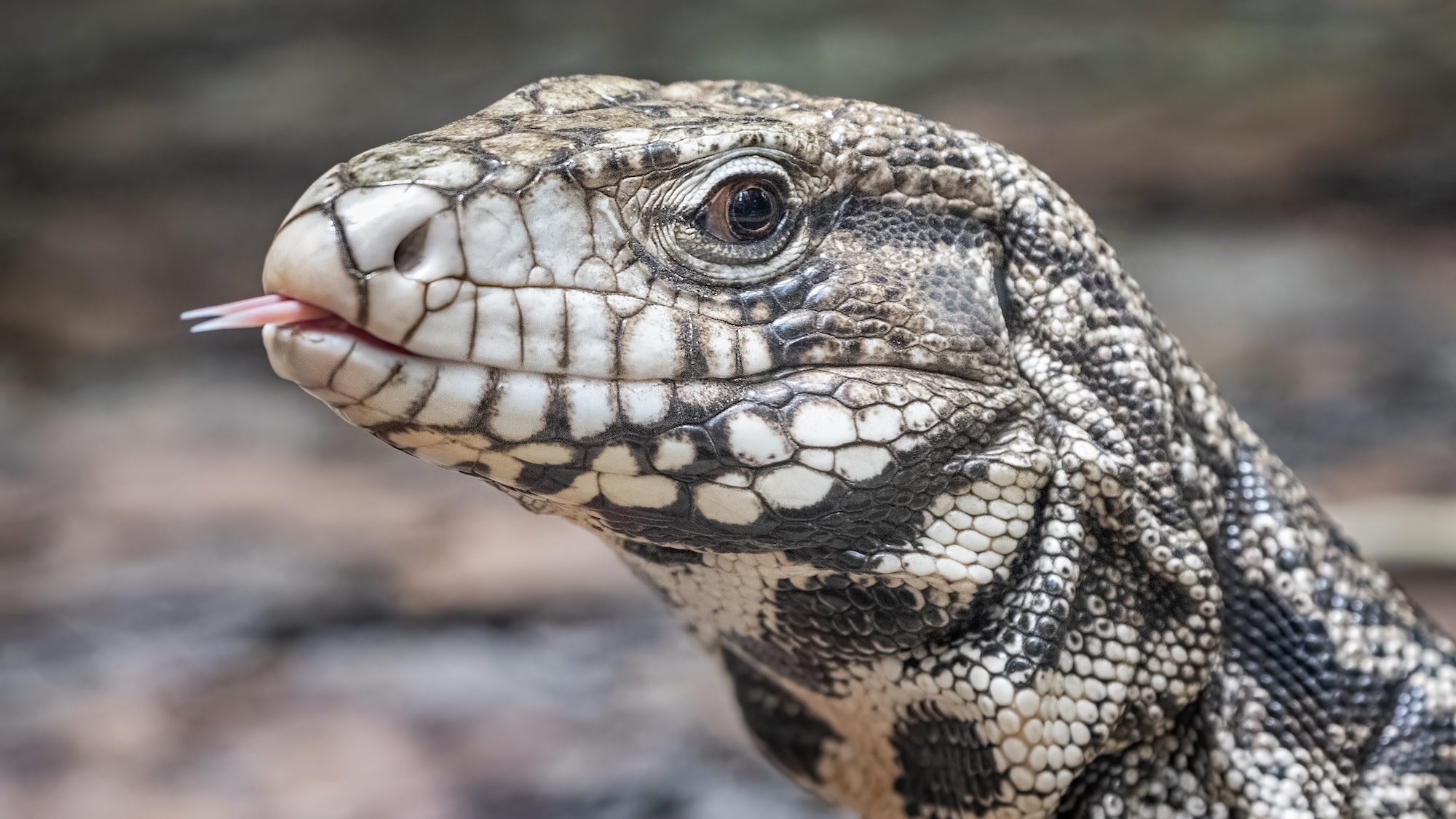
Like many reptiles, tegus can carry Salmonella, which can be transmitted to humans through direct contact or through contaminated surfaces. More concerning to wildlife biologists is the potential for tegus to introduce exotic parasites and pathogens to native reptile populations. These "hitchhiker" diseases can sometimes be more devastating than the predator itself, as native species lack the natural immunity to fight off foreign bacteria or viruses.
The DNR has issued clear guidance: residents should not attempt to handle a wild tegu. Instead, they are encouraged to document the sighting with a photograph and report the location immediately to wildlife authorities.
Official Responses and Legal Status
In response to the threat, the Georgia Department of Natural Resources has classified the Argentine black and white tegu as a non-native, invasive species. Under current Georgia law, there is no closed season for the hunting or trapping of tegus. They can be trapped or killed year-round on private land with the landowner’s permission, provided the methods used are humane and comply with local ordinances.
The DNR has also implemented stricter regulations regarding the possession of tegus as pets. As of 2023, the Argentine black and white tegu was added to the list of "wild animals" that are regulated in the state. This means that current owners must register their animals and have them microchipped, and the breeding or sale of tegus within the state is heavily restricted. These measures are designed to prevent further accidental or intentional releases into the environment.
Residents who spot a tegu are urged to contact the DNR’s Wildlife Resources Division. Reports can be submitted via email to [email protected] or by phone at (478) 994-1438. Official tracking is supported by an ongoing mapping project involving the U.S. Geological Survey and Georgia Southern University, which aims to provide a real-time look at the distribution of the species across the Southeast.
A Regional Crisis: The Broader Impact
Georgia is not alone in its struggle against the tegu. The lizard has established massive, well-documented populations in Florida, particularly in the Everglades and around the Tampa Bay area. The Florida Fish and Wildlife Conservation Commission (FWC) has spent millions of dollars on eradication efforts, yet the species continues to thrive.
Recent data from the Early Detection and Distribution Mapping System (EDDMapS) shows that tegu sightings are now occurring in South Carolina, Alabama, and Texas. The spread suggests a regional trend where the warming climate and the proliferation of the exotic pet trade are converging to create a "perfect storm" for invasive reptiles.
Analysis of the tegu’s potential range suggests that much of the Southern United States, from the Atlantic coast to East Texas, provides a suitable climate for the species. If left unchecked, the Argentine black and white tegu could become as permanent and destructive a fixture in the American South as the fire ant or the feral hog.
Analysis and Future Outlook
The battle against the Argentine black and white tegu in Georgia is at a critical juncture. Wildlife biologists emphasize that early detection is the only way to prevent a localized population from becoming an unmanageable regional epidemic. The "invasion curve"—a biological model used to track invasive species—suggests that once a species becomes widely established, eradication becomes nearly impossible, and the focus must shift to "maintenance and control," which is both costly and perpetual.
The success of Georgia’s mitigation efforts will depend largely on public participation. Because much of the land in Toombs, Tattnall, and surrounding counties is privately owned, the DNR relies on residents to report sightings and allow trapping on their property. Education is also vital; potential pet owners must understand the long-term commitment required by exotic reptiles to prevent the cycle of "rescue and release" that started this crisis.
As the summer months approach and the current year’s clutch of eggs begins to hatch, Georgia officials remain on high alert. The goal is clear: to protect the state’s native biodiversity from a four-foot intruder that, while impressive in its biology, has no place in the Georgia woods. The coming years will determine whether the tegu becomes a footnote in Georgia’s environmental history or a permanent, costly resident of the Peach State.