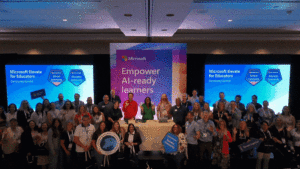




Microsoft has officially opened the advanced recognition application window for the Microsoft Elevate for Educators program for the 2026–2027 academic year, signaling a significant expansion in its efforts to integrate generative artificial intelligence into global K-12 systems. The program, which seeks to identify and support innovative educators and school leaders, is designed to address the rapidly evolving technological landscape by fostering AI literacy and creative problem-solving in the classroom. This initiative centers on two primary designations: the Microsoft Educator Expert and the Microsoft Showcase School, both of which serve as benchmarks for excellence in digital transformation. The application period, which began in May 2026, is scheduled to remain open through July 31, 2026, providing a critical window for academic institutions to align their pedagogical strategies with the latest advancements in AI and cloud computing.
The Strategic Evolution of AI in Global Education
The launch of the 2026–2027 Elevate for Educators cycle comes at a time when the global education sector is undergoing a profound shift. According to recent industry reports, the integration of artificial intelligence in education is no longer a peripheral experimental phase but a core requirement for workforce readiness. Microsoft’s program aims to move beyond simple software proficiency, focusing instead on "AI literacy"—the ability for students and teachers to understand, utilize, and critically evaluate AI tools. By championing educators who demonstrate a commitment to excellence, Microsoft is effectively building a global infrastructure of "lighthouse" leaders who can pilot new methodologies and share best practices across borders.
The program is built on the premise that educators are the primary catalysts for technological adoption. By empowering these leaders with specific credentials and capacity-building resources, the initiative seeks to bridge the gap between technological potential and classroom reality. This is particularly relevant as schools grapple with the dual challenges of personalized learning and administrative efficiency. Through the use of AI-driven tools, educators in the Microsoft community are finding ways to automate routine tasks, thereby freeing up time for more meaningful student-teacher interactions and creative instruction.

Program Timeline and Informational Support
To facilitate a smooth application process and ensure that prospective candidates are well-equipped to meet the rigorous standards of the program, the Microsoft Elevate for Educators team has scheduled a series of global informational sessions and office hours throughout the summer of 2026. These sessions are tailored to K–12 educators and school leaders, providing a comprehensive overview of the program’s benefits and the technical requirements for recognition.
The scheduled timeline for these engagements is as follows:
- June 3, 2026 (8:00 AM PT): Program Overview Session – An introductory webinar covering the core pillars of the Elevate program and the benefits of joining the global community.
- June 17, 2026 (4:00 PM PT): Office Hours – A dedicated Q&A session for educators to seek clarification on application specifics.
- June 24, 2026 (11:00 PM PT): Office Hours – A late-night session (PT) designed to accommodate educators in various international time zones.
- July 8, 2026 (4:00 PM PT): Program Overview Session – A secondary introductory session for late applicants.
- July 15, 2026: Multiple Office Hours (8:00 AM, 4:00 PM, and 11:00 PM PT) – A high-frequency support day to assist candidates as the deadline approaches.
- July 29, 2026: Final Office Hours (8:00 AM and 4:00 PM PT) – Last-minute technical support and application finalization.
This structured timeline reflects Microsoft’s commitment to accessibility and global inclusivity, ensuring that educators from different geographic regions and socioeconomic backgrounds have the support necessary to participate in the program.
Defining Excellence: The Educator Expert and Showcase School Designations
The Microsoft Elevate for Educators program distinguishes between individual leadership and institutional transformation through its two flagship designations.

The Microsoft Educator Expert designation is awarded to individual teachers who have demonstrated a bold commitment to transforming learning through the purposeful use of Microsoft tools and AI. These individuals are characterized by their ability to spark curiosity, encourage collaboration, and bring creativity to life within their classrooms. Currently, the global community consists of more than 43,000 educators who exchange ideas and strengthen their professional practice through a shared network. For an educator, this designation provides access to a "laddered pathway" for training and credentialing, ensuring that their skills remain relevant in an era of constant technological flux.
Conversely, the Microsoft Showcase School designation is an institutional recognition. It is reserved for schools that have successfully implemented the Microsoft Education Transformation Framework. These schools use technology to empower teaching, transform learning environments, and equip students with future-ready skills. Becoming a Showcase School involves a rigorous evaluation of the school’s leadership, its commitment to equity and inclusion, and its ability to scale innovative practices across the entire campus. These institutions serve as models for other schools in their regions, demonstrating how cloud-based collaboration and AI can lead to better student outcomes.
Supporting Data and the Impact of Digital Transformation
The push for AI integration in schools is supported by a growing body of data regarding the "digital divide" and the "skills gap." A 2025 study on global workforce trends indicated that nearly 70% of future jobs will require a high degree of AI fluency. Microsoft’s focus on AI literacy through the Elevate program is a direct response to this need. Furthermore, internal data from Microsoft’s education initiatives suggests that schools utilizing integrated AI tools see a measurable reduction in teacher burnout, as automated grading and lesson planning assistance can save educators up to five hours of administrative work per week.
Industry analysts suggest that the "Educator Expert" community serves as an essential feedback loop for Microsoft’s product development. By observing how 43,000 experts utilize tools like Copilot, Teams for Education, and OneNote, Microsoft can refine its software to better serve pedagogical needs. This symbiotic relationship between the tech provider and the practitioner is a cornerstone of the Elevate program’s success.

Broader Implications for the Future of Pedagogy
The 2026–2027 program cycle represents more than just a professional development opportunity; it is an attempt to standardize the ethical and safe integration of technology in teaching. As AI tools become more ubiquitous, concerns regarding data privacy, algorithmic bias, and the "human element" of teaching have come to the forefront. Microsoft’s program addresses these concerns by providing research-backed guidance and toolkits designed to help educators navigate the complexities of AI integration safely.
By fostering a "global community of peers," Microsoft is also addressing the professional isolation that many innovative educators feel. The ability to collaborate with a colleague halfway across the world on a shared AI project or a hybrid learning model allows for a cross-pollination of ideas that was previously impossible. This global network is reshaping the very definition of a classroom, moving away from a physical room and toward a connected ecosystem of learners and mentors.
Official Perspectives and Educational Outcomes
While Microsoft remains the primary architect of the program, the initiative has garnered support from various educational stakeholders. School boards and ministries of education have increasingly recognized the value of these designations as a form of professional accreditation. Leaders within the Showcase School network often report higher levels of student engagement and better preparedness for higher education and vocational training.
Microsoft’s leadership has emphasized that the goal is to "empower every person and every organization on the planet to achieve more." In the context of education, this means providing the tools that allow students to "create, imagine, and achieve" beyond traditional boundaries. The Elevate program is the practical application of this mission, turning high-level corporate goals into classroom-level successes.

Conclusion and Call to Action for Educational Leaders
As the July 31, 2026, deadline approaches, the global educational community is encouraged to evaluate its progress in the digital era. The Microsoft Elevate for Educators program offers a structured, supported, and recognized path for those ready to lead the next era of learning. Whether through individual excellence as an Educator Expert or institutional innovation as a Showcase School, the opportunity to shape the future of teaching and learning has never been more accessible.
For educators and administrators, the first step involves engaging with the informational sessions and utilizing the capacity-building resources provided by Microsoft. By joining this network of changemakers, schools can ensure they are not merely reacting to the future of technology, but actively defining it. The 2026–2027 academic year stands to be a landmark period for AI in education, and the leaders recognized today will undoubtedly be the architects of tomorrow’s academic landscape.