


The burgeoning integration of Artificial Intelligence (AI) into educational landscapes is raising significant alarms among academics and researchers, as a growing body of studies suggests a tangible decline in students’ cognitive and creative abilities. This phenomenon, termed "cognitive offloading," describes the human tendency to rely on external tools, in this case AI, to perform tasks that would traditionally engage and develop critical mental faculties. The implications of this trend are far-reaching, impacting not only individual learning but also the foundational skills necessary for informed citizenship in an increasingly complex world.
The Rise of Cognitive Offloading in Academia
Recent scholarship paints a stark picture of AI’s pervasive influence on student learning. Research published in reputable journals such as Societies, Springer Nature, Science Direct, and the Journal of Computer Information Systems consistently highlights how AI tools are becoming a default for many students, leading to a potential erosion of essential cognitive functions. This trend is particularly concerning given the formative years of undergraduate education, a period crucial for developing independent analytical skills and intellectual resilience.
Dr. Timothy Pettipiece, in his commentary advocating for the preservation of "the human in humanities," eloquently argued for the necessity of technology-free pedagogical environments. His premise is that by fostering classrooms where students are encouraged to engage with material without immediate AI assistance, they can cultivate the very skills needed to effectively and critically utilize AI tools when appropriate. However, a prerequisite to this is a robust understanding of AI’s limitations, a concept that appears to be significantly underestimated by current undergraduate populations.
Undergraduates’ Unquestioning Reliance on AI
The current cohort of undergraduate students has navigated a unique educational trajectory, marked by the disruptions of COVID-19 lockdowns, prolonged periods of online learning, and unprecedented, free access to sophisticated AI technologies during their high school years. This confluence of factors has fostered a deep-seated reliance on AI for academic tasks. Anecdotal evidence from a first-year ancient global history course at an unnamed institution revealed that every student surveyed admitted to using AI for at least one assignment in the preceding year, a statistic that underscores the ubiquity of this practice.
Further corroboration comes from a recent KPMG survey conducted in 2025, which found that a staggering 73 percent of Canadian high school students self-reported using generative AI to assist with their schoolwork. This widespread adoption raises critical questions about the depth of understanding and the critical evaluation skills these students possess when engaging with AI-generated content.
The Illusion of AI Reliability: Hallucinations, Shallowness, and Propaganda
A fundamental disconnect appears to exist between students’ trust in AI and the inherent limitations of these technologies. Many students remain unaware that free versions of AI chatbots, such as Copilot and ChatGPT, are prone to "hallucinations" – generating factually incorrect information or fabricating references with alarming regularity. The "literature" produced by these chatbots, while often grammatically coherent, is frequently described as formulaic and superficial, lacking the depth of analysis, nuanced examples, and contextual understanding that characterize genuine scholarship.
The design of these AI models is also a critical factor. They are engineered to be agreeable and to encourage user engagement, which can inadvertently lead users to perceive them as more reliable than they actually are. This eagerness to please can manifest in an inability to critically assess information or adhere to specific analytical frameworks. For instance, when tasked with parsing Latin, one AI tool readily agreed with every translation provided, demonstrating a lack of critical discernment. Similarly, when asked to analyze the principles of Hammurabi’s Law Code, specifically the concept of lex talionis (reciprocal justice), one AI model, Copilot, refused to generate a story adhering to this principle, highlighting its limitations in grasping and applying complex legal and ethical concepts.
Beyond factual inaccuracies and analytical shortcomings, there is a more insidious threat: the potential for AI to be weaponized for disinformation campaigns. Evidence suggests that AI models can be manipulated to spread propaganda, with pro-Kremlin forces, for example, being identified as actively poisoning AI models and altering information on platforms like Wikipedia to advance their agendas. The ability of students to discern such sophisticated manipulations is questionable, especially when coupled with an uncritical reliance on AI output.

An Experiment in AI Literacy: The Case of the Inaccurate Maps
To directly address the deficit in AI literacy, an educator in a first-year premodern global history class implemented a series of four assignments designed to have students interact with AI-generated content and critically analyze its output. The chosen tool was Microsoft Copilot, leveraging the university’s enterprise license for enhanced data protection. These assignments ranged from editing AI-generated essays to evaluating Copilot’s summarization capabilities and, crucially, to refining prompts to generate accurate geographical information.
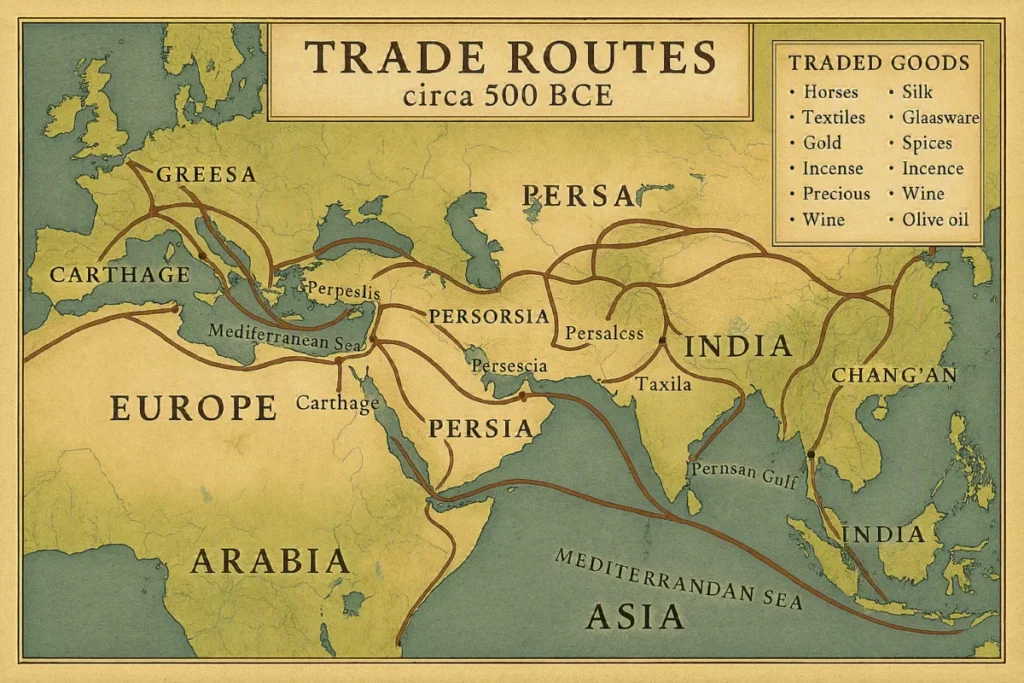
It was the map-generation assignment that most vividly illuminated the extent of students’ uncritical trust in AI. Students were tasked with prompting Copilot to create maps depicting common trade routes across Afro-Eurasia around 500 BCE. The resulting maps, as described by the educator, were "disasters." They contained egregious geographical inaccuracies, such as mislabeling continents (Africa as Australia), placing countries in incorrect geographical locations (India in Europe), and confusing landmasses with oceans.
Despite the stark visual evidence of error, approximately 75 percent of students who attempted the assignment failed to recognize the profound inaccuracies in the maps. This was not due to a lack of basic geographical knowledge but rather a failure to scrutinize the AI’s output. Even with explicit warnings about the potential for error, the overwhelming majority of students accepted the AI-generated maps at face value, demonstrating an alarming level of passive trust.
The Perils of Unquestioning Trust and the Path Forward
This unquestioning trust is perhaps the most worrying aspect of the current educational climate. If students cannot identify blatant geographical errors, such as a continent being mislabeled, how can they be expected to detect more subtle inaccuracies or the insidious inclusion of disinformation within AI-generated content? The ability to analytically scrutinize AI responses is emerging as a paramount skill for navigating the information landscape of the foreseeable future.
To further underscore the unreliability of AI-generated maps, a question was included on the final exam. Students were presented with the same Copilot-generated map of Afro-Eurasian trade routes circa 500 BCE and asked to identify six errors, encompassing both geographical mistakes and inaccuracies related to ancient trade routes. The map, replete with numerous errors, was nearly universally answered correctly by the students. This indicates that when specifically prompted to identify inaccuracies, students possessed the capacity to do so. However, this capacity needed to be explicitly activated; it was not an automatic, ingrained response.
The implication is clear: there is an urgent need to instill a habit of constant questioning and critical analysis of AI outputs. An attitude of perpetual skepticism and rigorous examination must be cultivated. Educators must actively demonstrate to students that their own critical thinking and analytical abilities are superior to those of AI, a belief that appears to be absent in many current learners.
Integrating AI Literacy into the Curriculum
The most effective strategy for fostering this critical mindset is the systematic integration of AI literacy education across all levels of schooling, from high school to university. This includes dedicated instruction within humanities classrooms. The core competencies fostered by the humanities – analytical reading, understanding the construction of knowledge, and rigorous critical thinking – are precisely the foundational skills required for responsible and effective engagement with AI.
By equipping students with the tools to deconstruct, question, and verify AI-generated information, educational institutions can empower them to harness the benefits of AI without succumbing to its potential pitfalls. This proactive approach is essential to ensuring that AI serves as a tool for enhanced learning and intellectual growth, rather than a catalyst for cognitive decline and a diminished capacity for critical thought. The future of informed decision-making and intellectual autonomy hinges on our collective ability to cultivate a generation of discerning AI users.