



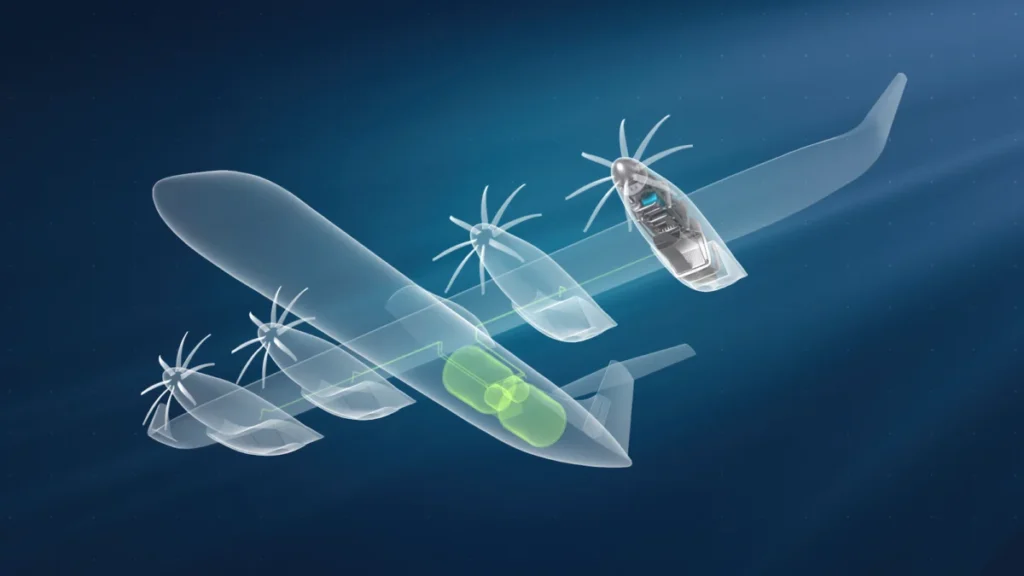
In a move that signals a paradigm shift for the global aerospace industry, Airbus and Germany’s MTU Aero Engines have officially confirmed the establishment of a joint venture dedicated to the development of a fully electric hydrogen fuel cell engine. This strategic partnership, finalized on July 7, aims to revolutionize commercial flight by replacing traditional internal combustion engines with electrochemical propulsion systems. The newly formed entity is slated to begin its operational phase in 2027, pending the necessary regulatory approvals from European Union competition authorities. This collaboration represents the next evolution of the Airbus ZEROe initiative, a multi-year program designed to bring the world’s first zero-emission commercial aircraft to market by 2035.
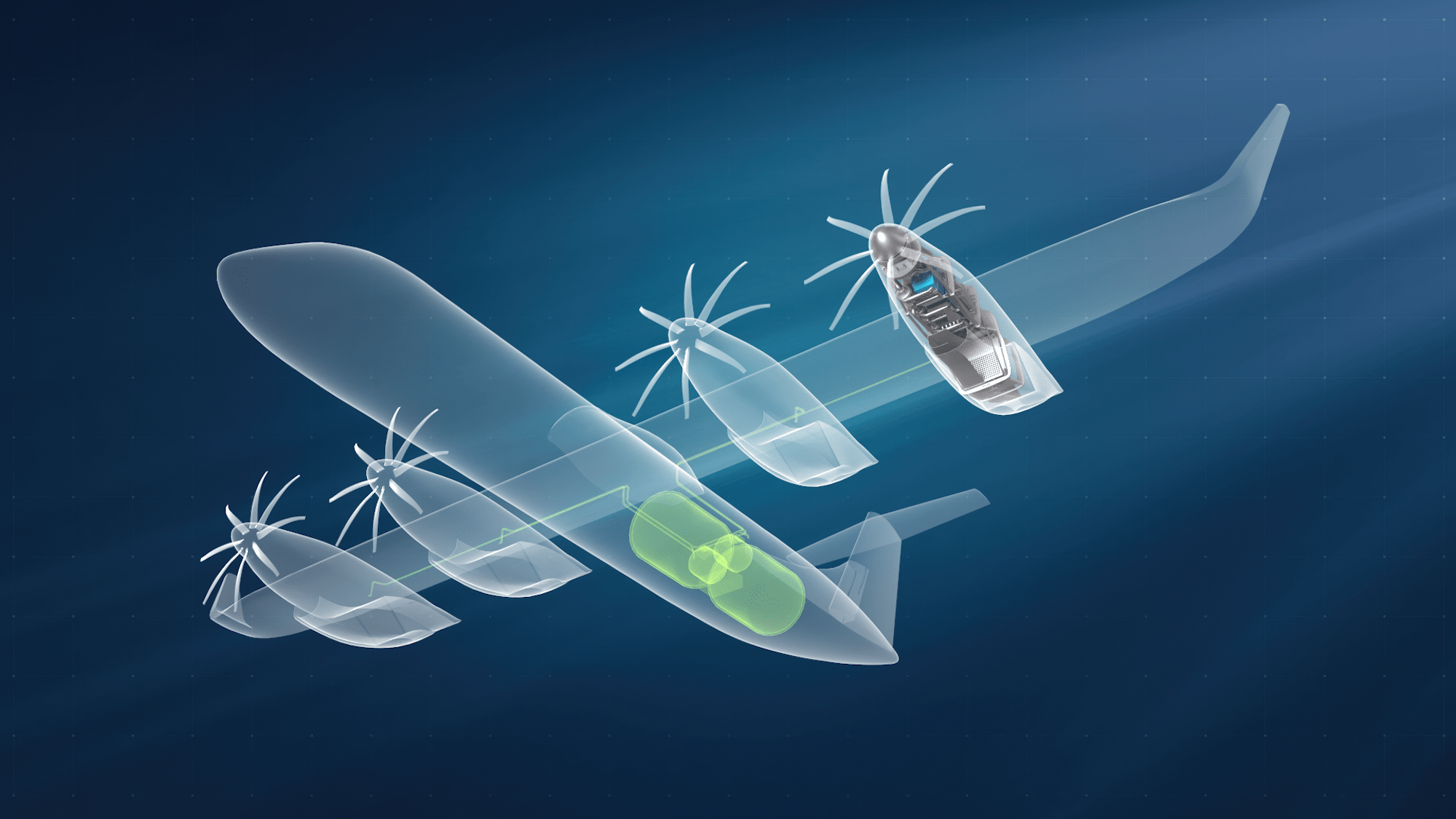
The agreement stems from a memorandum of understanding signed during the 2023 Paris Air Show, where both companies outlined a shared vision for decarbonizing the skies. Under the terms of the joint venture, the partners will combine their respective expertise: Airbus will leverage its extensive experience in aircraft integration and cryogenic fuel systems, while MTU Aero Engines will provide its specialized knowledge in propulsion technology and power plant architecture. The primary objective is to design, test, and certify a propulsion system that utilizes hydrogen fuel cells to generate electricity, which in turn powers electric motors to drive propellers or fans.
The Technological Architecture of Hydrogen Propulsion
To understand the magnitude of this venture, one must look at the fundamental shift in energy conversion it requires. Modern commercial aircraft rely on gas turbines that burn kerosene-based jet fuel. This combustion process releases carbon dioxide (CO2), nitrogen oxides (NOx), and particulate matter, all of which contribute significantly to global warming. In contrast, the system being developed by Airbus and MTU utilizes a Proton Exchange Membrane (PEM) fuel cell.
In this system, liquid hydrogen is stored in specialized cryogenic tanks at temperatures below -253 degrees Celsius. This hydrogen is then fed into a fuel cell stack where it reacts with oxygen from the ambient air. This electrochemical reaction produces a steady stream of high-voltage electricity and heat, with the only chemical byproduct being pure water vapor. By bypassing combustion entirely, the engine eliminates CO2 and NOx emissions at the source.
While the concept of hydrogen fuel cells is not new—having been used in space exploration and experimental automotive applications for decades—scaling this technology for the rigors of commercial aviation presents immense engineering challenges. The propulsion system must be lightweight enough to maintain aircraft efficiency, durable enough to withstand thousands of flight hours, and capable of operating at high altitudes where air density and temperatures fluctuate wildly.
A Chronology of the ZEROe Roadmap
The path toward a hydrogen-powered future has been a meticulously planned journey for Airbus. The timeline below highlights the critical milestones leading up to the current joint venture and the projected path toward 2035:
- September 2020: Airbus officially launches the ZEROe project, unveiling three distinct concept aircraft: a turbofan design, a turboprop design, and a futuristic "blended wing body" configuration.
- February 2022: Airbus announces the "ZEROe Demonstrator" program. The company selects an A380 MSN1—the world’s largest passenger aircraft—to serve as a flying testbed for hydrogen combustion and fuel cell technologies.
- June 2023: At the Paris Air Show, Airbus and MTU Aero Engines sign a memorandum of understanding to explore a partnership for fuel cell propulsion.
- July 2024-2026: Engineering teams conduct preliminary design reviews and bench tests of fuel cell stacks and electric motor controllers.
- 2027: The Airbus-MTU joint venture becomes fully operational, focusing on the "Iron Bird" ground testing phase, where the entire propulsion system is integrated and tested in a laboratory environment.
- 2030-2032: Flight testing begins using the A380 demonstrator to validate the performance of the hydrogen engine in real-world atmospheric conditions.
- 2035: Targeted Entry-into-Service (EIS) for the first commercial hydrogen-powered aircraft.
Industry Context: The Urgent Need for Decarbonization
The aviation sector currently accounts for approximately 2.5% to 3% of global CO2 emissions. However, when considering the non-CO2 effects of aviation—such as the formation of persistent contrails that trap heat in the atmosphere—the industry’s contribution to effective radiative forcing is estimated to be even higher. As other sectors, such as ground transportation and energy production, transition toward renewables, aviation risks becoming a disproportionately large share of the global carbon footprint if it remains tethered to fossil fuels.
The International Air Transport Association (IATA) and the International Civil Aviation Organization (ICAO) have both committed to reaching net-zero carbon emissions by 2050. Achieving this goal requires a multi-pronged approach, including Sustainable Aviation Fuels (SAF), increased operational efficiency, and radical new technologies like hydrogen. While SAF can be used in existing engines, its production remains expensive and limited in scale. Hydrogen is viewed by many experts as the ultimate long-term solution for short-to-medium-range flights due to its high energy density per unit of mass.
Official Responses and Strategic Vision
Leadership from both organizations has emphasized that this joint venture is not merely a research project but a commercial necessity. Stefan Weber, MTU Aero Engines’ Senior Vice President of Engineering and Technology, noted that the ambitious goal of the partnership is to create a propulsion system that is not only safe and reliable but also economically viable. This highlights a critical hurdle: for hydrogen aviation to succeed, it must be cost-competitive with traditional jet fuel.
Airbus has echoed this sentiment, stressing that the project is part of a broader "hydrogen ecosystem." The company is working with airports, energy providers, and logistics firms to ensure that the infrastructure required to produce "green hydrogen"—hydrogen created through electrolysis powered by renewable energy—is in place by the time the aircraft are ready for delivery.
"Our goal is to completely eliminate in-flight carbon dioxide and nitrogen oxide emissions," an Airbus spokesperson stated. "By partnering with MTU, we are combining the best of airframe integration with the best of engine technology to ensure that the 2035 target is not just a goal, but a reality."
Technical and Economic Implications: A Fact-Based Analysis
The transition to hydrogen fuel cells carries profound implications for aircraft design and airport operations. Because liquid hydrogen requires significantly more volume than kerosene for the same amount of energy, future aircraft will likely feature redesigned fuselages or elongated wings to accommodate large, pressurized fuel tanks. This may reduce the passenger capacity of smaller aircraft or require a complete rethink of cabin layouts.
Economically, the success of the Airbus-MTU venture depends heavily on the price of green hydrogen. Currently, "gray hydrogen"—produced from natural gas—is cheap but carbon-intensive. For the ZEROe initiative to be truly "zero emission," the industry must secure a supply of green hydrogen. Analysts suggest that as wind and solar power costs continue to drop, the price of green hydrogen will follow, potentially reaching parity with jet fuel by the mid-2030s.
Furthermore, the regulatory framework for hydrogen aviation is still in its infancy. The European Union Aviation Safety Agency (EASA) and the Federal Aviation Administration (FAA) in the United States will need to develop entirely new certification standards for cryogenic fuel systems and high-output electric motors. The Airbus-MTU joint venture will play a pivotal role in informing these regulators, helping to establish the safety protocols that will govern the next century of flight.
Broader Impact on the Global Market
The collaboration between Airbus and MTU also serves as a competitive response to other players in the field. Companies like ZeroAvia and Universal Hydrogen have already conducted successful test flights of smaller, hydrogen-retrofitted regional planes. Meanwhile, Boeing has focused more heavily on Sustainable Aviation Fuels (SAF) and blended wing body research. By moving into the fuel cell space with a dedicated joint venture, Airbus is positioning itself as the primary mover in the large-scale commercial hydrogen market.
If successful, the impact will extend far beyond the two companies. A viable hydrogen engine would trigger a massive wave of fleet renewals across the globe, creating thousands of jobs in high-tech manufacturing and renewable energy. It would also allow regional airlines to operate in noise-sensitive areas more easily, as electric motors are significantly quieter than internal combustion turbines.
As the joint venture prepares to launch in 2027, the aerospace world will be watching closely. The technical hurdles are high, and the capital requirements are vast, but the reward—a future where air travel no longer contributes to the warming of the planet—is a milestone that could define the 21st century. Through the ZEROe initiative and this new partnership with MTU Aero Engines, Airbus is betting that the future of flight is not just electric, but hydrogen-powered.