



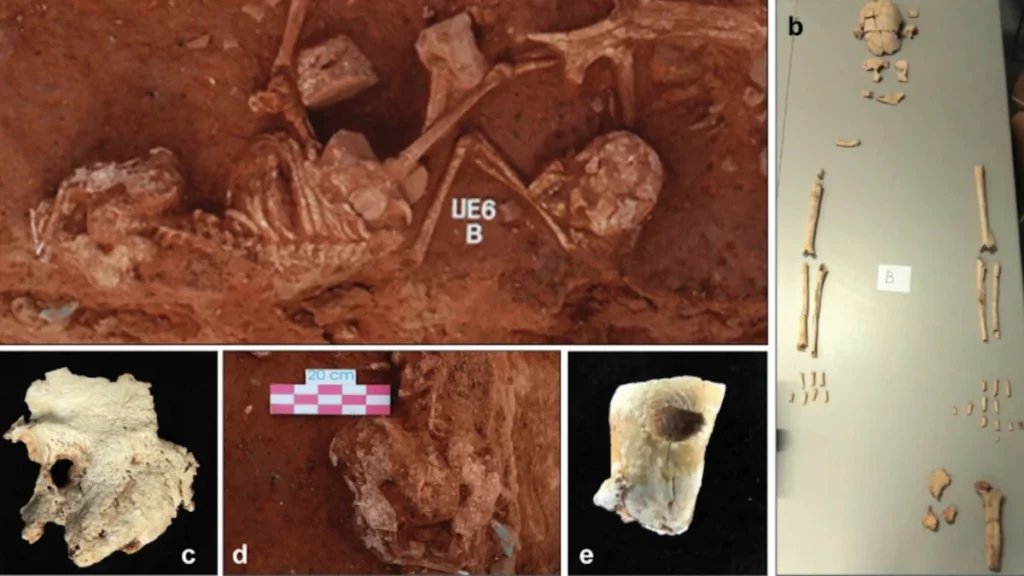
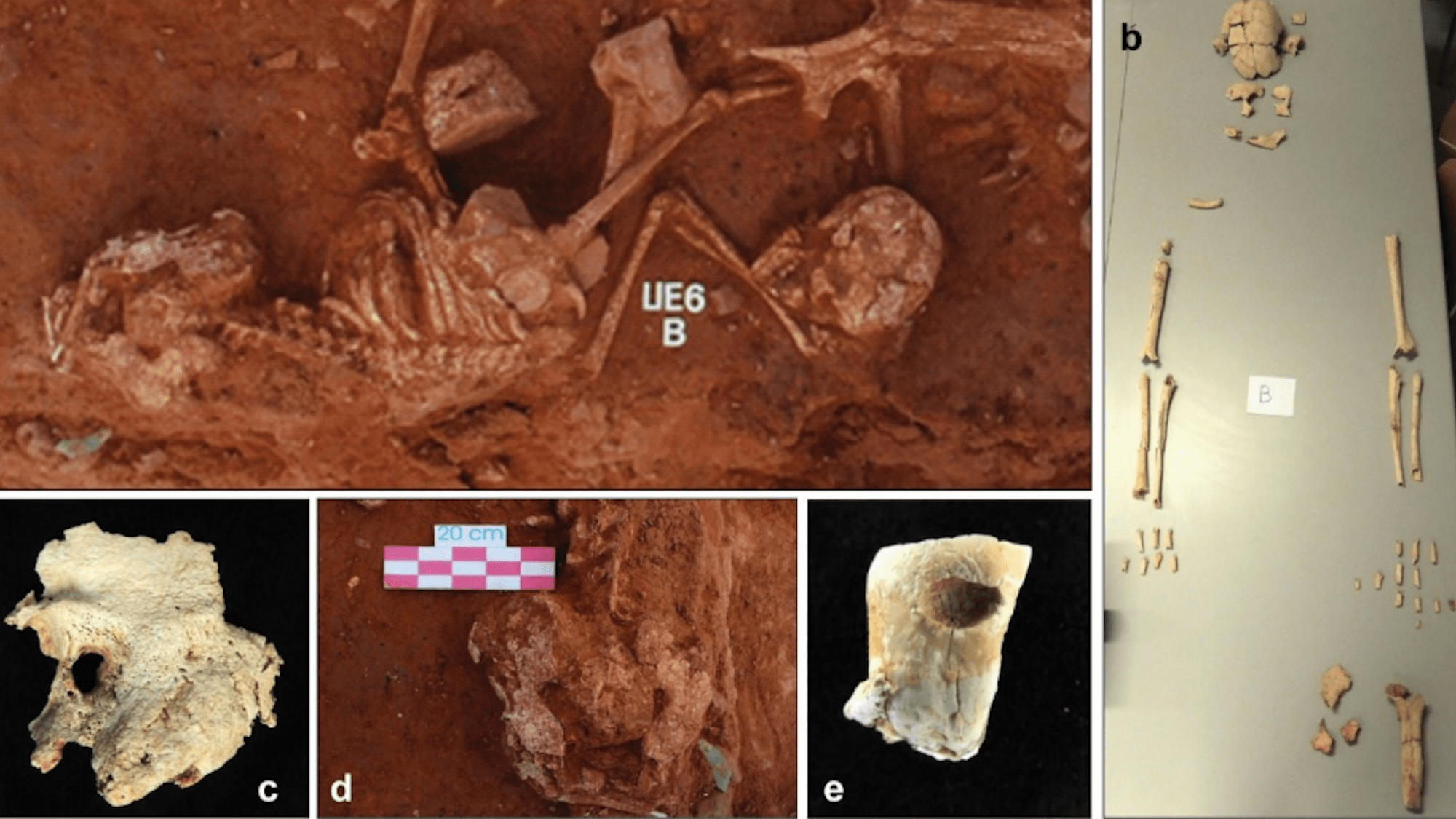
The archaeological record of the Iberian Peninsula has long provided a window into the complex social hierarchies and ritualistic behaviors of the Iron Age, yet few discoveries are as haunting as the remains recently analyzed from Cerro de las Cabezas. New research into skeletal remains originally excavated in 2010 has confirmed that two men, interred over 2,200 years ago, were victims of what archaeologists categorize as "bad deaths." These individuals were not only subjected to extreme violence but were also denied the traditional funerary rites of their culture, buried instead in a manner that suggests a mixture of haste, punishment, and ritualistic symbolism. The findings, published by a team led by researcher J. Herrerín, shed new light on the darker aspects of Iberian life during the late 2nd or early 3rd century BCE, a period characterized by tribal conflict and the looming shadow of Roman expansion.
The Discovery at Cerro de las Cabezas
Cerro de las Cabezas, located near present-day Valdepeñas in the province of Ciudad Real, Spain, is one of the most significant Iron Age sites in the region. An oppidum, or fortified urban settlement, it served as a major center for the Oretani, a powerful Iberian tribe. While most burials from this era involve cremation—a process where the deceased were burned and their ashes placed in ceramic urns within organized necropolises—the two men found at the southeastern defensive wall represent a stark deviation from the norm.
The remains were discovered outside the city’s protective perimeter, a location that carries immense symbolic weight. In Iron Age belief systems, the space outside the city walls was often viewed as liminal or "other," reserved for those who did not belong to the community or those whose deaths were considered polluting or dangerous. The absence of a formal grave, coffin, or grave goods—common staples of Iberian burials—indicates that these men were discarded rather than honored.
Forensic Evidence of Violence
The osteological analysis of the remains provides a grim timeline of the men’s final moments. According to the researchers, both individuals met violent ends, though the nature of their injuries suggests different circumstances.
The first individual, estimated to be between 35 and 45 years old, showed evidence of a previous life of conflict. His skull bore the marks of a healed wound to the frontal bone, likely caused by a blunt force trauma several weeks or months prior to his death. However, his demise was caused by a massive injury to his lower extremities. A deep, sharp-edged cut across his lower right femur indicates a strike from a heavy blade, such as a falcata (a curved Iberian sword). This wound would have severed major arteries, leading to rapid exsanguination.
The second individual, aged between 40 and 59, suffered a more definitive end. Forensic examination confirmed he had been decapitated. The precision and location of the cervical vertebrae damage suggest a perimortem event—occurring at or near the time of death. In the context of Iron Age Iberia, decapitation was often associated with the "severed head cult," a ritual practice where the heads of enemies were taken as trophies or used in religious displays to harness the power of the deceased.
The Mystery of the Red Deer Antlers
What elevates this find from a simple case of ancient homicide to a complex ritualistic event is the presence of six red deer antlers. These antlers, some measuring over three feet in length, were placed strategically above and below the bodies.
In Iberian iconography and archaeology, the red deer (Cervus elaphus) was a creature of profound spiritual significance. Deer were often associated with divinity, nature, and the cycle of life and death due to the annual shedding and regrowth of their antlers. Antlers have been found in numerous "votive deposits" across the peninsula—offerings made to gods in exchange for protection or favor.
The placement of these antlers with the "bad death" victims suggests a ritualistic attempt to "pin" the bodies to the earth or to provide a specific type of supernatural protection for the settlement. By burying these men at the base of the fortification walls with sacred objects, the inhabitants of Cerro de las Cabezas may have been attempting to transform a site of violence into a protective barrier, using the spirits of the deceased as eternal sentinels.
Chronology and Historical Context
The timing of these deaths—the late 2rd or early 3rd century BCE—is crucial for understanding the potential motivations behind such violence. This era was a flashpoint in Mediterranean history, marked by the Second Punic War (218–201 BCE) between Rome and Carthage. The Iberian Peninsula was a primary theater of war, and local tribes like the Oretani were frequently caught in the crossfire, forced to choose sides or defend their territory against invading legions and mercenaries.
Timeline of Cerro de las Cabezas:
- 6th Century BCE: Initial settlement of the hill, taking advantage of its strategic view over the Jabalón River valley.
- 4th-3rd Century BCE: The site reaches its zenith as a major Oretani oppidum, featuring sophisticated urban planning and massive defensive walls.
- Late 3rd Century BCE: Estimated period of the "bad deaths." This coincides with increased military tension in the region.
- 2nd Century BCE: The site begins to decline following the Roman conquest of the interior.
- 2010: Initial excavation of the southeastern wall area reveals the skeletal remains.
- 2026: Modern bioarchaeological analysis confirms the "bad death" classification and ritual antler associations.
Isotopic Analysis and the Identity of the Deceased
A central question for the research team was the identity of the two men. Were they local citizens executed for crimes, foreign enemies captured in battle, or perhaps prisoners of war sacrificed to the gods?
To answer this, researchers utilized isotopic analysis, a method that examines the chemical signatures left in teeth and bones by the water and food consumed during a person’s life. Strontium and oxygen isotopes can often pinpoint the geographic origin of an individual. However, in this instance, the results remained inconclusive. The chemical profiles did not provide enough variance to distinguish whether the men were local to the Valdepeñas region or from neighboring Iberian territories.
The lack of traditional grave goods further complicates the identification. Usually, an Iberian warrior would be buried with his weapons, and a person of high status would be accompanied by imported pottery or jewelry. The total absence of these items reinforces the "bad death" narrative—these men were stripped of their social identity before being cast into the earth.
The Concept of "Bad Death" in Archaeology
The term "bad death" (or mors immatura) refers to deaths that occur prematurely, violently, or under socially "incorrect" circumstances. In many ancient cultures, such deaths were believed to leave the soul restless, potentially returning to haunt the living.
Deviant burials—graves that differ from the norm—are the archaeological manifestation of these fears. Examples from across Iron Age Europe include bodies buried face down, weighed down with heavy stones, or, as seen at Cerro de las Cabezas, placed in non-funerary locations like rubbish pits or city defenses.
"The treatment of these two men suggests they were viewed with a mixture of fear and utility," notes the study. "By denying them cremation, the community was essentially excommunicating them from the afterlife. By placing them at the wall with antlers, they were perhaps being utilized as a ritual sacrifice to ensure the structural or spiritual integrity of the city’s defenses."
Broader Implications for Iberian Studies
The findings at Cerro de las Cabezas challenge the somewhat sanitized view of Iberian society as merely a collection of traders and skilled artisans. It highlights a culture deeply attuned to the ritualization of violence and the spiritual significance of the landscape.
The discovery also prompts a re-evaluation of other "extra-mural" burials found across Spain. It suggests that many remains previously thought to be the result of haphazard disposal during war may, in fact, be carefully orchestrated ritual events designed to navigate the stresses of life in a violent frontier.
As archaeologists continue to explore the ruins of Cerro de las Cabezas, the story of the two men by the wall serves as a reminder of the thin line between the sacred and the profane in the ancient world. Their "bad deaths" have provided a modern breakthrough, offering an unfiltered look at the fears, beliefs, and brutal realities of the Iron Age Oretani. While the exact mystery of their execution may never be fully solved, their presence continues to guard the history of the site they were left to protect over two millennia ago.