
For decades, the primary hurdle to organizational innovation was considered to be the technology itself—its cost, its integration into legacy systems, and its security profile. However, as generative artificial intelligence (AI) rapidly infiltrates the modern workplace, a new, more intangible barrier has emerged: a profound "trust gap" manifesting between colleagues. While executive leadership continues to focus on technical accuracy, data governance, and regulatory compliance, a growing body of research suggests that the most significant risk to AI adoption is not the algorithm, but the informal, often unspoken norms forming within the workforce.
The Emergence of the AI Shadow Culture
A recent industry survey conducted by Blanchard reveals a disturbing trend: nearly 43 percent of surveyed employees report observing "undesirable" behaviors linked to AI usage among their peers. These behaviors range from the subtle social judgment of those who utilize AI tools to the uncritical, automated processing of workplace tasks. Perhaps most telling is that 24 percent of respondents indicated these behaviors have already become normalized within their daily office routines, while only 18 percent admitted to engaging in these practices themselves.
This statistical discrepancy—wherein employees are 2.4 times more likely to identify problematic AI-related behavior in their colleagues than in themselves—points to a "self-awareness gap." This friction is not a product of the technology’s inherent flaws; rather, it is a reflection of existing organizational tensions that AI has surfaced and exacerbated. This phenomenon, increasingly referred to as "AI shadow culture," describes a workplace dynamic where employees use, judge, hide, or avoid AI in ways that remain unaddressed by formal corporate policy.
Chronology of a Shifting Workplace
The rapid adoption of generative AI since late 2022 has created an unprecedented pressure cooker for corporate culture.
- Phase 1: The Novelty Period (Q4 2022 – Q1 2023): Initial curiosity drove widespread, clandestine experimentation. Employees began utilizing large language models for drafting emails and summarizing meeting notes, largely without clear guidance or mandates from management.
- Phase 2: The Policy Vacuum (Q2 2023 – Q3 2023): As IT departments scrambled to implement data security frameworks, a significant gap remained regarding the "human" element. Organizations focused on preventing data leaks while failing to define the acceptable social etiquette for AI-assisted work.
- Phase 3: The Shadow Culture Era (Q4 2023 – Present): AI is now embedded in daily operations. However, because most organizations lack established norms for transparency, employees have adopted informal, often conflicting, strategies to navigate these tools, leading to the five archetypal behaviors that currently undermine team cohesion.
Analyzing the Five Workplace Archetypes
The Blanchard research identifies five recurring archetypes that serve as indicators of a fraying workplace culture. Each archetype represents a distinct failure to integrate AI into the collaborative fabric of the organization.
1. The Judgmental Observer
Comprising 47 percent of observed problematic behaviors, the judgmental observer views AI-assisted output as a sign of laziness or lack of competence. By signaling that AI usage is "lesser," these individuals force their colleagues to hide their workflows, ultimately stifling the collective intelligence that could be gained from shared best practices.
2. The Competitive User
When an employee uses AI to silently "improve" or critique a colleague’s work without engaging them in a collaborative dialogue, they inadvertently signal that efficiency is more important than human partnership. With 42 percent of respondents noting this behavior, the impact is a measurable reduction in the willingness of team members to share unfinished, creative work for fear of automated judgment.
3. The Overconfident Adopter
This archetype mistakes the polish of AI-generated prose for the validity of its logic. With 42 percent of observers witnessing peers pass off AI-generated content without verification, the risk is not just intellectual dishonesty, but the erosion of professional credibility. When the output is inevitably flawed, the person’s entire judgment is brought into question.
4. The Silent Explorer
Secrecy is the defining characteristic of this group. By concealing their use of AI tools, these employees prevent the organization from developing institutional knowledge. When 40 percent of the workforce practices silent exploration, the company loses the ability to set standard benchmarks for what constitutes effective AI application.
5. The Sideline Sponsor
Perhaps the most damaging to morale, this archetype describes leaders who publicly advocate for AI adoption but fail to model it themselves. When 42 percent of staff observe this discrepancy, it creates a "do as I say, not as I do" environment that breeds skepticism and prevents the culture from maturing beyond basic policy compliance.
The Data Behind the Friction
The implications of these behaviors are not merely anecdotal; they represent a fundamental shift in how productivity is measured and perceived. Research indicates that organizations that rely solely on technical governance—ignoring the social norms—experience 30 percent higher levels of employee burnout and lower rates of long-term technology retention.
Data further suggests that the "shadow culture" is not necessarily born of malice, but of ambiguity. In the absence of clear leadership regarding whether AI is a "productivity partner" or a "replacement threat," employees fill the void with their own assumptions. These assumptions often lean toward a defensive posture, where hiding the use of technology becomes a survival mechanism.
Implications for Organizational Strategy
The core issue facing organizations today is that they have confused "policy" with "norms." While a policy document might outline that an employee must disclose AI usage for data protection purposes, it rarely dictates how a team should handle the interpersonal dynamics of that disclosure.
Industry analysts suggest that the solution requires a pivot from rigid control to cultural transparency. This involves:
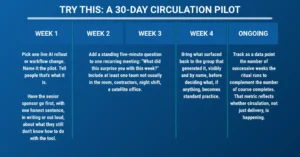
- Formalizing Disclosure: Moving beyond compliance, organizations should encourage "AI journals" or project logs where the role of AI is documented as part of the creative process, rather than a secret to be guarded.
- Defining Accountability: Management must reinforce the concept that while AI can aggregate data and draft structures, the human individual is solely responsible for the accuracy and ethical implications of the final output.
- Collaborative Integration: Encouraging teams to "prompt together" or use AI as a tool for brainstorming rather than a silent tool for critique can shift the narrative from competition to cooperation.
The Future of Human-AI Collaboration
As organizations continue to invest billions into AI infrastructure, the return on investment will be dictated by the strength of the human connections within those companies. If the current trajectory continues, the "trust gap" will likely widen, leading to silos where talent is siloed by their comfort with or skepticism toward technology.
However, companies that actively address the human element of AI—moving past the technical concerns and into the realm of cultural development—stand to gain a significant competitive advantage. By fostering a culture where AI is treated as a transparent, accountable, and collaborative assistant, organizations can mitigate the risks of shadow culture.
The ultimate lesson for leadership is that technology adoption is not an IT project; it is a human experience. As AI becomes an increasingly permanent fixture of the modern workplace, the organizations that succeed will be those that realize the most important variable in the equation is not the model’s accuracy, but the collective trust of the people using it. The challenge is no longer about who is right or who is wrong, but about how to build a unified framework for human-AI interaction that prioritizes institutional integrity over individual performance.