



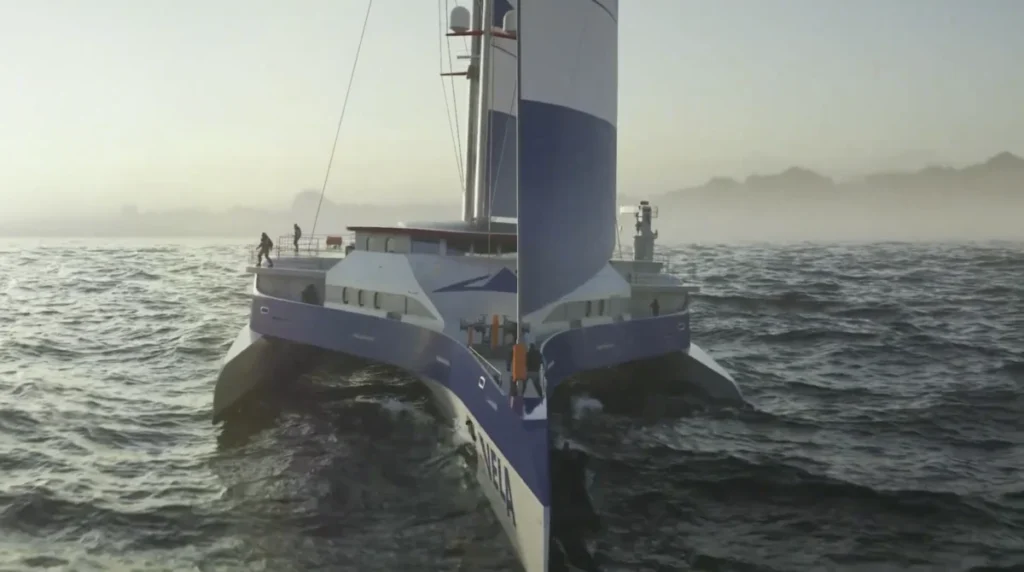
The global logistics industry is currently navigating a period of profound transition as corporations seek to reconcile the demands of international commerce with the urgent necessity of environmental decarbonization. In a significant move toward sustainable maritime operations, DHL Global Forwarding has announced a strategic partnership with the French startup VELA to transport high-value goods across the Atlantic Ocean using advanced wind-powered vessels. This collaboration marks a departure from traditional reliance on heavy-fuel-oil-powered container ships, signaling a return to wind propulsion enhanced by 21st-century aeronautical engineering and racing yacht technology.
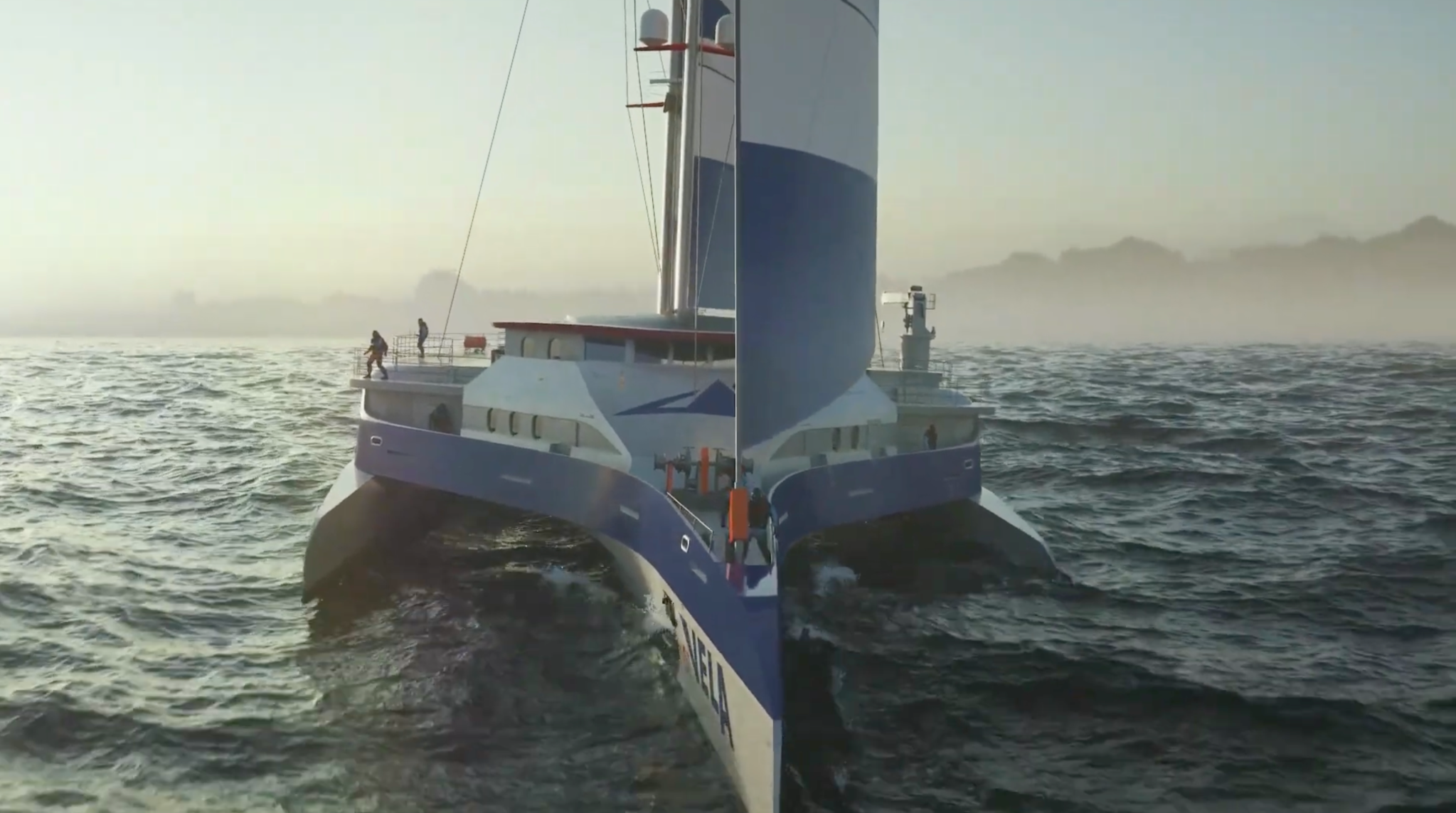
Starting as early as 2025, DHL plans to utilize VELA’s specialized 220-foot-long trimaran to move products such as luxury cosmetics, premium wines, and temperature-sensitive pharmaceuticals from Europe to the United States. Unlike the massive, boxy container ships that dominate modern skylines, VELA’s vessel is a sleek, three-hulled craft designed for speed, stability, and a near-total reduction in operational carbon emissions.
The Engineering of Modern Wind Propulsion
The VELA cargo vessel represents a significant evolution in maritime architecture, drawing heavy inspiration from the high-performance yachts used in competitive ocean racing. Constructed primarily from lightweight aluminum and reinforced with carbon fiber, the vessel is designed to maximize the kinetic energy of the wind. Its trimaran configuration—featuring a central hull flanked by two outriggers—provides an exceptionally wide base. This design is critical for stability, allowing the ship to maintain a steady course through heavy Atlantic swells while supporting a massive sail area of approximately 6,705 square feet.
The use of carbon fiber for the mast and high-performance technical fabrics for the sails allows the vessel to achieve an average cruising speed of 14 knots, or roughly 16 miles per hour. While this speed is modest compared to air freight, it is competitive within the context of maritime logistics, particularly when considering the efficiency of the ship’s routing. Unlike traditional cargo vessels that follow rigid, engine-driven paths, VELA’s navigation is dictated by meteorological data and natural wind corridors. This "weather routing" allows the ship to optimize its journey by following the most favorable wind conditions, much like the legendary tea clippers of the 19th century, albeit with the benefit of modern satellite forecasting.
Addressing the Environmental Crisis in Global Shipping
The partnership between DHL and VELA comes at a time when the shipping industry faces increasing pressure to mitigate its environmental impact. Currently, international maritime trade is responsible for approximately 3 percent of all global carbon dioxide emissions. If left unchecked, some estimates suggest this figure could rise significantly as global trade volumes continue to expand.
The primary environmental culprit is the industry’s reliance on heavy fuel oil (HFO). As a byproduct of the crude oil refining process, HFO is inexpensive but exceptionally "dirty." When burned, it releases high levels of sulfur dioxide and black carbon—fine particulate matter that contributes to global warming and poses severe health risks, including heart and lung disease. By utilizing wind as its primary source of propulsion, VELA estimates that its vessels can reduce carbon emissions by up to 99 percent compared to air freight and 90 percent compared to conventional container ships.
DHL has publicly committed to achieving net-zero emissions by 2050, a goal that requires a multi-faceted approach involving sustainable aviation fuel, electric delivery fleets, and innovative maritime solutions. While the company acknowledges that wind power cannot yet replace the massive scale of traditional shipping, it views VELA’s technology as a vital tool for creating "green corridors" for specific high-value trade routes.
A New Logistics Paradigm: Quality Over Velocity
One of the most notable aspects of the DHL-VELA partnership is the acknowledgment that not all cargo requires the blistering speed of air transport or the rigid scheduling of traditional ocean freight. The "slow steaming" movement in shipping has already demonstrated that reduced speeds can lead to significant fuel savings; the VELA project takes this a step further by prioritizing environmental integrity over rapid delivery.
A typical container ship can cross the Atlantic in about nine days, while air freight completes the journey in less than 24 hours. The VELA trimaran is expected to take approximately 15 days. For many consumer goods, this six-day difference is negligible, especially for products like aged wine or luxury perfumes where the brand value is increasingly tied to the sustainability of the supply chain.
Furthermore, the VELA vessel offers unique operational advantages that larger ships cannot match. Due to its smaller size and shallower draft, the trimaran can access secondary ports that are inaccessible to massive 20,000-TEU (Twenty-foot Equivalent Unit) container ships. Major international ports often suffer from extreme congestion, leading to weeks of delays as ships wait for berth space. By utilizing smaller, less-crowded harbors, VELA can potentially shorten the "last mile" logistics and reduce the overall time cargo spends sitting in port.
Capacity and Economic Scalability
While the VELA vessel is a marvel of engineering, it is small by modern commercial standards. The ship can carry roughly 415 metric tons of material, equivalent to about 600 European pallets. To put this in perspective, this capacity is five times greater than that of a standard cargo plane but only a fraction of a traditional container ship, which can carry tens of thousands of pallets.
Because of these capacity constraints, the sailboat is positioned as a premium service. DHL Global Forwarding noted that the primary objective is to expand the range of transport options for customers, enabling them to choose solutions that align with their specific environmental, social, and governance (ESG) targets. The target market includes the pharmaceutical industry, which requires precise climate control—provided on the VELA boat via deck-mounted solar panels—and the luxury goods sector, where consumers are willing to pay a premium for carbon-neutral shipping.
Chronology of Development and Future Outlook
The partnership between DHL and VELA is the result of several years of research and development into alternative propulsion.

- 2023: VELA was founded in France with the goal of creating the world’s first trimaran specifically designed for heavy freight.
- 2024: DHL and VELA formalized their partnership, beginning the logistical planning for the first "green" transatlantic route.
- 2025-2026: Pilot programs and sea trials are expected to take place, testing the vessel’s performance in varied North Atlantic weather conditions.
- 2027: The vessel is slated for its official maiden voyage, with a significant portion of its cargo space reserved exclusively for DHL customers.
As the 2027 launch approaches, VELA intends to build a fleet of these vessels to provide regular, scheduled service. This would allow for a continuous "pipeline" of wind-powered freight, mitigating the impact of the 15-day transit time through frequency and reliability.
Broader Implications for Marine Life and Global Trade
Beyond carbon emissions, the shift to wind power offers significant benefits for marine ecosystems. Traditional cargo ships generate immense underwater noise pollution from their engines and propellers, which interferes with the communication and navigation of whales and other marine mammals. The VELA trimaran, operating primarily under sail, is significantly quieter, reducing the acoustic footprint of transatlantic trade.
Additionally, the vessel’s end-of-life cycle has been considered in its design. The aluminum construction is more readily recyclable than the complex steel and composite structures of traditional ships, aligning with the principles of a circular economy.
DHL’s foray into wind power is part of a broader history of experimentation with unconventional delivery methods. The company already utilizes gondolas in Venice, solar-powered boats on the canals of Berlin, and even snowshoes for deliveries in the rugged terrain of rural Norway. This willingness to adapt to local environments and leverage ancient technologies suggests that the future of global logistics may not be a one-size-fits-all model of ever-larger engines, but rather a diverse ecosystem of specialized, low-impact vehicles.
The success of the VELA project could serve as a proof-of-concept for the wider maritime industry. If wind-powered cargo can be proven reliable and economically viable for high-value goods, it may encourage larger shipping lines to integrate auxiliary wind systems—such as rotor sails or automated kites—onto their existing fleets. For now, the DHL-VELA partnership stands as a bold experiment in "back-to-the-future" logistics, proving that the oldest power source in human history may still be the most effective way to protect the planet’s future.