

Visualizing complex information is an innate human tendency, a spontaneous act of clarification that often involves sketching or diagramming to elucidate ideas. This fundamental drive to represent knowledge graphically finds a highly effective, evidence-based application in concept mapping, a pedagogical strategy gaining renewed attention from cognitive scientists. Dr. Kripa Sundar, a distinguished cognitive scientist specializing in this domain, alongside Dr. Pooja Agarwal, editor of the influential book "Smart Teaching Stronger Learning: Practical Tips from 10 Cognitive Scientists," are at the forefront of advocating for the widespread adoption of concept maps in educational settings. Their insights, shared through various platforms, underscore concept mapping as a robust, low-tech, yet profoundly impactful tool for enhancing comprehension and memory retention across all levels of learning.
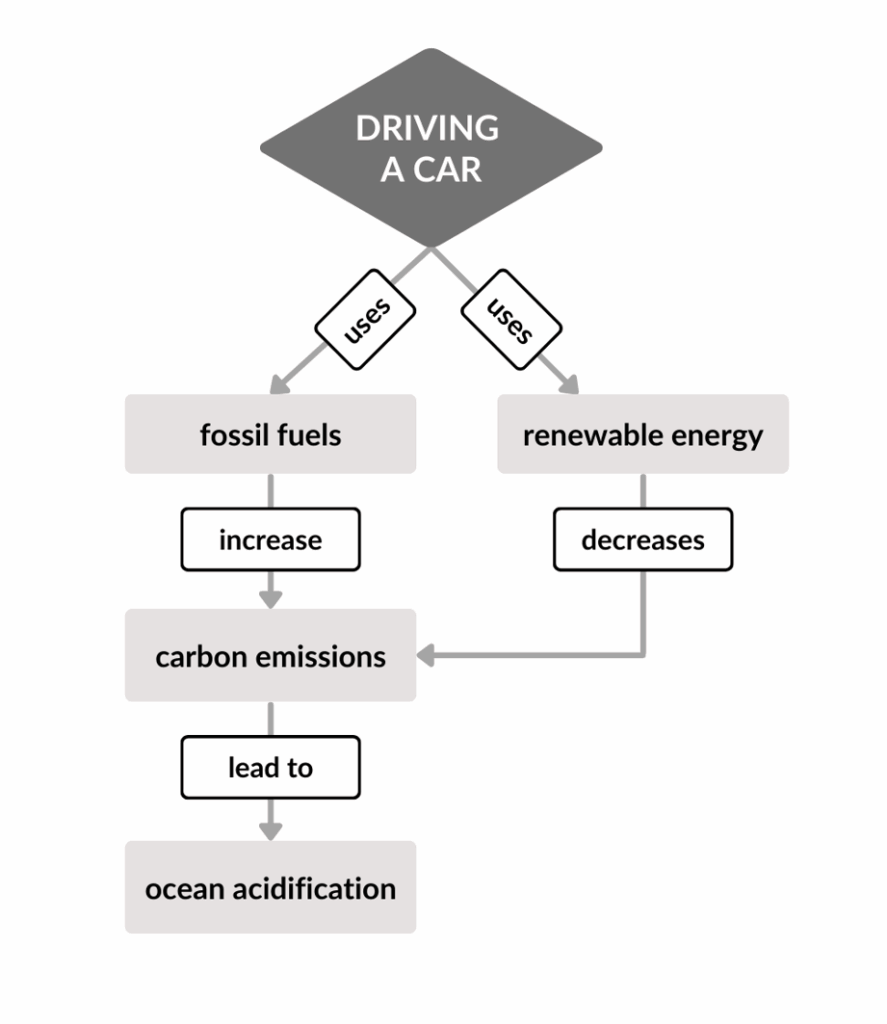
Concept maps serve as graphic organizers or visual representations of knowledge, distinguishing themselves from simpler visual aids like mind maps or spider maps through their emphasis on hierarchical structures and propositional relationships. At their core, concept maps consist of "nodes"—boxes or bubbles containing key concepts—interconnected by lines or arrows. Crucially, these connectors are not merely decorative; they are labeled with "linking words" that explicitly define the relationship between adjacent concepts, forming meaningful propositional statements. This structured approach, while seemingly straightforward, engages learners in a deeper cognitive process that significantly outperforms passive learning methods such as lectures or simple text summaries, a claim supported by extensive meta-analyses in educational research.
The Cognitive Science Foundation of Concept Mapping
The efficacy of concept maps is deeply rooted in established cognitive science principles, particularly the memory formation model, which involves encoding, storage, and retrieval. Dr. Sundar emphasizes that concept maps uniquely engage all three phases, making them a "packed strategy" for learning.
-
Encoding: The act of constructing a concept map requires learners to actively process and organize new information. This involves identifying key concepts, discerning their hierarchical relationships, and formulating precise linking words. This active elaboration enhances the initial encoding of information into long-term memory, moving beyond superficial memorization to a more meaningful understanding. The process compels students to synthesize information, rather than merely absorb it, thereby creating richer, more interconnected memory traces.

-
Storage: Concept maps facilitate the creation of robust and organized knowledge structures, or schemas, in the learner’s mind. By visually representing how concepts relate, learners build a coherent mental framework. This structured storage makes information more accessible and less prone to decay over time. The explicit linking words prevent isolated pieces of information, instead fostering a network of interconnected ideas, making it easier to recall specific details by traversing related concepts. This aligns with dual coding theory, proposed by Allan Paivio, which suggests that information is better remembered when it is encoded both visually and verbally. Concept maps inherently leverage this by presenting concepts (verbal) within a spatial, graphical structure (visual).
-
Retrieval: The very structure of a concept map acts as a powerful retrieval cue. When learners revisit their maps or attempt to reconstruct them, they engage in retrieval practice—a highly effective learning strategy. This active recall strengthens memory pathways and helps identify gaps in understanding. Furthermore, the hierarchical and relational nature of concept maps allows for more efficient and accurate retrieval of information, as learners can navigate their mental models to pinpoint specific details or relationships. This contrasts sharply with rote memorization, which often leads to fragmented knowledge and difficulty in applying information.
Beyond these core memory processes, concept mapping also fosters metacognition. As learners construct maps, they are forced to reflect on their own understanding, identify misconceptions, and clarify ambiguous relationships. This self-monitoring is a critical component of effective learning, empowering students to take ownership of their knowledge acquisition.
A Brief History of Visualizing Knowledge in Education
The practice of using visual aids to organize and understand information is ancient, dating back to early philosophical diagrams. However, the formal development of concept mapping as a pedagogical tool is relatively recent. In the 1970s, Joseph Novak, a research scientist and professor at Cornell University, developed concept mapping as a way to represent students’ emerging scientific knowledge. His work was based on David Ausubel’s assimilation theory, which emphasizes that meaningful learning occurs when new concepts are linked to existing knowledge structures. Novak’s innovation was to create a structured visual tool that could explicitly show these connections, making the learning process visible and assessable.
Initially, concept maps were primarily used in science education, but their utility quickly expanded across disciplines. Over the decades, variations like mind maps (often less structured, radiating from a central idea) and spider maps (branching diagrams) emerged, but concept maps retained their unique emphasis on propositional links and hierarchical organization. The current resurgence in interest, championed by cognitive scientists like Dr. Sundar, reflects a deeper understanding of the neurological and psychological underpinnings that make these tools so effective.
Expert Insights from "Smart Teaching Stronger Learning"
The collective wisdom presented in "Smart Teaching Stronger Learning," edited by Dr. Pooja Agarwal, consolidates actionable, evidence-based classroom practices from ten leading cognitive scientists. Dr. Kripa Sundar’s chapter on concept mapping is a cornerstone of this collection, offering practical guidance grounded in rigorous research. The book’s overarching goal is to bridge the gap between cognitive science research and classroom application, providing educators with concrete strategies to optimize student learning. This initiative is particularly timely, given the increasing demand for instructional methods that move beyond traditional passive reception of information to active knowledge construction.
Dr. Sundar’s contribution not only reaffirms the power of concept maps but also provides a roadmap for their optimal implementation. Her advocacy for their use extends beyond simple memorization, highlighting their potential to cultivate critical thinking, problem-solving, and the ability to synthesize complex information—skills essential for 21st-century learners. The book itself, a collaborative effort, stands as a testament to the growing recognition within the educational community of the need to integrate cognitive science into pedagogical practice.
Best Practices for Maximizing Concept Map Effectiveness
While concept maps are inherently powerful, their impact can be significantly amplified through strategic application. Dr. Sundar outlines several key best practices:
-
Be Clear About Your Motivation (The "Why"): Before embarking on concept mapping, educators must clarify their objectives. Is the map intended for individual learning, group collaboration, whole-class instruction, note-taking, or as a formal assessment? The purpose dictates the design and level of detail. For instance, a map designed for initial concept introduction might be less detailed than one used for summative assessment, requiring students to demonstrate a comprehensive understanding of interconnections. This intentionality ensures that the activity serves a specific learning goal, preventing it from becoming a mere exercise in diagramming.

-
Have a Guiding Question: A well-defined guiding question is paramount to managing the complexity of a concept map. Without a specific focus, maps can quickly become overwhelming, encompassing too many concepts and obscuring core relationships. A precise question acts as a cognitive filter, directing learners to include only relevant concepts and connections. Dr. Sundar illustrates this with examples related to ocean acidification:
- A guiding question like "What is the relationship between driving a car and ocean acidification?" yields a focused, linear map detailing the chain of causality from fuel consumption to atmospheric CO2, ocean absorption, and subsequent acidification. This narrow scope makes the initial mapping process manageable for students, allowing them to grasp a specific cause-and-effect relationship.
- In contrast, a broader question such as "What is the relationship between human activities and ocean acidification?" necessitates a far more intricate map, incorporating various anthropogenic factors like industrial emissions, deforestation, agricultural runoff, and their interconnected impacts. While more comprehensive, such a map would be introduced after foundational understanding is established or broken down into smaller, manageable sections to avoid "concept map shock."
-
Utilize Linking Words: This is arguably the most critical and often overlooked best practice. Connecting nodes with simple lines is insufficient for deep learning. The true power emerges when these lines are augmented with directional arrows and explicit linking words (e.g., "causes," "leads to," "is a type of," "results in," "is composed of"). While Dr. Sundar admits this "is a pain in the beep," she emphasizes that "that’s when you really push your learning harder." The effort required to articulate these precise relationships forces learners into higher-order thinking, compelling them to analyze, synthesize, and evaluate the connections between concepts. This process helps identify fuzzy thinking or genuine misconceptions, transforming a visual aid into a robust tool for constructing propositional knowledge.
Transforming the Classroom: Practical Applications of Concept Maps
Concept maps are versatile tools that can be integrated into various instructional practices, offering significant benefits for both teachers and students.
-
Expert Maps (Teacher-Created): Teachers can construct "expert maps" to provide students with a high-level overview of a unit’s key concepts and their interrelationships. These maps act as advanced organizers, setting the stage for learning by presenting the "big picture" from the outset. This helps students situate new information within a broader context, making the learning journey more coherent. However, Dr. Sundar cautions against "concept map shock," where an overly complex initial map can overwhelm learners. To mitigate this, teachers can introduce a skeletal expert map with only major concepts, gradually revealing more detailed connections as the unit progresses. This scaffolding approach allows students to build their understanding incrementally, preventing cognitive overload. Expert maps can serve as reference tools, helping students track their progress and understand how individual lessons contribute to a holistic understanding.
-
Note-Taking: Moving beyond linear note-taking, students can use concept maps to capture and organize information during lectures, readings, or research. This method is not only more efficient but also more effective in representing the complex relationships between ideas. Instead of transcribing information verbatim, students actively process and distill content into concise nodes and linking phrases. This active engagement during note-taking transforms a passive activity into an active learning experience, improving immediate comprehension and long-term retention. A simple technique recommended by Sundar is to provide a list of key terms and have students periodically construct maps showing their interconnections, reinforcing learning throughout a unit.
-
Formative Assessment: Concept maps are exceptional formative assessment tools. By asking students to create or complete a concept map, teachers gain invaluable insights into their understanding, identify misconceptions, and gauge the depth of their knowledge. For instance, providing a partially completed map and asking students to fill in missing nodes or linking words can reveal specific areas where understanding is weak. Analyzing student-generated maps allows educators to pinpoint common errors in conceptual understanding or relational thinking, informing subsequent instructional adjustments. This goes beyond traditional quizzes by revealing not just what students know, but how they connect that knowledge.
-
Collaborative Learning: Concept mapping lends itself exceptionally well to group activities. Students working together to construct a map must articulate their understanding, negotiate meanings, and collectively build a shared representation of knowledge. This collaborative process fosters rich discussions, peer teaching, and the co-construction of meaning, enhancing both individual and collective learning outcomes. It also helps develop communication and teamwork skills.
-
Curriculum Integration: Concept maps are not confined to a single subject. In science, they can illustrate biological processes or chemical reactions. In history, they can depict causes and effects of major events or relationships between historical figures. In literature, they can map character relationships, thematic connections, or plot structures. Their adaptability makes them a valuable tool across the entire curriculum, promoting interdisciplinary connections and deeper learning in diverse contexts.
Broader Implications for Educational Excellence
The insights from cognitive scientists like Dr. Kripa Sundar and Dr. Pooja Agarwal highlight a critical shift in educational philosophy: moving from instruction that merely delivers information to one that actively cultivates understanding and critical thinking. The widespread adoption of concept mapping has several broader implications for educational practice:
- Enhanced Student Engagement: The active, constructive nature of concept mapping can significantly boost student engagement. Learners are no longer passive recipients but active architects of their knowledge.
- Development of Higher-Order Thinking Skills: Creating effective concept maps demands analysis, synthesis, evaluation, and critical thinking—skills crucial for academic success and real-world problem-solving.
- Support for Diverse Learners: Visual learning strategies, including concept mapping, can be particularly beneficial for visual learners and can help differentiate instruction to meet diverse learning needs. The act of externalizing thoughts can also support students with processing challenges.
- Informed Pedagogical Decisions: Teachers who regularly use and assess concept maps gain a clearer picture of their students’ cognitive processes, allowing for more targeted and effective instruction.
- Professional Development: The effective implementation of concept mapping requires professional development for educators, ensuring they understand the underlying cognitive principles and best practices for integrating these tools into their teaching.
In an increasingly complex world, the ability to organize, synthesize, and critically evaluate information is paramount. Concept maps, simple in design but profound in their cognitive impact, offer a powerful, evidence-based pathway to achieving deeper, more meaningful learning outcomes. As educational institutions continue to seek innovative and effective teaching strategies, the call from cognitive scientists for greater integration of concept mapping provides a clear and compelling direction.