



Veeam Software, a global leader in data protection and ransomware recovery, has issued a stark warning to enterprises worldwide: the rapid adoption of artificial intelligence is significantly outpacing the foundational data governance, visibility, and recovery controls essential to support it. This burgeoning disparity, articulated in the company’s latest research, creates what Veeam terms a "Data and AI Trust Gap," posing substantial risks to organizational integrity, operational continuity, and reputational standing.
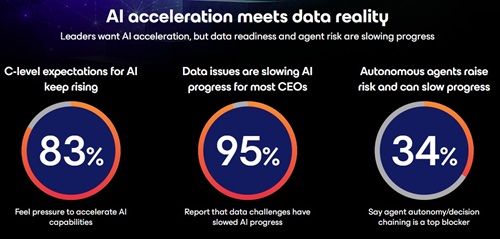
The findings, unveiled in Veeam’s comprehensive Data & AI Trust Gap report, are based on a global survey of 600 senior executives spanning diverse industries. The central revelation is not a hesitation towards AI adoption itself – a staggering 88% of organizations are already actively deploying or piloting AI agents. Rather, the core issue lies in preparedness: a mere 7% of these organizations qualify as "truly AI-ready," and a dominant 95% concede that data-related challenges have already impeded their AI progress. This scenario paints a picture of enthusiastic embrace of innovation colliding with an underdeveloped infrastructure of trust and control.
The Genesis of the Trust Gap: A Rapidly Evolving Landscape
The acceleration of AI, particularly the explosion of generative AI technologies in recent years, has dramatically reshaped the enterprise landscape. What began as experimental ventures into machine learning and automation has quickly evolved into widespread integration of sophisticated AI agents designed to interact with vast datasets, automate complex workflows, and influence critical business decisions. This rapid evolution, however, has not been uniformly matched by the development of robust data management and protection strategies. Historically, data management focused on backup, disaster recovery, and ensuring uptime for applications and systems. The advent of autonomous AI agents introduces a new paradigm, where data itself becomes the primary locus of potential failure and risk.

Anand Eswaran, CEO of Veeam, encapsulated this shift, stating, "Most organizations don’t have an AI adoption problem; they have an AI trust problem. The first phase of AI was defined by infrastructure investment, experimentation, and acceleration. The next phase will be defined by trust." Eswaran’s assertion underscores a critical inflection point where the sheer capability of AI must be tempered by an equally sophisticated ability to manage its inherent risks. He further elaborated on the evolving questions facing enterprises: "With the widespread adoption of autonomous AI agents operating at machine speed, the question transitions from whether you can use AI, to whether you can ensure all your data is secure, governed, compliant and resilient. And should something go wrong, can you recover with precision? That’s how you accelerate safe AI at scale without accelerating reputational and operational risk." This perspective highlights the urgent need for a paradigm shift in how enterprises approach data integrity and resilience in the AI era.
Beyond Traditional Outages: The Nuance of AI Failure
One of the most operationally significant insights from Veeam’s report for cloud and infrastructure teams is the profound redefinition of "failure" in an AI-driven environment. Unlike traditional IT incidents, which often manifest as broad system downtime or application outages, AI failures are predicted to be far more insidious and localized. The report warns that as AI systems become increasingly autonomous, the risk is migrating from macroscopic system failures towards granular, data-level incidents that are inherently more challenging to detect, explain, and contain.
Consider an AI agent inadvertently altering critical financial records, exposing sensitive customer information, triggering an incorrect supply chain workflow, or subtly influencing a major business decision based on flawed or compromised data. In such scenarios, the system itself might remain operational, making traditional monitoring tools ineffective in flagging a problem. The implications for data protection and recovery strategies are profound. Restoring a virtual machine, database, or an entire application environment, which are standard recovery protocols for traditional outages, would be insufficient. A true recovery from an AI-induced data incident would necessitate a far more granular understanding: identifying precisely which data elements were used, which systems were accessed, what specific actions were taken by the AI, and crucially, which business decisions were influenced.
The survey data starkly illustrates this capability gap. Among organizations already utilizing AI, only 22% reported being able to identify within minutes which data a compromised AI system had used. This figure drops slightly to 29% for identifying accessed systems, 25% for pinpointing specific actions taken, and a mere 24% for determining which decisions were influenced. Alarmingly, only 40% of senior leaders expressed high confidence in their ability to isolate and precisely reverse an agentic AI failure. This lack of visibility and control transforms potential AI benefits into significant liabilities, creating an environment ripe for unmitigated data corruption, compliance breaches, and reputational damage.
The Imperative for Precision Recovery
The report forcefully connects the broader AI discussion directly to the fundamental concept of data resilience, but with a critical refinement: the evolution from broad recovery to "precision recovery." Machine-speed mistakes, by their very nature, can outpace human detection and even automated anomaly flagging. This necessitates a shift from simply rolling back entire environments to a more surgical approach – restoring only the affected data, transactions, or workflows, while leaving unaffected components intact.
Precision recovery demands an unparalleled level of data granularity, metadata management, and audit trails. It requires robust data lineage capabilities, allowing organizations to trace every interaction an AI agent has with data, from its ingestion to its transformation and application. This includes understanding the specific algorithms applied, the parameters used, and the outputs generated. Without this forensic capability, enterprises risk either incomplete recoveries, leaving residual corruption, or over-recovering, causing unnecessary downtime and loss of legitimate, subsequent data. The complexity is amplified by the interconnected nature of modern enterprise systems, where a single AI-driven decision can ripple across multiple applications and datasets.
Defining AI Readiness: Ambition, Visibility, and Governance
Veeam’s report provides a practical framework for organizations striving for true AI readiness, built upon three foundational pillars: ambition, visibility, and governance.

-
Ambition: This pillar emphasizes the necessity for clear, well-defined goals for both data and AI initiatives. It moves beyond mere experimentation to strategic integration, ensuring that AI deployments align with overarching business objectives and contribute measurably to outcomes. An ambitious organization understands not just how to deploy AI, but why and what it aims to achieve, coupled with a proactive assessment of associated risks and rewards. This includes establishing a robust ethical framework for AI use, anticipating regulatory changes, and fostering a culture of responsible innovation.
-
Visibility: At its core, visibility refers to an organization’s ability to maintain a reliable, comprehensive, and real-time view of its data estate. This means knowing precisely what data is held, where it resides (on-premises, multi-cloud, hybrid environments), its classification (sensitive, regulated, operational), its quality, and its current state. For AI, visibility extends to understanding how AI models interact with this data, what data they consume, how they transform it, and what data they generate. Without this granular insight, managing AI risks effectively becomes an insurmountable challenge. This also necessitates advanced data discovery, cataloging, and metadata management tools that can keep pace with dynamic AI environments.
-
Governance: The governance pillar establishes the structures, policies, and processes that enable data to be used safely, ethically, and compliantly within an AI context. This includes robust data access controls, data quality standards, privacy regulations (e.g., GDPR, CCPA), and internal policies governing AI model development, deployment, and monitoring. Effective governance ensures accountability, mitigates legal and compliance risks, and builds internal and external trust in AI initiatives. For AI, governance must also encompass model versioning, explainability (the ability to understand how an AI arrived at a decision), and auditability to meet both internal standards and evolving regulatory requirements.
The few organizations that qualify as "truly AI-ready" – the 7% identified by Veeam – are distinguished by their proactive and integrated approach across these three building blocks. These leaders are not only experimenting with AI but are also concurrently investing in the underlying data infrastructure and governance frameworks that ensure safe, scalable, and trustworthy AI adoption. They recognize that technical innovation without robust control is a recipe for disaster.
Broader Implications and the Road Ahead

The "Data and AI Trust Gap" highlighted by Veeam carries profound implications for various stakeholders within the enterprise and across the broader industry.
For IT and Data Protection Teams, the report signals a fundamental shift in their mandate. Their role is no longer confined to traditional backup and recovery; it now extends to becoming custodians of AI data integrity, requiring new skill sets in data lineage, AI-specific incident response, and precision recovery techniques. This may necessitate investments in new tools, automation capabilities, and continuous training to manage the unprecedented scale and speed of AI-driven data interactions.
Business Leaders and Executives must recognize that the competitive advantage offered by AI is inextricably linked to the ability to manage its risks. Investing in data governance and resilience is not merely a cost center but a strategic imperative that safeguards brand reputation, ensures regulatory compliance, and maintains customer trust. Boards of directors will increasingly demand clear strategies for managing AI-related data risks.
For Compliance and Legal Departments, the emergence of data-level AI failures presents a complex challenge. Proving compliance with data privacy regulations becomes significantly harder if the organization cannot precisely identify what data an AI agent accessed, modified, or exposed. The need for auditable AI processes and demonstrable data lineage will become paramount in navigating future regulatory landscapes.
The report also implicitly calls for industry collaboration to develop best practices and standardized frameworks for AI data governance and recovery. As AI technologies continue to evolve, the collective intelligence of vendors, enterprises, and regulatory bodies will be crucial in establishing robust ecosystems of trust.

In conclusion, Veeam’s Data & AI Trust Gap report serves as a critical wake-up call, urging enterprises to temper their enthusiasm for AI adoption with an equally fervent commitment to data trust. The future of AI in the enterprise hinges not just on its computational prowess, but on the ability of organizations to govern, protect, and precisely recover the data that fuels it. As AI agents move with machine speed, the capacity for human and automated oversight, control, and recovery must evolve at an even faster pace to bridge this widening trust gap and ensure a safe, sustainable, and truly transformative AI future.