


The landscape of professional development and organizational effectiveness is undergoing a seismic shift, driven by the accelerating integration of artificial intelligence (AI) into the workplace. This transformation, while promising unprecedented efficiencies, is also sparking palpable anxiety among professionals, particularly within the Learning and Development (L&D) sector. A recent, candid conversation with a seasoned L&D leader revealed a prevalent sentiment of apprehension: "My team is scared. And I don’t disagree with them, to be honest. Are we even going to have jobs in a year?" This sentiment, though often unspoken, echoes through many L&D departments grappling with the implications of AI.
While this fear is understandable, emerging research offers a compelling reframing of the situation. Data consistently suggests that AI will automate a significant portion of current work. However, this does not signal an obsolescence of human roles, but rather a recalibration. The focus is shifting towards a more concentrated and elevated sphere of human endeavor: work that is inherently creative, innovative, and judgment-driven. This highly specialized domain demands not merely individual expertise but a sophisticated form of collective intelligence, a concept increasingly identified as "team cognition." This is the very work L&D has long strived to cultivate, but the stakes, and the timeline, have accelerated dramatically. The critical question for L&D leaders is no longer about the survival of their teams in the AI era, but about their capacity to foster teams that will actively thrive within it – teams that excel not just in individual task execution but in the synergistic process of collective thinking.
The Shifting Unit of Performance: From Individual to Team
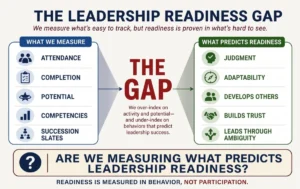
For decades, the prevailing paradigm in corporate learning has been rooted in the principle of individual development. The assumption was straightforward: enhance individual skills, and organizational performance would naturally follow. This model, characterized by training individuals, measuring their progress, and promoting them based on their capabilities, provided a clear and manageable framework for L&D interventions. While this approach is not inherently flawed, its sufficiency is rapidly diminishing.
The increasing automation of routine, procedural, and high-volume tasks by AI has fundamentally altered the nature of human work. What remains is work that is inherently collaborative and cannot be effectively accomplished in isolation. Complex creative problems rarely find their solutions in solitary brilliance; innovation flourishes at the intersection of diverse perspectives and constructive friction. Crucially, sound judgment in ambiguous or high-stakes situations requires a foundation of mutual trust, enabling individuals to disagree productively and commit to unified decisions. Consequently, the primary unit of performance is no longer the isolated individual but the cohesive team.
Despite this evident shift, much of the existing learning infrastructure has not yet adapted. This represents a profound challenge for modern leadership development frameworks. The imperative is to move beyond optimizing for individual capabilities in isolation and to actively cultivate environments that foster and leverage collective intelligence.
Team Cognition: The Cornerstone of Future Success
The academic and professional communities have identified a specific term for this collective capacity: team cognition. Defined as the collective ability of a team to process information, integrate knowledge, and make unified, informed decisions in complex and often high-pressure environments, team cognition is emerging as one of the most critical organizational assets for the next five to ten years. This concept transcends mere teamwork; it is about the team’s ability to "think" as a unified entity.
Research, such as studies from institutions like the National Training Laboratories (NTL) and the work of organizational psychologists like Amy Edmondson, has consistently demonstrated the link between psychological safety and high team performance. Edmondson’s seminal work on psychological safety highlights how teams that feel safe to take interpersonal risks—to speak up, ask questions, admit mistakes, and offer novel ideas—exhibit higher levels of learning, innovation, and overall effectiveness. This foundational element directly underpins the development of robust team cognition. For instance, a 2020 study published in the Journal of Applied Psychology analyzed data from over 100 teams and found that teams with higher levels of psychological safety and shared understanding were significantly more effective at problem-solving and innovation, even when facing complex, novel challenges.
Cultivating Team Cognition: Key Pillars for L&D Leaders
Developing team cognition is not an abstract concept; it is about deliberately establishing a set of observable conditions within a team. L&D leaders play a pivotal role in architecting these conditions. Three core pillars are paramount:
1. Explicit Communication Norms: Making Thinking Visible
High-performing creative and innovative teams share a common, observable trait: they consistently make their thinking processes visible. They do not operate under the assumption that colleagues automatically grasp their contextual understanding or underlying rationale. Instead, they articulate their thought processes, explicitly stating assumptions, surfacing uncertainties, and proactively soliciting feedback before decisions become entrenched. This practice of "saying the quiet part out loud" is crucial.
This level of explicit communication does not occur spontaneously. Unchecked, most teams gravitate towards perceived efficiency, prioritizing brevity and speed, often at the expense of genuine understanding and avoiding the discomfort of dissent. L&D leaders must actively foster explicit communication as a norm, not an anomaly. This involves modeling these behaviors, recognizing and rewarding teams that practice them, and designing team rituals and structured interactions that provide opportunities for practice and reinforcement.
In the evolving AI-integrated workplace, explicit communication becomes even more critical. As AI tools become integral to a team’s cognitive processes, human team members must be exceptionally clear about their individual contributions, their interpretation of AI-generated outputs, and the rationale behind their decisions. Ambiguity in this collaborative dynamic can rapidly erode the trust essential for creative and innovative endeavors. A 2022 report by Deloitte on the future of work highlighted that organizations with strong communication practices were 4.2 times more likely to have highly engaged employees, a direct correlation to the trust and clarity needed for effective collaboration.
2. Shared Mental Models: Aligning Understanding
Imagine two individuals attempting to navigate an unfamiliar city. If one possesses a detailed map while the other is working from a vague sketch, their efforts to coordinate will inevitably be fraught with miscommunication, regardless of their individual intelligence or motivation. Shared mental models function as these common maps for teams. They represent a unified understanding of the work at hand, the team’s objectives, individual roles, and the interdependencies within the team.
When shared mental models are robust, coordination becomes fluid and efficient. Conversely, their absence leads to constant, exhausting alignment efforts, even for simple decisions. Building these models is a fundamental L&D challenge. It requires deliberate onboarding processes, structured opportunities for reflection, and team practices that actively reconcile divergent understandings before they solidify into conflict. A proactive team leader who identifies and addresses discrepancies in mental models, rather than pushing forward, is essential in this process. Research in cognitive science, particularly within the field of distributed cognition, emphasizes that shared mental models are not static but are continuously constructed and refined through interaction. This continuous development is key to adapting to dynamic work environments.
3. Trust Architecture: The Foundation of Risk-Taking
Trust is not merely an ephemeral feeling; it is a structural component of a high-functioning team. A "trust architecture" refers to the explicit, designed conditions under which team members feel safe to experiment, to fail at a manageable scale, and to learn from those experiences without fear of professional reprisal. This is particularly vital for creative team members, who are often highly invested in their work and thus inherently risk-averse due to the potential consequences of failure. A well-established trust architecture empowers them to bring their most innovative—not just their safest—ideas to the table.
Building this architecture directly intersects with the complex ethical considerations surrounding AI. Teams grapple with unspoken questions: Is it appropriate to use AI for this specific task? What level of transparency do we owe our clients regarding AI assistance? Where does AI-assisted work transition into plagiarism? The L&D profession carries a strong ethical legacy concerning integrity, attribution, and authentic authorship. AI introduces an uncomfortable grey area for those who uphold these principles.
Leaders who openly acknowledge these tensions and invite their teams into a genuine conversation about ethical norms, rather than simply issuing policy directives, are performing a crucial function that extends beyond compliance management. They are cultivating the psychological safety that underpins all other aspects of team cognition and innovation. A 2023 study by the Harvard Business Review found that organizations prioritizing psychological safety and ethical AI integration reported higher levels of employee innovation and a stronger ability to attract and retain talent in a competitive market.
Strategic Enablers for Team Cognition
Beyond these three core conditions, two overarching factors significantly influence the success of a team cognition culture:
A Clear Line to Strategy: Indispensability Through Alignment
Many L&D functions find themselves vulnerable when their offerings are disconnected from an organization’s overarching strategic priorities. In such cases, learning programs can be perceived as mere overhead, a luxury rather than a necessity. However, when learning initiatives are visibly and explicitly tied to tangible business outcomes, L&D leaders can demonstrate their function’s indispensable value. This requires L&D professionals to be deeply conversant in the business landscape, fostering strong relationships with leaders across the organization, and exercising the discipline to decline strategically misaligned initiatives in favor of those that truly matter. The ability to articulate a direct causal link between a learning intervention and a strategic goal transforms L&D from a cost center to a strategic partner. A survey by the Association for Talent Development (ATD) indicated that organizations with a strong learning culture aligned with business strategy experienced 24% higher profit margins.
The Right Tools, Clearly Understood: Enabling Fluency
Teams cannot effectively collaborate if they are hindered by their technological tools. L&D leaders bear the responsibility of removing friction from team access to essential technology and ensuring genuine fluency with these tools. This goes beyond mere AI adoption for its own sake. The objective is to equip teams with the cognitive fluency to leverage AI as a genuine thought partner in creative work, a process that is significantly more demanding and rewarding than using AI as a simple shortcut. This requires a focus on deeper understanding and application, rather than superficial engagement. Organizations that invest in comprehensive training and support for their AI tools report higher rates of effective implementation and employee satisfaction, as evidenced by numerous case studies in technology adoption.
Returning to the Coffee Shop Conversation
The apprehension expressed by the L&D leader in the coffee shop was not unfounded. The professional landscape is indeed undergoing profound and unsettling changes. The fear is a rational response to uncertainty. However, the work that remains for human teams is not a lesser alternative but the most intellectually stimulating, demanding, and meaningful work available: creative problem-solving, driving innovation, making critical judgments amidst ambiguity, and fostering connection across diverse perspectives. The AI era is not creating this work but rather amplifying its urgency and its value.
The L&D leaders who will navigate and excel in the coming years will be those who shift their focus from defending their function’s existence to actively building teams optimized for the uniquely human contributions. This is a more challenging, yet ultimately more significant, question. The commitment of L&D leaders to answering this question will be a critical determinant of their teams’ future success and their own professional relevance.