



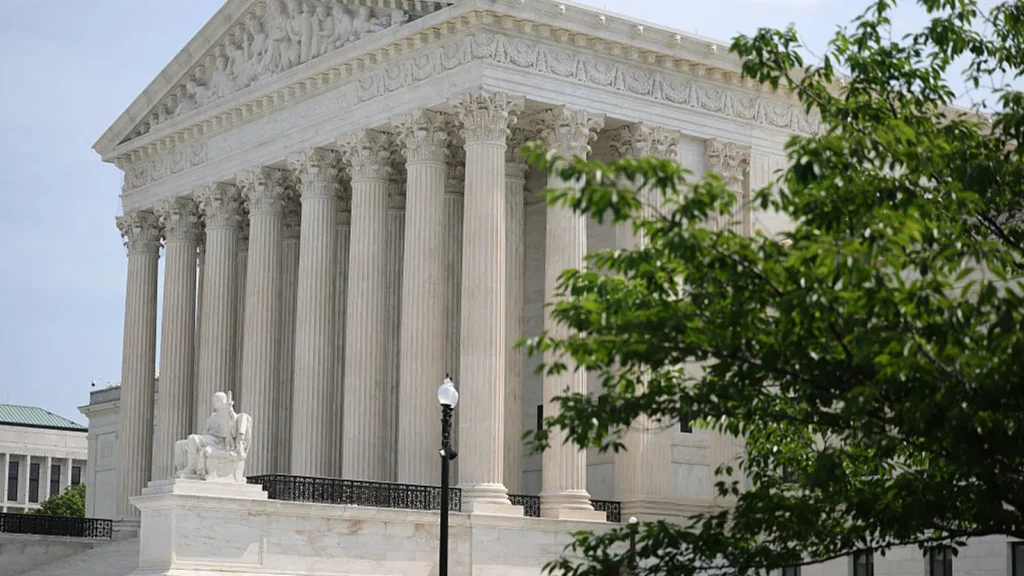
The U.S. Supreme Court’s recent emergency order on the "shadow docket," concerning school districts’ supportive measures for transgender students, is generating significant ripple effects across the nation. This pivotal decision, stemming from the case Mirabelli v. Bonta, has prompted appellate courts to re-examine existing cases, spurred federal investigations into school district policies, and instigated broader policy upheaval in the realm of LGBTQ+ student rights and parental notification. The implications of this ruling are far-reaching, potentially reshaping how schools navigate issues of gender identity and parental involvement in educational settings.
One of the most immediate and tangible consequences of the Supreme Court’s intervention occurred on June 18, when the 9th U.S. Circuit Court of Appeals issued a temporary block on a California state law. This law, Assembly Bill 1955 (AB 1955), also known as the Support Academic Futures and Educators for Today’s Youth Act (SAFETY Act), was designed to prevent school districts from mandating parental notification when a student’s gender identity or sexual orientation changes, unless the student explicitly consents to such disclosure. Enacted in 2024, AB 1955 was a landmark piece of legislation, being the first of its kind nationwide, aimed at protecting students from being "outed" to their parents without their permission. Proponents argued that such protections are vital for the mental health and physical safety of students, particularly those in potentially abusive or unsupportive home environments. The law stood in stark contrast to measures adopted in many Republican-leaning states and even within some California districts that mandate parental notification in cases of gender identity changes.
However, the 9th Circuit’s temporary pause on AB 1955, citing Mirabelli, signals a significant shift. The appellate court stated that those challenging the California law have a strong likelihood of prevailing. In their ruling in City of Huntington Beach v. Newsom, a three-judge panel asserted that "Under Mirabelli, an objecting parent who is the target of AB 1955’s effort to prohibit constitutionally required mandatory policies has standing to seek injunctive relief to remove that unlawful impediment to compliance with the Constitution." This decision effectively overturned a prior 9th Circuit ruling that had declined to halt the law, demonstrating the direct influence of the Supreme Court’s Mirabelli decision on lower courts.
The legal landscape surrounding parental rights and LGBTQ+ student support has been evolving rapidly, with Mirabelli serving as a critical inflection point. This development follows closely on the heels of another significant ruling in April by the 3rd U.S. Circuit Court of Appeals. In that instance, the court ruled that parents could pursue damages in a lawsuit challenging the Pine-Richland School District in Pennsylvania’s policy, which had previously limited parental involvement in their children’s gender identity and support processes at school. While the 3rd Circuit’s ruling acknowledged that the Mirabelli opinion was not a definitive judgment on the merits of that specific case, it clearly indicated its relevance and informative nature for lower courts grappling with similar legal questions.
The Genesis and Impact of Mirabelli v. Bonta
The Mirabelli v. Bonta case itself originated in 2023, predating the passage of California’s SAFETY Act. The lawsuit was filed by a coalition of parents and teachers against the Escondido Union School District and the California State Board of Education. The plaintiffs alleged that the district’s gender support policies infringed upon their First and Fourteenth Amendment rights. Specifically, they argued that these policies interfered with their religious freedoms and their ability to guide their children’s upbringing according to their sincerely held beliefs about sex and gender.
The Supreme Court’s decision in Mirabelli arrived via its "emergency docket," often referred to as the "shadow docket." This procedural route allows the highest court to issue rulings on significant legal disputes without the traditional process of hearing oral arguments and issuing a full, reasoned opinion. This approach has become increasingly prevalent in recent years, enabling the Court to act with greater speed to resolve contentious legal issues. In the Mirabelli case, the Supreme Court placed it on the shadow docket following an emergency request from the plaintiffs in January. In an unsigned opinion issued in March, the justices effectively sided with the plaintiffs, ordering the strike-down of the California district’s policies. The majority opinion stated that "parents who assert a free exercise claim have sincere religious beliefs about sex and gender, and they feel a religious obligation to raise their children in accordance with those beliefs."
This swift intervention through the shadow docket has led to a situation where the Supreme Court has made significant pronouncements on parental rights and LGBTQ+ student issues without the benefit of extensive legal debate or the traditional appellate review process. Despite numerous calls for the Court to formally address this controversy through its standard procedures, including several instances where it has rejected hearing similar cases on appeal through the traditional route, the Mirabelli decision continues to exert considerable influence on policy-making and legal challenges nationwide.
Federal Investigations Launched in the Wake of Mirabelli
The repercussions of the Mirabelli decision have extended to federal oversight. In June, the U.S. Department of Justice (DOJ) initiated investigations into four California public school districts, including the San Francisco Unified School District. These probes are examining the districts’ LGBTQ+ policies to determine their compliance with the principles established in Mirabelli v. Bonta.
Harmeet Dhillon, Assistant Attorney General of the DOJ’s Civil Rights Division, issued a strong statement on June 8, asserting, "This Department of Justice will not tolerate local school authorities trampling on the rights of parents concerning the education of their children." She further elaborated, "The Supreme Court’s recent decisions in Mahmoud and Mirabelli have put all school districts on notice: policies that keep parents in the dark about sexuality and gender ideology in the classroom must end now." This statement clearly links the DOJ’s actions to the Supreme Court’s pronouncements, indicating a concerted effort to enforce what the department views as parental rights in education.
The DOJ’s investigations into California districts follow a similar pattern established in April, when the department launched probes into over 30 school districts in Illinois. In those instances, the DOJ also cited Mirabelli and underscored the fundamental right of parents to direct the care, upbringing, and education of their children, a principle they believe is reinforced by Supreme Court precedent. These actions suggest a broader federal strategy to scrutinize and potentially alter school policies related to LGBTQ+ issues, particularly those that may limit parental involvement or notification.
Broader Implications and Legal Analysis
The combined impact of the Supreme Court’s decisions in Mahmoud v. Taylor and Mirabelli v. Bonta appears to be a significant expansion of parental rights concerning LGBTQ+-related curriculum and student gender transitions. While Mahmoud addressed parental rights in the context of LGBTQ+ curriculum, Mirabelli specifically focused on gender transitions and the notification of parents. These rulings, especially when delivered through the shadow docket, create a complex legal environment for school districts attempting to balance student privacy and safety with parental rights and legal mandates.
The dissenting justices in the Mirabelli decision voiced strong concerns about the Court’s use of the emergency docket. Justice Elena Kagan, joined by Justice Ketanji Brown Jackson, argued that the case demonstrated a "malfunction" of the emergency docket and that the Court had engaged with "scant and, frankly, inadequate briefing about the legal issues in dispute" when crafting the majority opinion. This criticism highlights a potential for less thorough legal analysis and precedent-setting when cases are resolved through this expedited process, raising questions about the long-term stability and clarity of the legal standards being established.
The implications for school districts are multifaceted. Many districts that have implemented policies to protect the privacy of LGBTQ+ students now face increased legal scrutiny and potential challenges. This could lead to a chilling effect on the implementation of such supportive measures, as districts become hesitant to adopt policies that might draw the attention of federal investigators or lead to costly litigation. Furthermore, the emphasis on parental notification, as suggested by the Mirabelli ruling and subsequent DOJ actions, could inadvertently create unsafe situations for students who are not able to disclose their gender identity or sexual orientation to their parents due to fear of reprisal or lack of acceptance.
The legal interpretation of "parental rights" and its boundaries in relation to a minor’s right to privacy and safety remains a contentious issue. While the Supreme Court’s recent actions have amplified the voice of parents in these matters, the long-term consequences for LGBTQ+ youth, particularly those in vulnerable situations, are yet to be fully understood. The ongoing legal battles and policy shifts across the country underscore the profound impact of the Mirabelli decision and the continuing debate over the balance between parental authority, student well-being, and the role of schools in supporting all students. As more cases are brought before the courts and federal agencies continue their reviews, the legal and educational landscape concerning LGBTQ+ students is likely to remain dynamic and subject to further change.