

In the modern corporate landscape, leadership development has evolved into a multi-billion-dollar global industry. According to data from Global Market Insights, the corporate training market—a significant portion of which is dedicated to leadership and management development—is projected to exceed $450 billion by 2026. Organizations currently pour massive capital into leadership academies, executive coaching, and rigorous succession planning. These initiatives are designed to bridge the gap between individual contributor and senior leader, ensuring that the next generation of executives is technically equipped to manage increased spans of control and strategic oversight. Yet, as turnover rates for C-suite executives hover at record highs—with research from the Conference Board suggesting that CEO turnover is closely linked to the failure to navigate shifting market complexities—a critical flaw has emerged in the traditional development model. The current paradigm operates under the assumption that preparing a leader to assume a role is equivalent to preparing them to sustain effectiveness within that role.
The Disconnect Between Responsibility and Reality
Historically, leadership development has functioned as a "gateway" process. It is a front-loaded investment strategy: assess current competencies, fill identified skill gaps, and transition the individual into a position of greater responsibility. This model relies heavily on competency frameworks, which categorize leadership into measurable behaviors. While these frameworks provide a necessary foundation, they are inherently static. They are designed for a predictable environment, yet the modern business climate is defined by the acronym VUCA—volatility, uncertainty, complexity, and ambiguity.
The divergence between responsibility and reality is where many leadership development programs fail. Responsibility defines the job description, the reporting structure, and the technical requirements of the role. Leadership conditions, by contrast, define the environment in which those responsibilities are executed. These conditions include rapid technological disruption, shifting stakeholder expectations, hyper-competitive global markets, and the psychological weight of constant organizational change. When a leader moves from a mid-level manager to a senior executive, the "responsibilities" are clear, but the "conditions" are often fluid, volatile, and entirely unpredictable.
A Chronology of Leadership Development Evolution
To understand why this gap persists, one must look at the evolution of leadership training over the last half-century.
- The 1970s and 1980s: The Competency Era. Organizations began formalizing "Management by Objectives" (MBOs) and establishing corporate universities. The focus was on standardization—creating a uniform way for managers to lead.
- The 1990s and 2000s: The Emotional Intelligence Shift. Following the popularization of EQ, organizations began integrating soft skills into training. The goal was to humanize leadership, focusing on interpersonal effectiveness and communication.
- The 2010s: The Digital and Agile Pivot. As the pace of innovation accelerated, training shifted toward "agile" methodologies. Leaders were taught to pivot strategies quickly and embrace digital transformation.
- The 2020s: The Sustainability Imperative. The current decade is defined by the need for resilience. Organizations are realizing that even the most "agile" leaders burn out or fail when the environment remains perpetually unstable. This has given rise to the concept of leadership sustainability.
The Data Behind the Burnout Crisis
The necessity for a shift toward sustainability is supported by mounting data on executive performance and mental health. A report by the American Psychological Association found that high-level leaders report significantly higher levels of chronic stress compared to the general population, with "decision fatigue" cited as a primary driver of poor strategic outcomes.
Furthermore, data from the Harvard Business Review indicates that nearly 50% of new leaders underperform in their first 18 months. This is rarely due to a lack of technical capability or "competency." Instead, it is a failure to navigate the conditions of their new environment. When leaders are trained only for the "what" of their role and not the "how" of sustaining performance under pressure, the investment made in their development is effectively diluted by the attrition of their effectiveness.
Defining Leadership Sustainability
Leadership sustainability is not a new skill set to be added to a curriculum; it is a fundamental shift in the intended outcome of development. It proposes that the goal of a leadership program should not be to "graduate" a leader into a role, but to build their capacity to navigate ongoing, unpredictable conditions.
For HR professionals and organizational development (OD) leaders, this requires a pivot in curriculum design. Where traditional programs focus on "What do you need to know to take this job?", sustainable development asks, "What do you need to be able to do to remain effective six months, two years, and five years from now?"
This involves three core pillars:
- Reflective Practice: Moving beyond "action learning" to include structured periods of reflection that allow leaders to process complex decisions and learn from the ambiguity they encounter.
- Adaptive Regulation: Strengthening the psychological capacity to regulate responses under pressure, ensuring that stress does not compromise decision-making quality.
- Boundary Management: Teaching leaders how to establish the structural and personal boundaries necessary to preserve their effectiveness over a long-term horizon, preventing the performance plateaus associated with chronic, low-level burnout.
Implications for Organizational Strategy
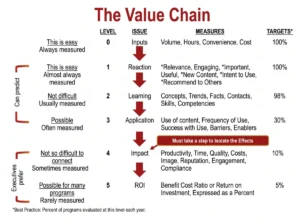
The transition to a sustainability-focused model has profound implications for how organizations measure success. Currently, the metrics of leadership development are largely administrative: promotion rates, number of training hours logged, and participant satisfaction surveys. These are "output" metrics that track the initiation of a leader, not their endurance.
To track sustainability, organizations must adopt longitudinal metrics. These include "stay-rates" in roles, 360-degree feedback trends that measure long-term adaptability rather than just static competency, and internal climate assessments that track team engagement over extended periods under the same leader.
From an organizational behavior perspective, this shift is critical. When a company invests in a leader, that individual represents a capital asset. If the leader fails to sustain their effectiveness due to a lack of preparation for the realities of the environment, the organization loses not only the initial investment but also incurs the hidden costs of leadership turnover: institutional knowledge loss, team destabilization, and reduced morale.
The Role of Executive Coaching and Peer Learning
The industry is beginning to see a transition in how external partners support these outcomes. Executive coaching, once reserved for remedial performance improvement or high-potential grooming, is increasingly being positioned as a "sustainability engine." Instead of focusing on specific task-based competencies, modern coaching engagements are shifting toward "sense-making"—the ability to interpret disparate, messy, and contradictory information to form a coherent strategy.
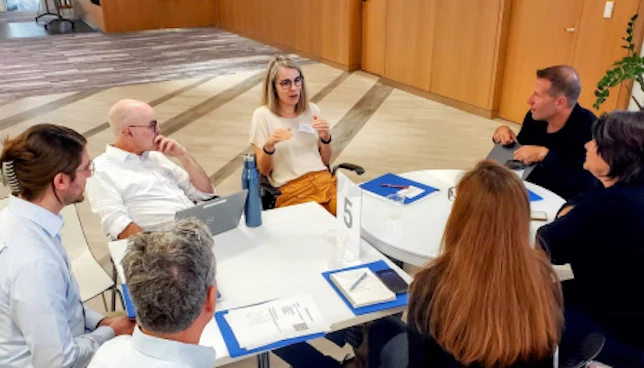
Similarly, peer learning groups are gaining traction. By connecting leaders who are navigating similar organizational conditions, companies can create a support structure that mitigates the isolation that often accompanies high-level roles. This creates a feedback loop where leaders can share strategies for managing ambiguity, effectively crowdsourcing solutions to the conditions that the official organizational development program could not have anticipated.
A Call for Intentional Evolution
As organizations look toward the next phase of development, the directive is clear: the focus must move beyond the "transition" and into the "duration." The goal of leadership development should not be to prepare a leader to step into a room, but to ensure they have the internal architecture to remain effective once the room begins to change.
The move toward leadership sustainability represents a maturation of the corporate training function. It acknowledges that the world is no longer a place of static roles and predictable responsibilities. By shifting the objective from merely achieving "readiness" to fostering "sustainability," organizations can build a more resilient leadership pipeline. This is not merely an improvement to a program; it is a necessary evolution for the longevity of the modern enterprise. As the business world continues to grow more volatile, the leaders who will thrive are not necessarily those with the most comprehensive list of competencies, but those with the deepest capacity to sustain their judgment, focus, and effectiveness amidst the ever-shifting realities of their roles.