
For higher education IT teams navigating a complex landscape of AI pilots, intricate ERP integrations, evolving student-facing applications, sophisticated analytics projects, and ever-mounting cybersecurity concerns, Visual Studio Live! San Diego 2026 offers a critical vantage point into the development practices and architectural shifts fundamentally reshaping the campus technology environment. Scheduled to unfold from September 14–18, 2026, in the vibrant city of San Diego, this pivotal conference centers its comprehensive agenda on Microsoft technologies, featuring an extensive array of sessions meticulously curated to cover crucial domains such as .NET, Azure, GitHub, advanced AI development, robust data platforms, cutting-edge cloud architecture, stringent application security, and numerous other integral facets of modern software engineering. The event promises to serve as an indispensable forum for professionals seeking to understand, implement, and secure the next generation of campus IT infrastructure, with artificial intelligence positioned squarely at its operational and strategic heart.
The Evolving Landscape of Higher Education IT
The technological journey of higher education institutions has traversed a remarkable trajectory over the past decades. From the early days of mainframe systems supporting administrative functions and research computing, universities have progressively embraced networked environments, the internet, enterprise resource planning (ERP) systems, and cloud computing. Each wave of innovation has brought both immense opportunities and significant challenges, demanding constant adaptation from IT departments. Today, higher education IT leaders face an unprecedented confluence of demands: supporting diverse academic and research needs, delivering seamless digital experiences for students and faculty, ensuring data privacy and security, and managing increasingly complex hybrid IT environments. The introduction of artificial intelligence marks not merely another tool but a paradigm shift, promising to redefine everything from student recruitment and personalized learning to administrative efficiencies and groundbreaking research methodologies.
However, moving AI from experimental pilots to production-ready, scalable, and secure applications presents a formidable hurdle. University IT teams often operate with constrained budgets, limited staffing, and the continuous burden of maintaining legacy systems while simultaneously attempting to integrate nascent technologies. The pressure to leverage AI for competitive advantage – whether in attracting students with personalized digital experiences, streamlining back-office operations, or accelerating research outcomes – is palpable. VSLive! San Diego 2026 directly addresses this critical juncture, providing practical guidance on how to navigate this transition, offering tangible frameworks and real-world case studies for successful AI adoption.
AI’s Ascendance: From Pilots to Production
The strategic imperative for higher education to embrace AI is multifaceted. According to various industry reports, the global AI in education market is projected to grow substantially in the coming years, driven by the demand for personalized learning, smart content, and automated administrative tasks. Institutions that fail to integrate AI risk falling behind in terms of operational efficiency, student engagement, and research innovation. VSLive! 2026 recognizes that the initial phase of AI exploration – characterized by isolated chatbot pilots or departmental-level experiments – is giving way to a more mature demand for enterprise-wide, integrated AI solutions.
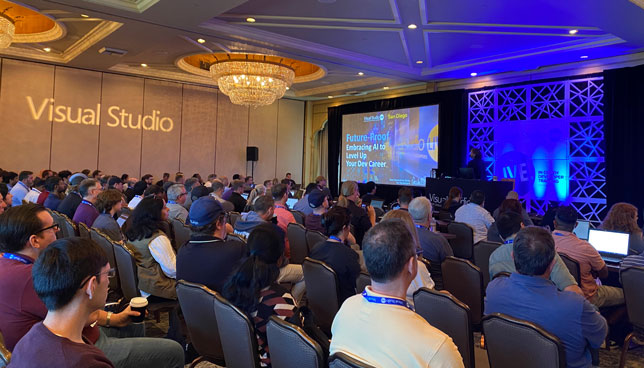
Much of this year’s agenda is meticulously crafted around the familiar yet pressing challenge for higher education institutions: how to effectively transition AI initiatives from conceptual pilots into robust, scalable production environments. The conference curriculum features a diverse range of AI sessions, extending from practical applications of GitHub Copilot for developer productivity and Copilot Studio for custom AI assistants, to advanced topics like agent frameworks and the development of multimodal applications that can process and generate various forms of data, including text, images, and audio. The overarching emphasis of these sessions is firmly rooted in real-world development workflows, illustrating how AI is rapidly evolving from an optional add-on to an intrinsic component of how modern applications are conceived, built, and subsequently supported.
This shift signifies a fundamental change in development philosophy. Instead of retrofitting AI capabilities onto existing systems, the focus is now on architecting applications with AI at their core, enabling more intelligent, adaptive, and personalized experiences from the outset. Conference attendees will explore how to embed AI into the fabric of their software development lifecycle, ensuring that AI tools are not just present but are seamlessly integrated into every stage, from ideation to deployment and maintenance.
Operationalizing AI: Trust, Monitoring, and Responsibility
Beyond the initial development, a significant portion of the VSLive! 2026 agenda delves into the critical operational details required to maintain, monitor, and ultimately foster trust in AI-enabled systems post-launch. This includes comprehensive discussions on managing agent-based applications, establishing secure and efficient enterprise data connections, implementing best practices for deployment, and integrating robust safety controls. As higher education organizations progress beyond first-generation chatbot pilots, campus IT teams are confronted with complex and fundamental questions that demand clear, actionable answers.
"The move to production-grade AI necessitates a profound re-evaluation of our existing IT governance and operational frameworks," a hypothetical VSLive! organizer might state, emphasizing the critical nature of these sessions. "Questions like, ‘Which institutional systems can an AI tool securely access?’ and ‘How are the results generated by AI evaluated for accuracy and bias?’ are no longer theoretical. Furthermore, establishing clear accountability, particularly ‘Who is responsible when an automated workflow produces a flawed or harmful recommendation?’, becomes paramount. Our sessions are designed to equip IT professionals with the frameworks and tools to address these questions proactively, ensuring responsible and ethical AI deployment."
These discussions are vital for building confidence in AI systems, especially within a higher education context where data privacy, academic integrity, and ethical considerations are paramount. Attendees will gain insights into establishing rigorous evaluation metrics, implementing continuous monitoring systems, and developing transparent processes for auditing AI decisions.
Cybersecurity as a Foundational Pillar in the AI Era

The increasing interconnectedness of modern applications and the pervasive integration of AI naturally amplify cybersecurity risks. Data, often sensitive, moves across a growing number of services, making secure API design an indispensable, rather than optional, component of development. Cybersecurity features prominently throughout the VSLive! 2026 agenda, reflecting its non-negotiable status in contemporary IT architecture.
A prime example is the session titled "Building Practical Zero Trust APIs with .NET 10 and Azure." This session focuses on critical security paradigms such as managed identity, which provides an automatically managed identity in Azure Active Directory for applications to use when connecting to resources that support Azure AD authentication. It also explores ingress and egress controls, crucial for regulating data flow into and out of an organization’s network, thereby minimizing attack surfaces. Furthermore, the session delves into Azure-native security capabilities, showcasing how the cloud platform’s inherent security features can be leveraged for robust protection, and how these can be integrated into efficient developer workflows.
The pairing of Zero Trust principles with developer productivity underscores a crucial philosophical shift: security can no longer be an afterthought, "bolted on" after an application has been developed. Instead, it must be intrinsically woven into everyday engineering practices from the earliest stages of design and development. "In an environment where data breaches can have catastrophic consequences for institutional reputation, student trust, and regulatory compliance, embedding Zero Trust principles into every API and application is not merely best practice—it’s an absolute necessity," a security expert speaking at the conference might articulate. "The convergence of advanced AI capabilities with robust security measures is the only path forward for responsible innovation in higher education." This approach ensures that security considerations are an integral part of the development lifecycle, leading to more resilient and trustworthy systems.
Microsoft’s Ecosystem: A Robust Foundation for Campus IT
VSLive! San Diego 2026’s dedicated focus on Microsoft technologies is a testament to the company’s pervasive influence and strategic importance within enterprise and higher education IT. Microsoft’s comprehensive ecosystem, encompassing Azure for cloud computing, .NET for application development, and GitHub for collaborative code management, provides a cohesive and powerful foundation for universities tackling complex digital transformation initiatives.
Azure, with its extensive suite of services, has become a preferred cloud platform for many institutions, offering scalability, security, and a rich array of AI and machine learning capabilities. Its global infrastructure and compliance certifications make it particularly attractive for managing sensitive academic and student data. .NET, as a mature and continuously evolving development framework, underpins countless enterprise applications. The upcoming .NET 10, as highlighted in the security session, signifies Microsoft’s ongoing commitment to innovation, performance, and security, providing developers with powerful tools to build next-generation applications. GitHub, acquired by Microsoft, has become the de facto standard for collaborative software development, fostering open-source contributions and streamlining team workflows – a critical asset for university IT departments and research groups alike.
The strength of this integrated ecosystem lies in its ability to offer end-to-end solutions, reducing the complexity and fragmentation often associated with disparate technologies. For higher education IT teams, this means a more streamlined development process, easier integration between services, and a unified platform for innovation. The emphasis on Microsoft technologies at VSLive! thus reflects a pragmatic recognition of their widespread adoption and continued relevance in shaping the future of campus IT.

Empowering Developers: Skill Enhancement and Community Building
The conference’s practical focus is exemplified by experiences like that of Josh Yarbrough, a software developer at Vanderbilt University, who attended a previous VSLive! event to deepen his Blazor skills. Having limited prior exposure to the framework, Yarbrough’s team, already proficient in C# for API and back-end development, sought to explore Blazor for its UI development capabilities. "The instructors and classes were exceptionally well-structured and focused directly on the topics I needed to master to get up to speed quickly," Yarbrough recounted. The immediate impact was tangible: "After the conference, our team returned to campus and successfully developed and deployed a couple of Blazor applications." This anecdote underscores the conference’s effectiveness in translating theoretical knowledge into practical, deployable solutions.
Yarbrough also highlighted another invaluable benefit of the event: the unparalleled access to instructors and speakers outside the formal session environment. He noted that when he and a colleague encountered specific technical challenges, presenters were able to directly connect them with Microsoft developers who had been intimately involved in the creation and evolution of those particular tools. This level of direct engagement with product experts provides a unique opportunity for attendees to gain insights, troubleshoot issues, and forge connections that extend beyond the conference walls, fostering a vibrant community of practice.
The emphasis on developer experience and skill enhancement is crucial for higher education. As technology evolves at an accelerating pace, continuous learning and upskilling are not just beneficial but essential for IT professionals. Conferences like VSLive! serve as vital platforms for developers to acquire new competencies, validate existing skills, and stay abreast of the latest industry trends and best practices. "Investing in our developers’ continuous education is paramount," a university CIO might state, acknowledging the value of such events. "The direct interaction with leading experts and the hands-on learning opportunities provided by VSLive! empower our teams to build more innovative, secure, and efficient solutions for our academic community."
The Human Element: Navigating Technological Change
While the technical intricacies of AI and cybersecurity form the core of the VSLive! agenda, the conference dedicates significant attention to the human side of technological change. Sessions on cultivating a positive code review culture, effective project management methodologies, strategic career development, and the broader impact of AI on traditional software roles recognize a fundamental truth: successful technology projects are not merely about the tools and code; they depend equally on human factors. Collaboration, transparent and well-documented decisions, and the ability of teams to manage increasing complexity without introducing unnecessary friction are critical determinants of long-term success.
In environments where higher education IT teams are often stretched thin across multiple roles and responsibilities, these "soft skills" and organizational practices can make the difference between new initiatives thriving or faltering. The implementation of AI, for instance, requires not just technical prowess but also careful change management, clear communication, and thoughtful consideration of ethical implications. Sessions exploring these human aspects equip attendees with strategies to build more resilient, adaptable, and high-performing teams. They address challenges such as potential job displacement or role evolution due to AI, emphasizing reskilling and upskilling pathways for developers.
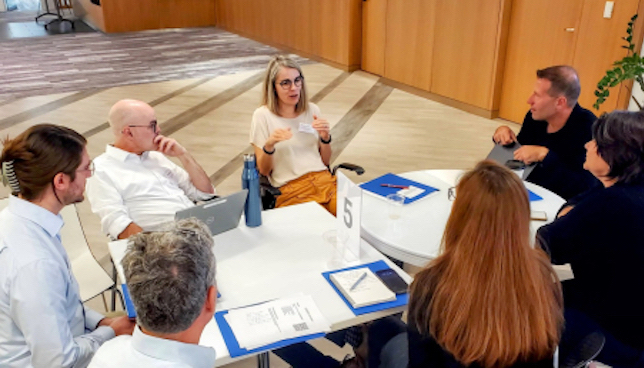
"The greatest innovations are often born from effective human collaboration, not just superior technology," a session leader on team dynamics might suggest. "Our goal is to ensure that while we empower developers with the latest tools, we also strengthen the ‘human infrastructure’ – the processes, culture, and leadership – that enables these tools to be used most effectively and ethically within complex institutional settings." This holistic approach acknowledges that the success of the next campus application stack hinges as much on people and processes as it does on platforms and code.
VSLive! Legacy and Future Outlook
The Visual Studio Live! conference series has a long-standing history of providing developers with in-depth training and insights into Microsoft technologies. Since its inception, VSLive! has consistently adapted its content to reflect the rapidly evolving technology landscape, serving as a trusted resource for developers seeking to master new tools and paradigms. From the early days of Visual Basic and classic ASP to the advent of .NET, cloud computing, and now AI, VSLive! has remained at the forefront, guiding professionals through successive waves of innovation.
VSLive! San Diego 2026 stands firmly within this legacy, continuing its mission to empower developers and IT professionals. By placing AI at the core of the campus IT stack, the conference not only addresses current challenges but also provides a forward-looking perspective on where the next generation of higher education technology is headed. It anticipates the needs of institutions as they strive to harness AI for competitive advantage, operational excellence, and enhanced learning experiences. The conference serves as a crucial bellwether, signaling the direction of development and the skills that will be most in demand for the foreseeable future.
For higher education IT teams diligently planning their next round of application development, data management, and AI integration projects, the comprehensive agenda of VSLive! San Diego 2026 offers invaluable insights into the architecture and best practices defining the future campus application stack. It represents an unparalleled opportunity for professional development, networking, and strategic planning in an era of unprecedented technological transformation. To browse the full agenda and register for this seminal event, interested professionals are encouraged to visit the VSLive! site.
About the Author
Rhea Kelly is editor in chief for Campus Technology, THE Journal, and Spaces4Learning. She can be reached at [email protected].