


Representing ideas visually is an inherent human tendency, often manifesting as an instinctive reach for a writing tool when attempting to elucidate complex concepts. This fundamental impulse underscores the utility of visual aids in communication and, critically, in learning. While simple diagrams or flowcharts serve to illustrate processes or structures, a more sophisticated tool, the concept map, harnesses visual representation to deepen understanding and consolidate knowledge. These graphic organizers, sometimes referred to as mind maps or spider maps, operate on a core principle: key concepts are encapsulated in nodes—typically boxes or bubbles—and interconnected by lines or arrows that explicitly denote their relationships. Far from being rudimentary, concept maps are potent educational instruments, requiring minimal technology and offering rapid deployment, yet yielding profound benefits when applied with an understanding of their underlying cognitive principles.
The efficacy of concept mapping is a subject extensively researched by cognitive scientists, among whom Dr. Kripa Sundar stands out. A specialist in the field, Dr. Sundar is a contributor to the seminal work, "Smart Teaching Stronger Learning: Practical Tips from 10 Cognitive Scientists." This collaborative book, edited by Dr. Pooja Agarwal, compiles actionable, evidence-based classroom strategies from leading experts. Dr. Sundar’s chapter specifically delves into the profound advantages of concept maps, outlining why they are such powerful learning tools and detailing specific best practices for their optimal utilization. Her insights, along with those of her co-authors, underscore a growing consensus within educational psychology regarding the transformative potential of visually structured knowledge.
The Historical Roots and Theoretical Foundations of Concept Mapping
The development of concept mapping can be traced back to the 1970s, pioneered by Joseph D. Novak at Cornell University. Novak’s work was deeply influenced by David Ausubel’s assimilation theory of meaningful learning, which posits that learning is most effective when new concepts are integrated into existing cognitive structures in a non-arbitrary, non-verbatim manner. Ausubel distinguished between meaningful learning, where new information is linked to relevant pre-existing knowledge, and rote learning, which involves arbitrary, word-for-word memorization without conceptual integration. Concept maps, by their very design, facilitate meaningful learning by requiring learners to actively identify relationships between concepts, thereby constructing a coherent mental framework.
From a constructivist perspective, concept maps are powerful because they encourage learners to actively build their own understanding. Instead of passively receiving information, students engage in a process of selection, organization, and integration of knowledge. This aligns with the broader pedagogical shift towards student-centered learning, where the learner is an active participant in knowledge creation rather than a passive recipient. The evolution of concept mapping from a theoretical construct to a widely adopted educational tool highlights its robust theoretical underpinnings and practical applicability across diverse educational settings.

Cognitive Science: Why Concept Maps Enhance Memory and Understanding
Dr. Sundar, in her contributions and articles, emphatically champions concept maps as a "packed strategy" for learning. She highlights that multiple meta-analyses, synthesizing findings from hundreds of studies, consistently support the superior effectiveness of concept maps compared to traditional methods like lectures, discussions, or text summaries. These analyses often report significant effect sizes, indicating that concept mapping can substantially improve learning outcomes, retention, and the ability to apply knowledge. For instance, studies cited in various educational psychology journals have shown that students who engage in concept mapping activities demonstrate better recall and deeper comprehension, especially when dealing with complex or abstract subjects.
The core of this effectiveness lies in how concept maps engage the intricate processes of memory formation: encoding, storage, and retrieval.
-
Encoding: Concept maps facilitate robust encoding by promoting active processing. When creating a map, learners must identify key concepts, define them, and then determine their relationships. This involves:
- Elaboration: Thinking deeply about how concepts connect to one another, which enriches the memory trace.
- Dual Coding: Combining verbal (words in nodes, linking phrases) and visual (spatial arrangement, arrows) information, which strengthens encoding and creates multiple pathways for later retrieval, as theorized by Allan Paivio.
- Semantic Processing: Focusing on the meaning of information rather than just its surface features, leading to deeper and more durable learning.
-
Storage: The act of organizing information spatially within a concept map helps create a structured, interconnected knowledge network in long-term memory. This organized storage is crucial for efficient recall. Instead of isolated facts, knowledge is stored in a hierarchical or networked fashion, mirroring how the brain naturally processes and stores complex information. The more links and connections a learner makes, the stronger and more accessible the stored knowledge becomes. This structural organization helps learners see the "big picture" and understand how individual pieces of information fit into a larger framework.
-
Retrieval: Concept maps serve as powerful retrieval cues. When attempting to recall information, the visual layout and interconnectedness of the map can trigger a cascade of related memories. This process is akin to having a well-indexed library; finding one book leads easily to others on the same topic. Furthermore, the very act of creating a concept map is a form of retrieval practice in itself. As learners attempt to connect concepts from memory, they are actively retrieving and reorganizing information, which is a highly effective way to strengthen memory and identify gaps in understanding. Repeated exposure to, and reconstruction of, these maps can also serve as a form of spaced practice, further enhancing long-term retention.
Beyond these memory processes, concept maps also foster metacognition—the ability to think about one’s own thinking. As students construct or review maps, they become aware of their understanding, identify misconceptions, and recognize where their knowledge is incomplete. This self-monitoring is a cornerstone of effective learning and self-regulation.
Best Practices for Maximizing Concept Map Effectiveness
While the benefits of concept maps are clear, their optimal use requires adherence to specific best practices, as meticulously detailed by Dr. Sundar. These guidelines transform a simple visual exercise into a powerful cognitive workout.
-
Clarity of Motivation: The foundational step, according to Sundar, is to clearly define the "why" behind using a concept map. Is it for individual note-taking, a collaborative group activity, a whole-class review, or a formal assessment? Each purpose dictates different design considerations and expected outcomes. For instance, a map used for formative assessment might start with a partially completed structure to gauge specific understanding, whereas a map for personal note-taking might be more exploratory and iterative. Understanding the objective guides the complexity, scope, and evaluative criteria of the map.
-
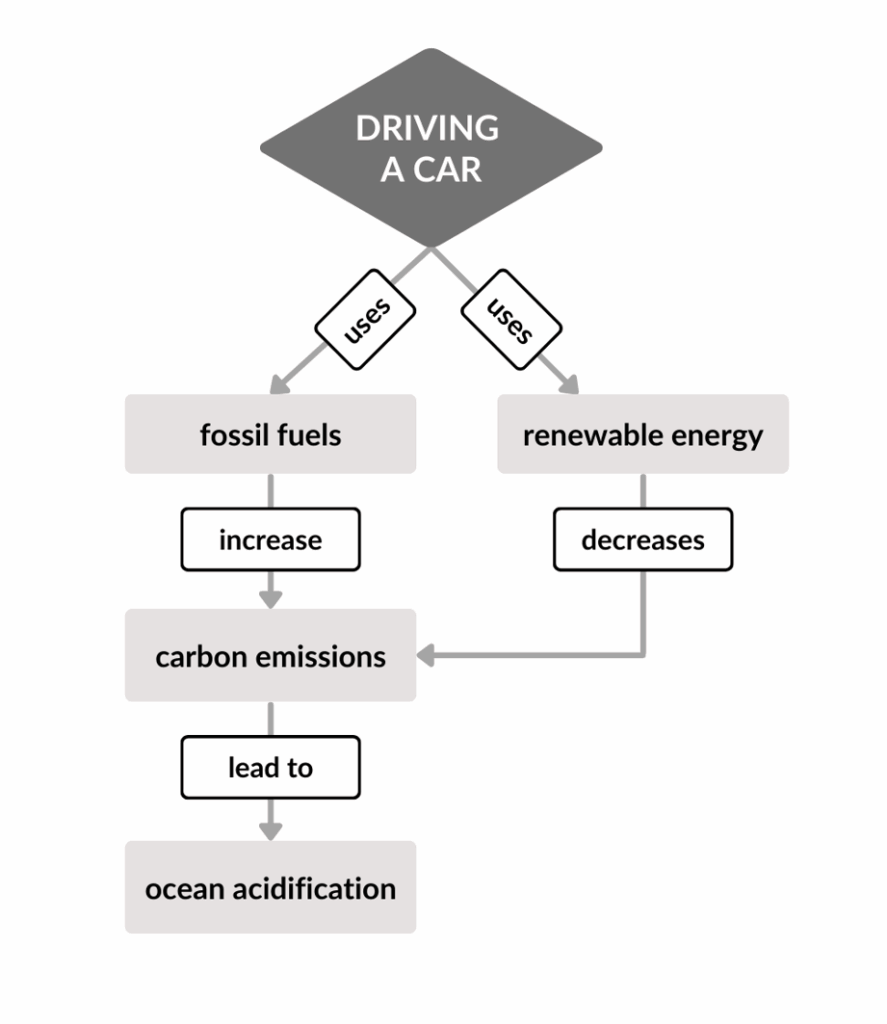
The Guiding Question: To prevent overwhelming complexity and maintain focus, every concept map should be anchored by a clear guiding question. This question acts as a conceptual compass, narrowing the scope of the map and directing the selection of relevant concepts and relationships. Sundar illustrates this with the example of ocean acidification. A guiding question like "What is the relationship between driving a car and ocean acidification?" yields a relatively focused map, tracing a specific causal chain from fossil fuel combustion to CO2 emissions, atmospheric absorption, oceanic absorption, and its chemical consequences. Conversely, a broader question such as "What is the relationship between human activities and ocean acidification?" necessitates a far more intricate map, incorporating industrial processes, deforestation, agricultural runoff, and their multifaceted contributions to the phenomenon. The guiding question effectively manages cognitive load and ensures the map remains a useful, rather than daunting, tool.
-
The Crucial Role of Linking Words: A key differentiator between a true concept map and a simpler mind map lies in the explicit labeling of connections. Nodes in a concept map are not merely joined by lines; these lines are directional, indicated by arrows, and crucially, they are labeled with linking words or short phrases that precisely describe the nature of the relationship between the connected concepts. For example, instead of just a line between "Driving a Car" and "CO2 Emissions," a concept map would show "Driving a Car releases CO2 Emissions."

Sundar emphasizes that while adding these linking words "is a pain in the beep," this seemingly tedious step is precisely what elevates the concept map to a robust learning tool. It forces learners to articulate their understanding of the connections, pushing them beyond superficial associations to a deeper, more semantic processing of the information. This active construction of propositional statements ("concept-linking word-concept") reveals and strengthens conceptual understanding, making the map a far more effective instrument for both learning and assessment.
Innovative Applications of Concept Maps in the Classroom
Beyond foundational principles, concept maps offer versatile applications within educational settings, transforming various pedagogical activities.
-
Expert Maps for Unit Overview: Teachers can leverage "expert maps" to provide students with a visual roadmap of a unit of study. These teacher-created maps delineate key concepts and their interrelationships, offering students a valuable reference tool throughout the unit. Sundar advocates for expert maps as a superb way to present the "big picture" from the outset, enabling students to grasp the overarching structure of information they will encounter. This proactive visualization helps contextualize individual lessons and prevents the feeling of disjointed learning, ensuring students understand how various topics connect.
A crucial caveat, however, is to prevent "concept map shock." Presenting an overly complex expert map at the beginning can overwhelm students. Sundar suggests a gradual unveiling: start with a simplified map showing only the broadest concepts and their primary connections, then progressively reveal more granular details as the unit unfolds. This scaffolding approach manages cognitive load and allows students to build their understanding incrementally, integrating new information into an expanding framework.
-
Dynamic Note-Taking: Concept maps offer a superior alternative to traditional linear note-taking. While conventional notes can often become lengthy and unstructured, concept maps provide an efficient, visually organized method to capture information and, critically, to represent relationships more clearly. Sundar notes that linear writing can lead to verbosity without necessarily fostering deeper understanding. Concept mapping encourages conciseness and forces learners to identify core ideas and their connections, thus capturing more information in fewer words and diagrams. This visual encoding bypasses the need for extensive textual explanations, facilitating quicker comprehension and recall. This active process of converting lecture or text into a mapped format engages higher-order thinking skills, enhancing engagement and retention far beyond passive transcription.
A practical strategy involves maintaining a running list of key terms—on a classroom wall, digital board, or in student notebooks. Periodically, students can be tasked with constructing a concept map using these terms, demonstrating their evolving understanding of how these concepts relate to one another. This regular practice reinforces learning and allows for continuous assessment of comprehension.
-
Formative Assessment Tool: Concept maps are exceptionally effective as formative assessment tools, providing teachers with immediate insights into student understanding and potential misconceptions. By asking students to create a concept map on a given topic, educators can gauge the depth and accuracy of their conceptual networks. One highly effective method involves providing students with a partially completed concept map and asking them to fill in the missing nodes, linking words, or connections. This targeted approach can pinpoint specific areas where understanding is strong or weak, allowing for timely instructional adjustments.
Furthermore, concept maps can be used for peer assessment, where students evaluate each other’s maps for clarity, accuracy, and completeness, fostering collaborative learning and critical thinking. They also empower self-assessment, as students can compare their maps to expert versions or revisit them after additional learning, tracking their own conceptual growth.
Broader Impact and Future Implications
The widespread adoption and continued research into concept mapping underscore its enduring value in modern education. Its implications extend beyond individual learning strategies to broader pedagogical considerations:
- Curriculum Design: Integrating concept mapping into curriculum design can encourage a more interconnected approach to learning, breaking down disciplinary silos and highlighting interdisciplinary relationships. This can lead to richer, more holistic learning experiences for students.
- Teacher Training: Effective implementation of concept mapping requires teachers to be well-versed in its principles and best practices. Training programs that equip educators with the skills to teach, guide, and assess concept maps are crucial for maximizing their impact.
- Student Agency and Metacognition: By actively constructing their knowledge representations, students develop greater agency over their learning. This fosters metacognitive skills, empowering them to monitor and regulate their own understanding, a critical skill for lifelong learning.
- Adaptability Across Disciplines and Levels: Concept maps are remarkably versatile, applicable across all subject areas—from science and history to literature and mathematics—and adaptable for learners of all ages, from elementary school to postgraduate studies. Their visual nature also makes them beneficial for diverse learning styles.
- Digital Tools and Evolution: The rise of digital tools and software for concept mapping (e.g., CmapTools, MindMeister, XMind) offers new avenues for creation, collaboration, and sharing. These digital platforms can enhance the ease of editing, integration of multimedia, and facilitate dynamic, interactive learning environments, further expanding the reach and utility of concept maps.
In an era characterized by information overload, the ability to organize, synthesize, and meaningfully connect knowledge is more critical than ever. Concept maps provide a robust, evidence-based framework for achieving this, moving learners beyond rote memorization towards a deeper, more integrated understanding of the world. As educational practices continue to evolve, the principles embedded in concept mapping—active learning, meaningful connection, and visual representation—will undoubtedly remain central to fostering strong, durable, and transferable learning.