



New Jersey school districts, as early adopters of solar power purchase agreements (PPAs) within the public sector, are now providing invaluable insights into the long-term performance and financial viability of these energy contracts. These agreements, which allow districts to procure electricity from third-party-owned solar arrays without upfront capital investment, were significantly boosted by state policies and incentives that fostered widespread adoption in the late 2000s and 2010s. As many of these 15-year contracts approach maturity, and as new agreements are being considered, school districts across the nation can learn critical lessons from their New Jersey counterparts regarding the sustained value and potential pitfalls of PPAs over time.
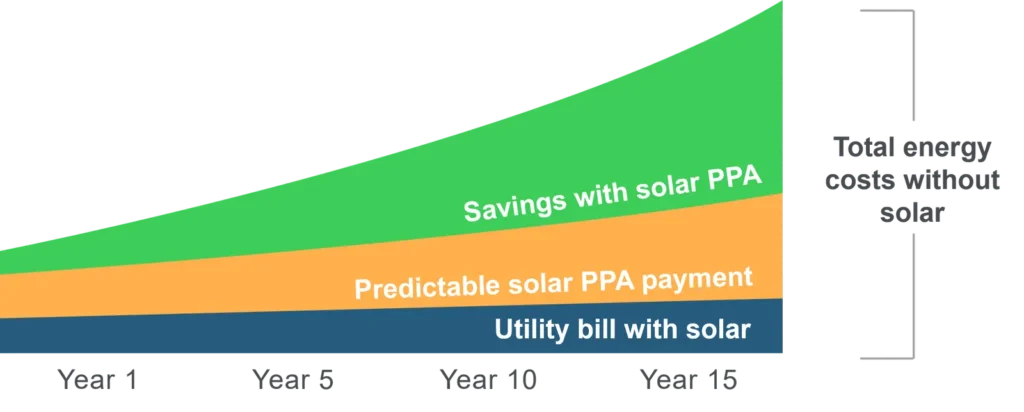
The core of a solar PPA lies in its promise of predictable energy costs, a significant advantage for school districts operating under tight budgets. By purchasing energy from a solar array owned and maintained by a developer, schools can lock in electricity rates, shielding themselves from the volatility of traditional energy markets. This predictability was a primary driver for the initial surge in PPA adoption in New Jersey, and it remains a compelling benefit today, especially as global energy demand escalates and price fluctuations become more pronounced. However, the long-term success of a PPA extends beyond the initial price, encompassing system performance, the specifics of contract terms, and how the PPA rate compares to evolving utility electricity prices over the contract’s lifespan. This necessitates a proactive approach, with districts encouraged to reassess their PPAs at the midpoint of the contract term and as the end approaches, ensuring that the agreements continue to deliver the expected financial and operational benefits.
Understanding the Mechanics and Long-Term Value of Solar PPAs
A solar PPA is fundamentally a contract for the purchase of electricity generated by a solar photovoltaic (PV) system. In this arrangement, a solar developer finances, installs, owns, and maintains the solar array, typically on school district property. The school district then agrees to purchase the electricity produced by this system at a predetermined rate for a specified period, often 15 to 25 years. This model eliminates the need for school districts to allocate significant capital funds for solar installation, making renewable energy accessible even for institutions with limited budgets.
The initial appeal of solar PPAs for school districts stemmed from their ability to offer long-term price certainty. This was particularly attractive in New Jersey, where energy costs have historically been a significant operational expense. The structure of a PPA typically includes an annual escalator clause, a predetermined percentage by which the PPA rate increases each year. While this escalator provides a degree of predictability, its impact over a 15 or 20-year term can be substantial, especially if it outpaces the rate of increase in utility electricity prices.
The economic advantage of a PPA hinges on two critical factors: the system’s consistent performance and the competitiveness of its rate over time. A well-performing solar array generates electricity at or above its projected output, directly offsetting a portion of the school district’s energy consumption from the utility. Simultaneously, the PPA rate must remain lower than the prevailing utility rate for the same amount of electricity. When these conditions are met, the PPA delivers tangible cost savings. However, a decline in system performance, coupled with an escalating PPA rate that outpaces utility rate increases, can erode these savings, potentially leading to a situation where the PPA becomes more expensive than purchasing power directly from the utility.
Assessing PPA Performance: Key Questions for School Districts
As solar PPAs mature, the assumptions made during the initial contract negotiations can diverge significantly from current realities. Several factors can influence the PPA’s performance and its financial benefits:
- Utility Rate Volatility: Utility electricity prices are subject to market forces, regulatory changes, and fuel costs. If utility rates increase at a faster pace than anticipated in the PPA’s escalator clause, the PPA remains advantageous. Conversely, if utility rates grow more slowly or even decline (though less common), the PPA’s savings can diminish.
- System Degradation: Solar panels naturally degrade over time, producing slightly less electricity each year. While reputable PPA agreements account for a predictable degradation rate, underperformance beyond this projected level can reduce the amount of energy delivered and, consequently, the savings realized.
- Shifting Energy Consumption Patterns: A school district’s energy usage can change due to factors such as increased use of technology, new building additions, or energy efficiency upgrades implemented independently of the PPA. If actual consumption patterns differ from those projected during the PPA’s negotiation, the savings may be affected.
- Ownership Changes: In some instances, the original PPA developer may sell the project to another entity. While the contract terms generally remain the same, a new owner might have different priorities or levels of engagement, potentially impacting maintenance or responsiveness.
Given these variables, districts are strongly advised to regularly review their PPA agreements. This review should enable district leadership to answer critical questions that underpin the PPA’s continued value.
Understanding PPA Financial Terms
A fundamental aspect of PPA review involves a thorough understanding of the financial commitments and contractual obligations. This includes:
- Current PPA Rate: Knowing the precise cost per kilowatt-hour (kWh) being paid under the agreement.
- Annual Escalator: Identifying the fixed percentage by which the PPA rate increases each year. For example, a 1.5% annual escalator means the PPA rate will rise by that percentage annually.
- Remaining Term: Determining how many years are left until the PPA contract expires. This is crucial for long-term financial planning.
- End-of-Term Options: Understanding the choices available upon contract expiration, such as renewing the PPA, purchasing the system, or having it removed.
- Notice Deadlines: Being aware of specific dates by which the district must notify the PPA provider of its intended end-of-term action. Missing these deadlines can result in automatic renewals or other unfavorable outcomes.
- Termination or Removal Obligations: Ascertaining if there are any financial penalties for early termination or specific costs associated with the removal of the solar system at the end of the term.
Verifying System Performance and Energy Production
The physical performance of the solar array is as vital as the contractual terms. Districts should ensure they have access to real-time or regular reporting on the system’s energy output. Key metrics to track include:

- Actual Production vs. Projected Generation: Comparing the amount of electricity the system is actually producing against the initial estimates made during the PPA negotiation.
- Degradation Rate: Monitoring the annual decline in energy output to ensure it aligns with the expected degradation rate stipulated in the PPA. For instance, if a PPA projects a 0.5% annual degradation, actual output should reflect this gradual decrease. If output drops by a significantly higher percentage, it indicates a performance issue.
- Historical Trends: Analyzing production data over several years to identify any unusual dips or sustained underperformance that might signal operational problems or equipment failures. Access to a performance monitoring portal or regular detailed reports from the PPA provider is essential for this assessment.
Quantifying Savings Against Utility Power Costs
The ultimate test of a PPA’s success lies in whether it continues to provide financial savings compared to purchasing electricity from the local utility. This requires a direct comparison of the PPA charges against what the district would have paid the utility for the equivalent amount of electricity.
For example, if a school district consumes 1,000,000 kWh of electricity annually, and its PPA rate averages $0.15 per kWh, its PPA cost is $150,000. If, during the same period, the utility rate for the same consumption would have been $0.18 per kWh, the avoided cost is $180,000, resulting in a net saving of $30,000. However, if the PPA rate rises to $0.19 per kWh while the utility rate remains at $0.18, the PPA is no longer saving money and is instead incurring an additional cost.
Districts that lack in-house energy expertise often find significant value in engaging objective third-party consultants. These experts can bridge the gap between complex contract terms, system performance data, and the dynamic landscape of utility electricity economics, providing a clear picture of the PPA’s current value and illuminating critical decision points as the contract matures.
Strategic Planning for PPA End-of-Term Options
As a PPA approaches its expiration date, typically in the final five years of the agreement, school districts must engage in strategic planning to determine the most advantageous path forward. Proactive planning, rather than reactive decision-making, is crucial.
Key Considerations for Future Planning:
- Market Conditions: Research current and projected electricity prices from utilities and explore alternative renewable energy procurement options.
- District Needs: Re-evaluate the district’s energy consumption patterns, future facility plans, and sustainability goals.
- Financial Capacity: Assess the district’s ability to invest in owned solar or other energy solutions if that becomes the preferred option.
- Contractual Obligations: Thoroughly review all end-of-term clauses, including renewal terms, purchase options, and termination fees.
Common End-of-Term Pathways:
As PPA agreements mature, school districts generally consider several primary options:
- Renew the PPA: Negotiate a new PPA with the existing provider or a different developer. This often involves updated pricing and potentially new terms reflecting current market conditions and technology. Districts should aim to secure favorable rates and contract durations.
- Purchase the System: Acquire ownership of the solar array from the PPA provider. This can be an attractive option if the system is well-maintained and performing efficiently, allowing the district to benefit from the electricity generated at its operational cost, free from future PPA escalators. However, the district would then assume responsibility for maintenance, repairs, and potential upgrades.
- System Removal: If the system is no longer economically viable, or if the district no longer wishes to host it, it can opt for system removal. This pathway requires careful review of the PPA to understand any associated costs for decommissioning and site restoration.
- Transition to a New Energy Solution: Explore alternative energy procurement strategies, such as direct power purchase agreements for other renewable sources, participation in community solar programs, or investing in energy storage solutions.
It is imperative for districts to confirm whether their PPA includes provisions for termination payments, buyout conditions, or specific obligations related to system removal and site restoration. The costs associated with these actions, particularly site remediation and removal, can be substantial and should be fully understood well in advance of the contract’s end date. The greatest risk for districts lies not in choosing one option over another, but in delaying these decisions until options become limited, forcing reactive and potentially less advantageous choices.
The Enduring Value of Periodic, District-Centric PPA Review
The experience of New Jersey school districts demonstrates that solar PPAs can indeed remain a valuable tool for energy cost management over extended periods. However, the effectiveness of these agreements is not static. They are influenced by shifts in school district leadership, fluctuating utility prices, the natural aging of solar technology, and evolving district priorities. Consequently, even well-structured PPAs benefit immensely from periodic, objective reviews conducted with the district’s best interests at the forefront.
The fundamental task for district leaders is to continually assess the alignment between system performance, the specifics of their contract terms, and the current economic realities of energy procurement. The objective of these reviews is not to question the initial decision to adopt solar PPAs, but rather to ensure that these agreements continue to serve and support the long-term strategic goals of the school district.
The most critical question remains a straightforward yet profound one: Is our current solar PPA functioning as we believe it is, and are we adequately prepared for the decisions and transitions that lie ahead as the contract matures? Proactive engagement and diligent oversight are key to maximizing the benefits of solar PPAs and ensuring they remain a cost-effective and sustainable energy solution for public education institutions.