


In a critical period for educational reform in the United States, a growing movement is championing the resurgence of student voice as a foundational element for genuine school improvement. For too long, the national discourse around education has been dominated by metrics such as standardized test scores and top-down curriculum mandates, often sidelining the lived experiences and unique perspectives of the very individuals at the heart of the system: the students. This narrow focus, as evidenced by recent data, has not only failed to deliver desired academic outcomes but has also contributed to a palpable decline in student well-being and engagement, prompting a renewed search for more human-centered approaches.
The Crisis in American Education: A Call for Transformation
The current state of education in the U.S. presents a complex challenge. A report by Schwartz (2025) highlighted a concerning trend: reading scores on the National Assessment of Educational Progress (NAEP) have fallen to new lows, with particularly steep declines among struggling students. This academic regression is compounded by significant behavioral issues within schools. A survey by Stephens (2025) revealed that nearly half of educators reported student behavior as worse than pre-pandemic levels, a statistic that had worsened in just two years. These indicators collectively paint a picture of an educational system struggling to connect with its students, often failing to address their holistic needs beyond mere academic performance.
Despite the existence of isolated pockets of excellence, many schools continue to grapple with these systemic issues, often attempting to implement solutions without genuinely engaging the primary stakeholders—the students themselves. The absence of student voice in these reform efforts is increasingly recognized as a critical oversight, leading to interventions that are detached from the realities of the classroom and the diverse experiences of learners. The focus on quantifiable, often impersonal, measures of success has inadvertently obscured the human dimension of education, leaving students feeling unheard and disengaged.
The Genesis of Street Data: A Paradigm Shift
Against this backdrop, a transformative approach emerged four years ago with the publication of Street Data: A Pathway Toward Equitable, Anti-Racist Schools by Shane Safir and Jamila Dugan. This seminal work proposed a radical departure from conventional school improvement strategies. Instead of relying solely on standardized metrics or broad administrative directives, Street Data advocated for "slow, thoughtful listening sessions" with students, particularly those at the margins whose voices are historically underrepresented and whose needs often go unmet. The philosophy posited that by deeply understanding these experiences, educators could co-create solutions that are genuinely responsive, equitable, and sustainable. These solutions would then be iteratively developed, piloted, and refined, guided by continuous feedback from students.
Unlike many educational programs, which often come with substantial financial investment and limited proven impact, the Street Data model presented a compelling, cost-effective alternative. Its emphasis on deep listening and iterative problem-solving resonated with educators seeking authentic change. The approach promised not just incremental improvements but a fundamental shift in how schools understand and respond to the needs of their communities.

A Journey Towards Implementation: The Street Data Timeline
The impact of Street Data quickly gained momentum within the educational community. The authors, Shane Safir and Jamila Dugan, were first featured on episode 178 of a prominent educational podcast, introducing their groundbreaking ideas to a wider audience. Recognizing the need for practical demonstration, a mini-documentary was subsequently produced, showcasing Safir and Dugan guiding two schools through the Street Data process. This visual narrative provided educators with an invaluable, up-close look at the methodology in action, illustrating how deep listening and student-centered inquiry could lead to tangible improvements.
A year later, the journey continued with an eight-episode video series further detailing the implementation process, accompanied by a follow-up podcast (episode 203) featuring participants who shared their experiences and insights. As the Street Data methodology permeated more schools, a crucial question arose: how does this top-level, school-wide improvement strategy translate into daily classroom practice? Specifically, "What does it look like when teachers center student voice and student agency in their pedagogy?" This inquiry became the impetus for the next evolution of the Street Data movement.
Introducing "Pedagogies of Voice": Bridging Theory to Practice
To address this vital question, Shane Safir collaborated with three distinguished educators: Marlo Bagsik, Crystal Watson, and Sawsan Jaber. Their collective expertise culminated in the new book, Pedagogies of Voice: Street Data and the Path to Student Agency. This publication serves as a practical companion to Street Data, offering concrete, actionable strategies for teachers to integrate student voice and agency directly into their pedagogical approaches.
Described as a "seed store" of practices, the book offers a rich collection of small, replicable moves designed to empower educators to cultivate student voice, foster agency, and create spaces for profound and meaningful learning. It deliberately avoids prescribing a rigid, one-size-fits-all approach, instead providing a diverse toolkit from which teachers can select and adapt strategies to fit their unique classroom contexts and student populations.
The publication of Pedagogies of Voice is particularly timely, arriving amidst a period of significant social and political turbulence. In many regions, there is an aggressive pushback against marginalized voices, with instances of book banning, teacher censorship, and broader threats to democratic principles. For educators seeking to channel their energy constructively in these challenging times, Pedagogies of Voice offers a powerful directive: to teach in ways that amplify student voice. By creating environments where students are encouraged to reflect, articulate their thoughts, and act on issues that matter to them, the book advocates for the cultivation of essential democratic practices—active listening, respectful disagreement, and collaborative problem-solving. The ultimate goal is to nurture students into engaged citizens who possess the conviction and skills to positively reshape their communities and the world.
The Agency Framework: Four Pillars of Student Empowerment
Pedagogies of Voice organizes its classroom practices into an innovative "Agency framework," structured around four interconnected domains: Identity, Belonging, Inquiry, and Efficacy. This framework provides a comprehensive lens through which educators can systematically foster student agency. The book’s authors, in a recent podcast interview, shared specific strategies from each domain, offering a glimpse into the practical application of their philosophy.
1. Awakening Identity: Valuing Every Learner’s Narrative
The Identity domain focuses on creating learning environments where every student genuinely feels that "My ways of being, knowing, and learning are valued here." Sawsan Jaber, one of the co-authors, highlighted the practice of storientation, which leverages personal stories as a powerful springboard for learning and identity development. This approach recognizes that students bring a rich tapestry of experiences, cultures, and perspectives into the classroom, and by inviting them to share these narratives, educators can validate their identities and deepen their engagement with academic content.
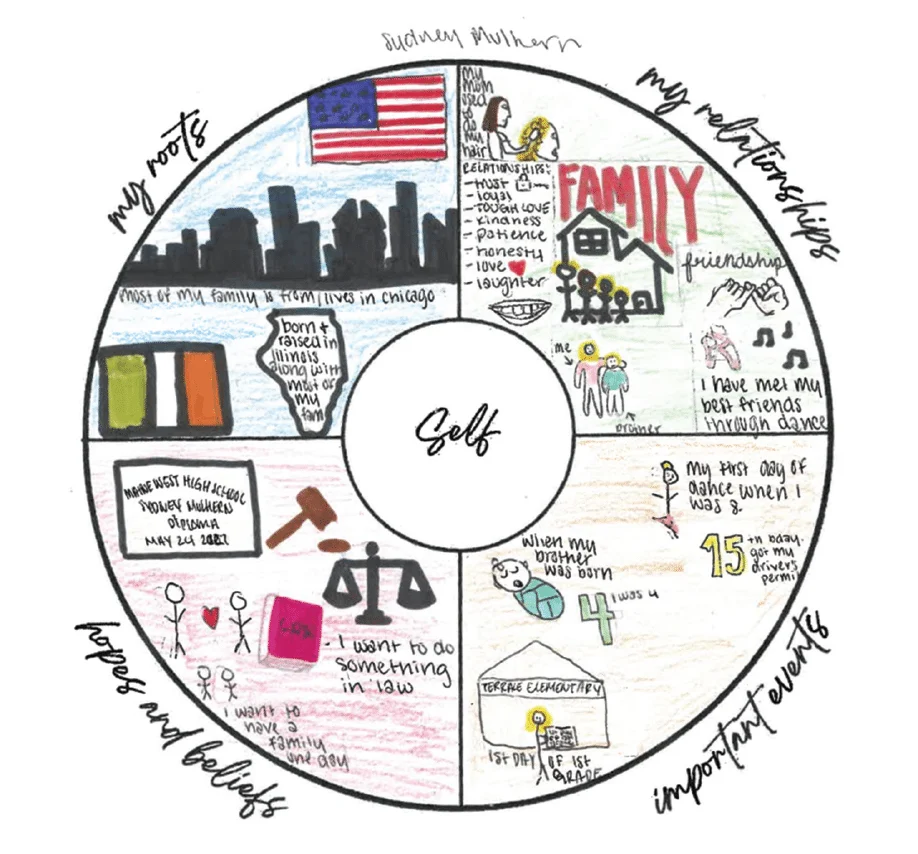
An example practice is the "Identity Mandala," where students visually represent various facets of their identity—family heritage, personal interests, values, and aspirations—in a circular, interconnected design. This not only allows for self-expression but also provides classmates with insights into each other’s unique backgrounds, fostering mutual understanding and respect. By centering individual stories and identities, teachers can transform classrooms into inclusive spaces where diversity is not just tolerated but celebrated as a resource for collective learning.
2. Fostering Belonging: Creating a Circle of Inclusion
The Belonging domain addresses the fundamental human need to feel seen, accepted, and loved within a community. Crystal Watson emphasized the profound impact of a deceptively simple practice: circling up. This involves arranging classroom seats in a circle for various activities, a deliberate spatial reorientation that significantly enhances students’ sense of belonging. Watson eloquently articulated the power of this arrangement: "I just love the fact that when you circle up, you’re all equidistant from the center. At any given time, an identity, an idea, a person can be centered. We’re not centering one or two identities or thoughts or ideals. We can center them all at any given time in our time together."
Watson, whose work often focuses on math education, found this practice particularly transformative in a subject often perceived as rigid and isolating. She noted that students who express a dislike for math frequently describe it as "You just sit there and do problems." Circling up counters this by inviting conversation, argumentation, and collaborative problem-solving, making math a more dynamic and interactive experience. By physically altering the classroom layout, educators can symbolically and practically reinforce the message that every voice is equally valuable and every student is an integral part of the learning community.
3. Cultivating Inquiry: Igniting Curiosity and Critical Thinking
The Inquiry domain is dedicated to empowering students to ask profound questions, explore complex ideas, and construct knowledge through increasingly sophisticated methods. Shane Safir lamented that "Inquiry has been stripped from the learning environments, so many places." She stressed the importance of nurturing young people’s capacity to "wrestle with big questions about the world, to be curious, to stay curious, to develop not just literacy, but critical literacy about text, about media, about the world."
Practices in this domain move beyond rote memorization, encouraging students to become active investigators. This can involve designing student-led research projects based on their own questions, engaging in Socratic seminars where students collaboratively dissect complex texts and ideas, or implementing problem-based learning scenarios that require critical analysis and creative solutions. The goal is to shift students from passive recipients of information to active constructors of knowledge, fostering intellectual autonomy and a lifelong love of learning. By providing opportunities for students to pursue their own lines of questioning, educators cultivate a sense of ownership over their learning journey, which is crucial for deep understanding and engagement.
4. Empowering Efficacy: Believing in the Power to Make a Difference
The Efficacy domain focuses on building learning spaces where every student develops a strong belief in their ability to effect positive change on issues that matter to them. Marlo Bagsik shared two interconnected practices that effectively bookend the school week, reinforcing this sense of agency:
- Weekly Wins: At the start of the week, students are invited to share a "win"—a personal or academic accomplishment, a challenge overcome, or a positive experience from the previous week. This practice not only builds a sense of collective celebration and recognition but also encourages students to reflect on their own strengths and progress, fostering a growth mindset. It highlights individual achievements and builds confidence.
- Weekly Asks: Towards the end of the week, students are prompted to articulate an "ask"—a request for support, a resource they need, or an idea for improving the classroom or school environment. This empowers students to identify areas where they need assistance or where they see opportunities for change, and to voice these needs constructively. It cultivates problem-solving skills, collaborative spirit, and the belief that their input can lead to tangible improvements.
These practices, by regularly inviting students to acknowledge their successes and articulate their needs, create a continuous feedback loop that reinforces their capacity to contribute meaningfully and to influence their learning environment. This directly translates into a stronger sense of personal efficacy and a belief in their collective power to shape their experiences.
Broader Implications and The Future of Education
The Street Data movement and its practical extension, Pedagogies of Voice, represent more than just a collection of teaching strategies; they signify a fundamental philosophical shift in education. By prioritizing student voice and agency, these approaches challenge the traditional, often hierarchical, structures of schooling and advocate for a more democratic and human-centered learning experience. The implications extend far beyond improved test scores, aiming instead for the holistic development of students as critical thinkers, empathetic communicators, and active citizens.
In an era marked by increasing social divisions and complex global challenges, fostering students who can listen, challenge different opinions respectfully, collaborate effectively, and believe in their capacity to make a difference is paramount. Pedagogies of Voice offers a concrete pathway for educators to cultivate these essential skills, preparing students not just for academic success but for engaged and impactful lives. By moving away from costly, often ineffective, top-down reforms and embracing the rich, authentic data gleaned from student experiences, schools can begin to build truly equitable and empowering learning environments that nurture the kind of individuals who will, indeed, reshape the world for the better. This movement calls for educators to put their energy into the most vital work: amplifying the voices of the future.